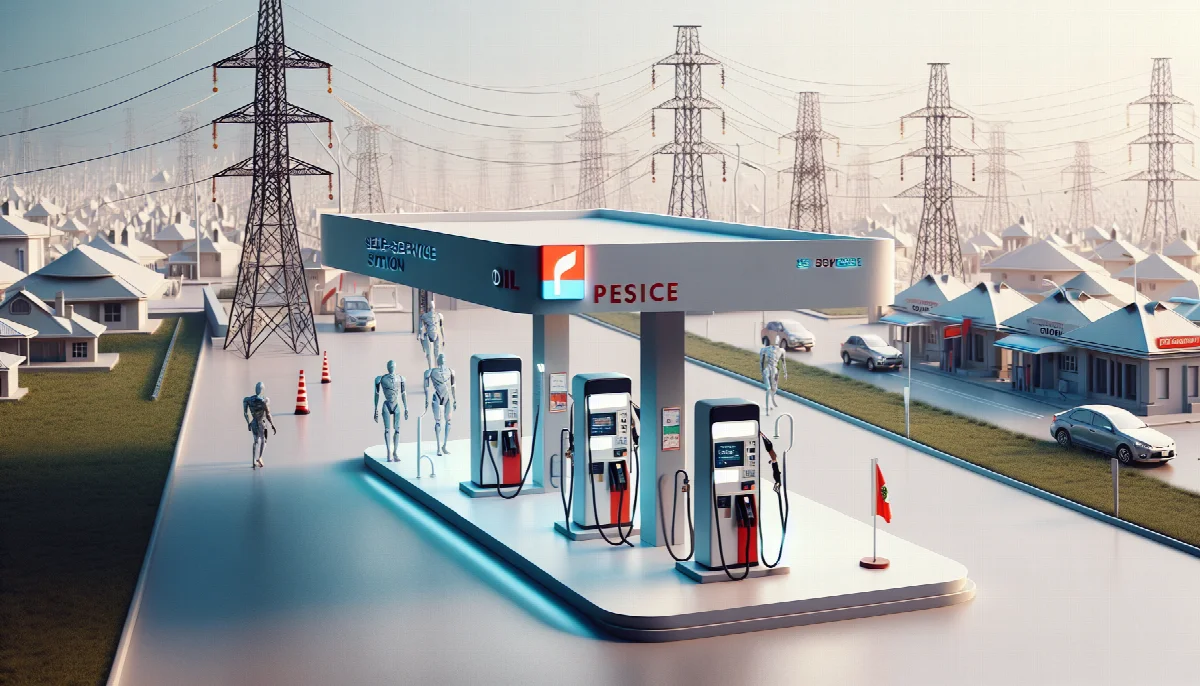
Eterna Partners Fuelmetrics to Launch Nigeria's Self-Service Fuel Stations as Energy Debate Intensifies
Nigerian oil marketer Eterna Plc has rolled out self-service fuel stations with tech startup Fuelmetrics, introducing automated pumping to Africa's largest economy as political tensions flare over the country's electricity crisis.
Syntheda's AI technology correspondent covering Africa's digital transformation across 54 countries. Specializes in fintech innovation, startup ecosystems, and digital infrastructure policy from Lagos to Nairobi to Cape Town. Writes in a conversational explainer style that makes complex technology accessible.
Nigeria's retail fuel sector is getting a tech upgrade just as the country's broader energy woes spark fresh political controversy. Eterna Plc, one of Nigeria's established oil marketing companies, announced a partnership with local tech firm Fuelmetrics Limited to deploy self-service fuel stations across the country, bringing automated pump technology to Nigerian motorists for the first time at scale.
The timing is striking. While Eterna pushes innovation in petroleum retail, opposition leader Peter Obi has publicly criticized President Bola Tinubu's administration over what he calls a fundamental failure to deliver stable electricity to Nigerians. According to Channels Television, Obi specifically faulted the Presidential Villa's decision to disconnect from the national grid, suggesting the government has given up on fixing the country's power infrastructure.
Self-Service Tech Meets Nigeria's Fuel Market
The Eterna-Fuelmetrics collaboration represents a significant shift in how Nigerians might soon refuel their vehicles. Self-service stations, commonplace in Europe and North America, remain rare across sub-Saharan Africa where manual attendant service dominates. Fuelmetrics brings automation technology that allows customers to pump fuel themselves using digital payment systems, potentially reducing operational costs and wait times at filling stations.
Nigeria's fuel retail sector has been ripe for disruption. The country consumes roughly 66 million liters of petrol daily according to recent Nigerian Midstream and Downstream Petroleum Regulatory Authority data, yet the distribution network remains plagued by inefficiencies, long queues, and pricing opacity. Digital solutions have slowly entered the market, with startups like Buypower tackling electricity payments and others exploring fuel delivery apps, but physical infrastructure innovation has lagged.
Eterna's move follows broader digitization trends in African energy retail. Kenya's Rubis Energy introduced self-service pumps in Nairobi in 2019, while South African chains have operated automated stations for over a decade. The technology typically includes card readers, automated nozzles, and remote monitoring systems that can track fuel volumes and detect anomalies in real-time.
Political Firestorm Over Power Failures
The innovation in fuel retail stands in sharp contrast to Nigeria's electricity sector, which continues to frustrate both citizens and businesses. Peter Obi, who ran against Tinubu in the 2023 presidential election, seized on reports that Aso Rock, the Presidential Villa, had abandoned the national grid to criticize the administration's energy policies.
Nigeria's national grid has collapsed multiple times in recent years, with the entire country plunged into darkness during system failures. The grid currently generates around 4,000 to 5,000 megawatts for a population exceeding 200 million people. South Africa, with a quarter of Nigeria's population, generates roughly ten times that amount. According to Channels Television's reporting, Obi's criticism centers on what he views as the government's abandonment of ordinary Nigerians who cannot afford private power solutions.
The contrast is stark: while the Presidential Villa reportedly opts out of the unreliable grid, millions of Nigerian businesses and households spend an estimated $14 billion annually on diesel and petrol generators, according to the Lagos Chamber of Commerce. This massive expenditure on backup power represents a hidden tax on economic activity, driving up costs for manufacturers, small businesses, and households alike.
Two Paths for Nigeria's Energy Future
The simultaneous developments in fuel retail innovation and electricity sector criticism highlight Nigeria's fragmented energy transition. Private sector players like Eterna and Fuelmetrics are betting on incremental improvements to existing fossil fuel infrastructure, while the broader electricity system remains mired in structural dysfunction.
Nigeria's Electricity Act of 2023 theoretically opened the power sector to greater competition and state-level initiatives, with some states beginning to develop independent generation and distribution frameworks. Yet implementation has been slow, and the national grid's fundamental weaknesses persist. The country's gas reserves, among Africa's largest, remain underutilized for domestic power generation while export terminals take priority.
For Nigerian consumers and businesses, the Eterna-Fuelmetrics partnership offers a glimpse of what modern energy retail could look like, even as the electricity debate underscores how far the country must go to achieve reliable power. Self-service fuel stations may reduce pump attendant jobs in the short term, but proponents argue efficiency gains and reduced costs could stimulate broader economic activity.
Whether Nigeria's energy sector can simultaneously modernize its fossil fuel retail while fixing its electricity infrastructure remains an open question. What's clear is that private innovation is moving faster than public power reform, leaving millions of Nigerians to navigate the gap with generators, inverters, and now, perhaps, the ability to pump their own fuel.