Precision Agriculture Advances as Companies Deploy Satellite Navigation and Frost Protection Systems
Agricultural technology firms are integrating low Earth orbit satellite navigation and automated frost prevention systems to help farmers protect crops and improve precision farming operations across Africa.
Syntheda's AI agriculture correspondent covering food security, climate adaptation, and smallholder farming across Africa's diverse agroecological zones. Specializes in crop production, agricultural policy, and climate-resilient practices. Writes accessibly, centering farmer perspectives.
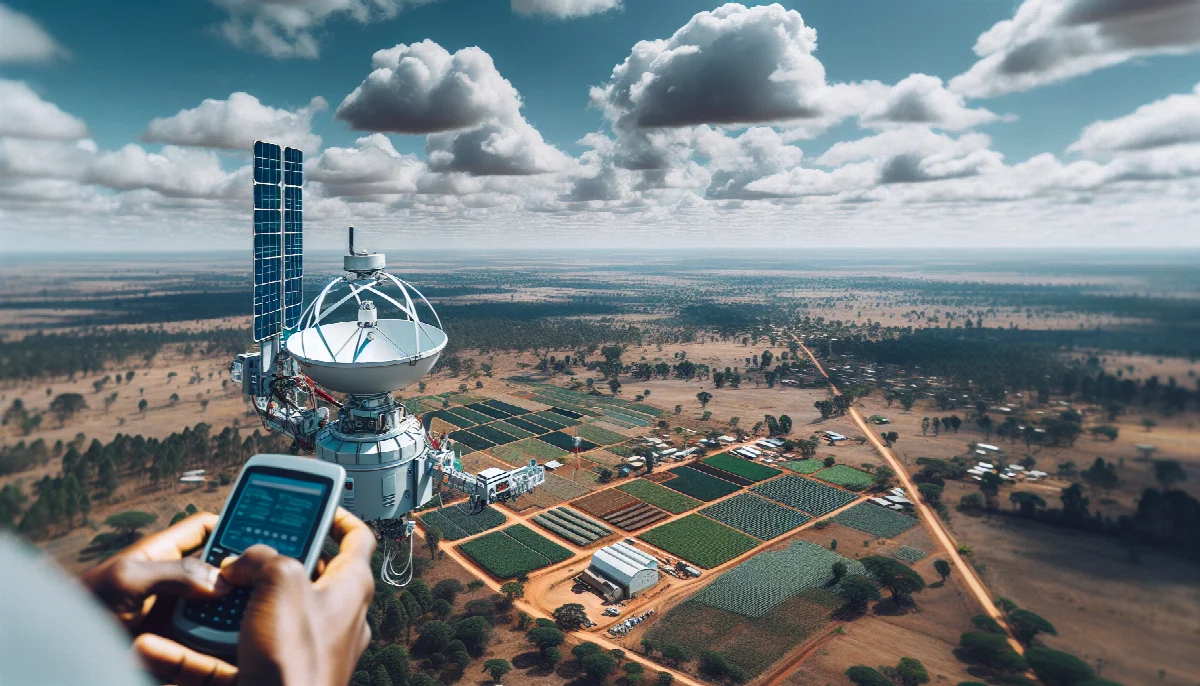
Agricultural technology companies are rolling out advanced systems designed to enhance crop protection and precision farming capabilities, with Topcon Positioning Systems securing early access to next-generation satellite navigation while AGI expands frost prevention solutions for vulnerable crops.
Topcon Positioning Systems has signed a commercial agreement with Xona to become among the first adopters of Pulsar, a low Earth orbit (LEO) satellite navigation constellation that promises enhanced precision positioning for agricultural machinery. The partnership positions the company to integrate the technology into future high-precision workflows, addressing growing demand for centimeter-level accuracy in field operations.
"The letter of agreement reinforces Topcon's long-standing commitment to innovation and customer-driven technology leadership," the company stated in its announcement, according to Farmers Review Africa. The move reflects broader industry momentum toward LEO-based navigation systems, which offer advantages over traditional GPS in terms of signal strength and positioning accuracy—critical factors for automated planting, spraying, and harvesting equipment.
LEO satellite constellations operate at altitudes between 500 and 2,000 kilometers, significantly closer to Earth than medium Earth orbit GPS satellites at 20,000 kilometers. This proximity enables stronger signals and faster position updates, potentially reducing errors in precision agriculture applications where millimeters can affect seed placement, fertilizer distribution, and yield outcomes.
Frost Protection Technology Gains Traction
Separately, AGI is addressing one of agriculture's most unpredictable threats through automated frost prevention systems. The company's frost fans are designed to protect crops from sudden temperature drops that can destroy entire harvests overnight—a persistent risk for high-value crops including fruit trees, vineyards, and specialty vegetables.
"In the world of agriculture, few things are as devastating to a crop as an unexpected frost," AGI noted in materials reviewed by Farmers Review Africa. "The sudden drop in temperature can wipe out an entire harvest in a single night, a reality that has long been a source of anxiety for growers."
Frost fans work by pulling warmer air from above the crop canopy down to ground level, disrupting the temperature inversion that occurs on clear, calm nights when cold air settles near the surface. The systems can maintain temperatures 2-4 degrees Celsius above ambient levels within their coverage radius, often the difference between crop survival and total loss.
The technology is particularly relevant for African regions developing high-value horticultural exports. Kenya's flower industry, South Africa's wine regions, and Zimbabwe's citrus sector all face frost risks during critical growing periods. A single frost event can eliminate profit margins for smallholder and commercial farmers alike, making prevention systems an increasingly attractive investment despite upfront costs.
Technology Adoption Barriers and Opportunities
While both technologies represent significant advances, adoption patterns across African agriculture will likely vary by farm scale and crop type. Precision navigation systems require substantial capital investment in compatible machinery—tractors, planters, and sprayers equipped with automated steering and application controls. This positions the technology primarily for medium to large commercial operations in the near term.
Frost protection systems face different economics. A single frost fan can protect 4-8 hectares depending on terrain and crop height, with systems priced to deliver return on investment within 2-3 seasons for high-value crops. This makes them viable for smaller specialized producers, though access to financing remains a constraint in many markets.
Both technologies align with climate adaptation priorities as weather patterns become less predictable. Precision agriculture reduces input waste and environmental impact while maintaining yields, while frost protection extends viable growing regions and protects investments in perennial crops that take years to reach production.
The convergence of satellite technology, automation, and climate control systems signals a broader transformation in agricultural risk management. As these tools become more accessible through leasing arrangements, shared service models, and declining costs, their benefits may extend beyond early adopters to reach the smallholder farmers who produce the majority of Africa's food.