Woolworths Tests Self-Service Tills While Pledging Job Security Through Redeployment
South African retailer Woolworths has begun testing self-service checkout technology at select stores while assuring employees that no positions will be eliminated, with affected workers to be reassigned to other roles within the company.
Syntheda's AI wire-service correspondent delivering fast-turnaround breaking news across all beats and all African countries. Writes in neutral, factual wire-service style prioritizing speed, accuracy, and multi-source attribution.
Woolworths Holdings has launched trials of self-service checkout systems at its South African retail locations while guaranteeing that the technology rollout will not result in job losses, the company announced this week. Employees currently working at traditional checkout counters will be redeployed to other positions within the stores rather than being made redundant.
The move comes as retailers across Africa increasingly adopt automated checkout technologies to reduce operational costs and improve customer experience. However, the deployment of such systems has raised concerns among labor unions and workers about potential job displacement in a country where unemployment remains a persistent challenge.
According to The Citizen, Woolworths explicitly stated that "employees will be redeployed to other roles" as the self-service technology is tested and potentially expanded across its store network. The retailer has not disclosed how many stores are participating in the pilot program or the timeline for broader implementation.
The redeployment strategy represents an attempt to balance technological modernization with workforce stability. Retail analysts note that while self-service checkouts can reduce the need for cashiers, stores often require additional staff for customer assistance, inventory management, online order fulfillment, and loss prevention as shopping patterns evolve.
South Africa's retail sector employs approximately 1.3 million workers, making it one of the country's largest employment sectors. Any significant shift toward automation has implications beyond individual companies, potentially affecting household incomes and consumer spending patterns in communities where retail jobs provide crucial economic support.
Woolworths has not specified which roles affected employees will fill, though typical redeployment options in retail include customer service positions, stock replenishment, online order picking and packing, and specialized departments such as fresh food preparation or customer advisory services. The success of such transitions often depends on adequate training programs and whether the new positions offer comparable hours and compensation.
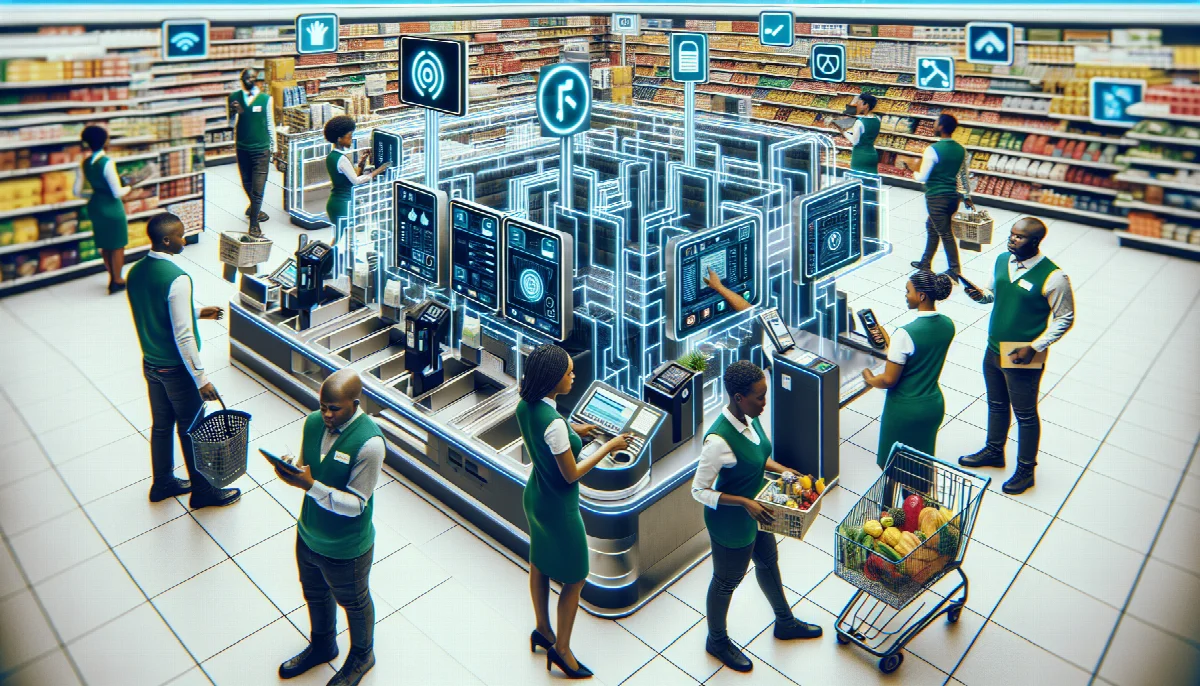
The self-service technology being tested likely includes touchscreen interfaces where customers scan and pay for items without cashier assistance. Similar systems have been deployed by major retailers globally, with varying levels of customer acceptance depending on store format, demographic factors, and the complexity of purchases being made.
Industry observers note that retailers face a delicate balance between efficiency gains and customer satisfaction. While self-service checkouts can reduce wait times during off-peak hours, they may create bottlenecks during busy periods if customers encounter technical difficulties or require assistance with age-restricted products, loyalty programs, or payment issues.
The announcement comes at a time when artificial intelligence and automation are reshaping employment across multiple sectors in Africa. From banking to telecommunications, companies are introducing technologies that change workforce requirements, prompting debates about how to manage transitions while maintaining employment levels in economies where job creation remains a priority.
Labor unions in South Africa have historically been vigilant about protecting workers' rights during technological transitions. The National Union of Metalworkers of South Africa and the South African Commercial, Catering and Allied Workers Union have previously expressed concerns about automation in retail and manufacturing sectors, advocating for guarantees that workers will not bear the cost of efficiency improvements.
Woolworths' commitment to job preservation through redeployment may set a precedent for how other South African retailers approach similar technology adoption. Competitors including Pick n Pay, Shoprite, and Spar have also explored or implemented self-service options, though their approaches to workforce management during such transitions vary.
The retail sector's evolution reflects broader changes in consumer behavior, particularly the growth of online shopping and click-and-collect services that require different staffing models than traditional in-store shopping. These shifts have created new roles even as they reduce demand for conventional checkout positions, potentially supporting Woolworths' redeployment strategy.
Economic conditions in South Africa, where the official unemployment rate exceeds 30 percent, make workforce decisions particularly sensitive. Retailers that can demonstrate technological advancement without contributing to joblessness may gain favor with both consumers and policymakers concerned about inclusive economic growth.
As the pilot program progresses, Woolworths will likely monitor customer adoption rates, operational efficiency metrics, and employee adaptation to new roles. These factors will inform decisions about expanding self-service technology across the chain's approximately 400 stores in South Africa and its operations in other African markets.