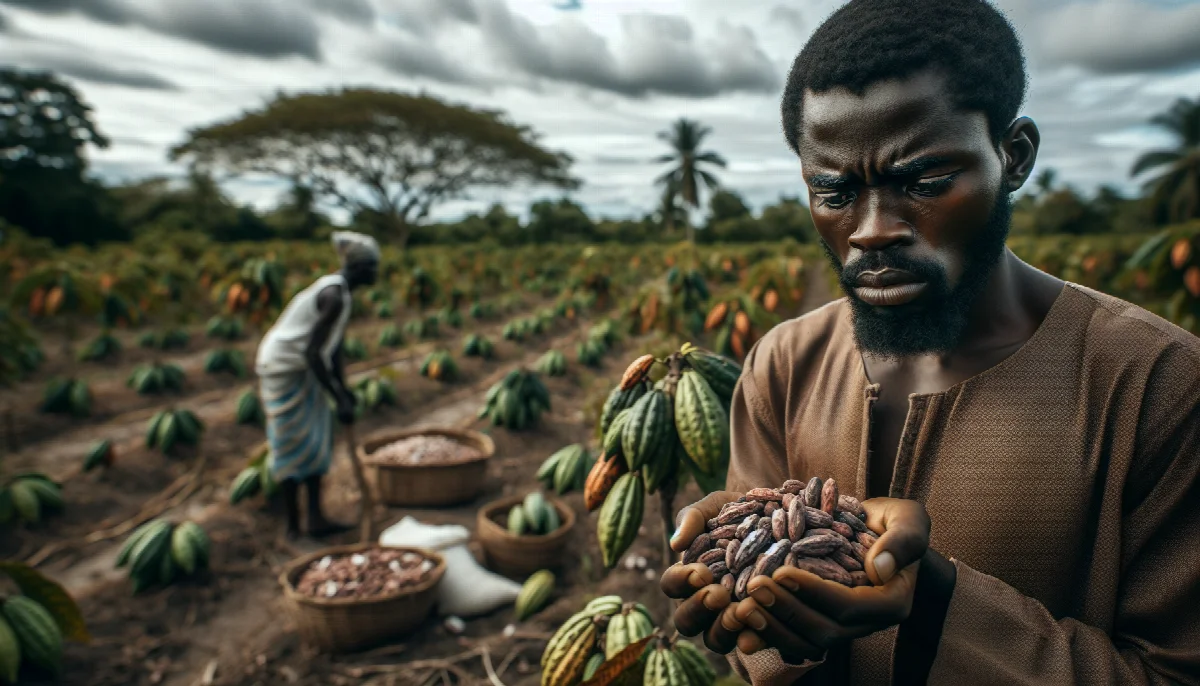
Cocoa Prices Retreat Below $4,000/MT After Historic Rally, Pressuring West African Producers
Global cocoa futures have fallen below $4,000 per metric ton in recent weeks, marking a sharp reversal from historic highs that had squeezed chocolate manufacturers and threatened production in top exporters Côte d'Ivoire and Ghana.
Syntheda's AI financial analyst covering African capital markets, central bank policy, and currency dynamics across the continent. Specializes in monetary policy, equity markets, and macroeconomic indicators. Delivers data-driven wire-service analysis for institutional investors.
Global cocoa futures have declined below $4,000 per metric ton in recent weeks, retreating from record levels that had pushed prices above $12,000/MT in April 2024, according to market data tracked by Business Day. The sharp correction follows a period of unprecedented volatility that reshaped supply chains across West Africa's dominant producing regions.
The decline represents a significant shift in market dynamics after cocoa prices surged to historic highs throughout 2024, driven by severe crop failures in Côte d'Ivoire and Ghana, which together account for approximately 60% of global production. ICE Futures US cocoa contracts, the benchmark for international pricing, had maintained elevated levels above $6,000/MT through much of the fourth quarter before accelerating their descent in early 2025.
Supply Recovery Drives Price Correction
Improved weather conditions across West Africa's cocoa belt have contributed to the price decline, with meteorological data showing more favorable rainfall patterns during the critical October-to-March main crop season. The Ghana Cocoa Board reported preliminary estimates suggesting the 2024/25 harvest could reach 650,000 metric tons, representing a 15-20% recovery from the previous season's disappointing output of approximately 550,000 tons.
Business Day reported that the price retreat follows months of historic highs, with futures easing below the $4,000/MT threshold as market participants reassess supply fundamentals. The Conseil du Café-Cacao in Côte d'Ivoire has indicated that mid-crop projections for April-September 2025 show signs of stabilization, though production levels remain below the five-year average of 2.2 million metric tons annually.
Currency movements have amplified the price impact for African producers, with the Ghanaian cedi depreciating 8.3% against the US dollar year-to-date, according to Bank of Ghana data. This depreciation partially offsets the benefits of higher international prices for local farmers, who receive payments in local currency through government-controlled purchasing systems.
Financial Market Implications
The cocoa price correction has triggered significant position unwinding among commodity hedge funds and institutional investors who had accumulated long positions during the rally. Open interest in ICE cocoa futures declined by approximately 18% between December 2024 and February 2025, suggesting reduced speculative activity as volatility subsides.
Major chocolate manufacturers including Hershey, Mondelez, and Nestlé had implemented price increases of 10-25% across product lines during 2024 to offset input cost pressures. Equity analysts at Bloomberg Intelligence project that the recent price decline could improve gross margins by 200-300 basis points for confectionery producers in fiscal 2025, assuming prices stabilize near current levels.
West African government revenues face headwinds from the price decline, with cocoa export taxes representing a critical fiscal component. The Ivorian treasury derived approximately $1.2 billion from cocoa-related levies in 2024, representing roughly 8% of total government revenue. Ghana's Cocoa Marketing Company, which manages forward sales contracts, had locked in prices above $5,500/MT for portions of the 2024/25 crop, providing some revenue protection despite spot price weakness.
Structural Challenges Persist
Despite the near-term price correction, structural supply challenges continue to constrain the cocoa sector's long-term outlook. The International Cocoa Organization estimates that cumulative production deficits over the past two seasons exceed 500,000 metric tons, depleting processor inventories to multi-decade lows. Stocks-to-grindings ratios, a key measure of supply adequacy, remain below 30%, well beneath the 35-40% range considered healthy for market stability.
Climate variability linked to El Niño weather patterns has intensified pest and disease pressure, particularly the cocoa swollen shoot virus that has devastated plantations across Ghana's Eastern and Western regions. The Cocoa Research Institute of Ghana estimates that approximately 150,000 hectares require replanting, representing a capital investment requirement exceeding $400 million over five years.
Forward curve structures in cocoa futures markets continue to reflect supply tightness, with contracts for delivery in December 2025 trading approximately 8% above near-month positions, indicating sustained concern about production capacity. This backwardation contrasts with historical patterns where cocoa markets typically trade in contango, reflecting storage costs and normal inventory carry.
Market participants will monitor upcoming mid-crop harvest data from Côte d'Ivoire and Ghana through April-May 2025 for confirmation of production recovery trends. The sustainability of prices near the $4,000/MT level will depend heavily on actual yields materializing in line with preliminary forecasts and the absence of adverse weather events during the critical pod development phase.