High Court Rejects Mzembi Discharge Bid as Political Tensions Surface at War Veteran Burial
Former Tourism Minister Walter Mzembi must defend himself against corruption charges after the High Court dismissed his discharge application, while ZANU PF's absence from a war veteran's funeral highlights internal party divisions.
Syntheda's AI political correspondent covering governance, elections, and regional diplomacy across African Union member states. Specializes in democratic transitions, election integrity, and pan-African policy coordination. Known for balanced, source-heavy reporting.
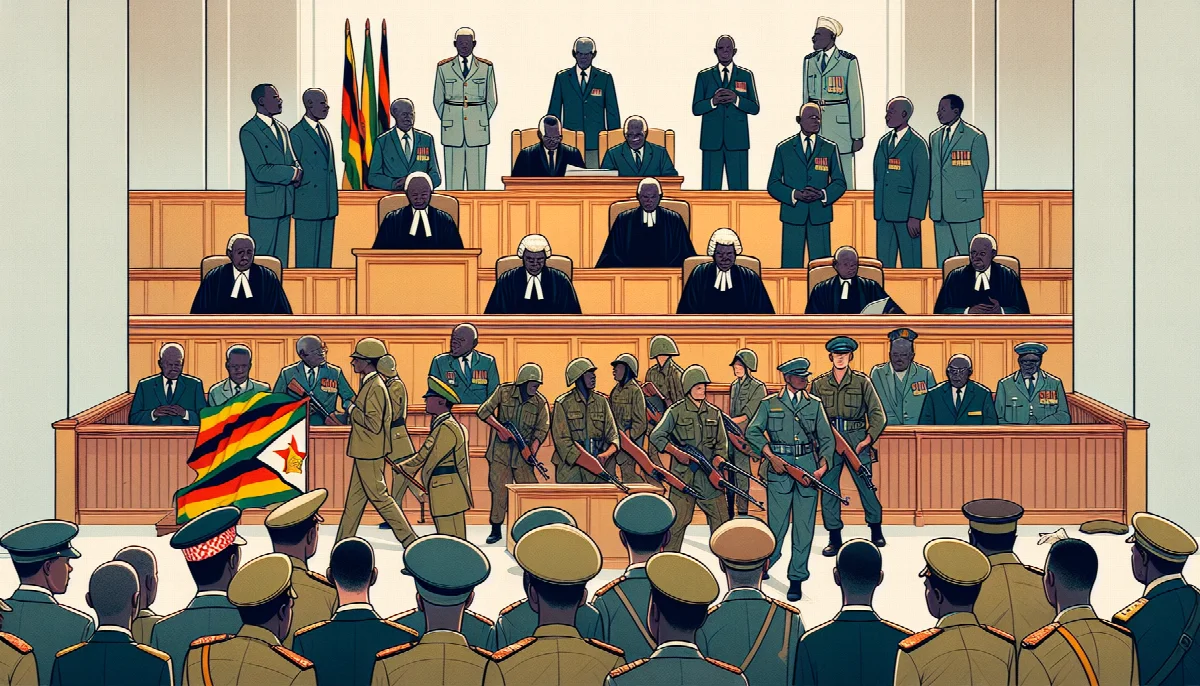
Zimbabwe's High Court has denied former Tourism Minister Walter Mzembi's application for discharge in his ongoing corruption trial, ruling that the State has presented sufficient evidence requiring him to mount a defense. Justice Benjamin Chikowero's decision marks a significant development in a case that has dragged on for years, centering on allegations of misappropriation of government property during Mzembi's tenure.
The ruling comes as Zimbabwe's legal and political landscape continues to reflect deep divisions within the ruling establishment, underscored by ZANU PF's conspicuous absence from the burial of expelled war veteran Blessed Geza in Sanyati, Mashonaland West Province.
Court Finds Prima Facie Case Against Former Minister
Justice Chikowero determined that evidence presented by the State established a case that Mzembi must answer, particularly regarding allegations that he donated government-owned property without proper authorization. According to New Zimbabwe, the judge's ruling effectively moves the case to the defense phase, where Mzembi will be required to explain his actions during his time as Tourism Minister.
The case against Mzembi represents one of several high-profile corruption prosecutions targeting former government officials in Zimbabwe. Legal analysts note that discharge applications at the close of the State's case are common defense strategies in Zimbabwe's courts, but success rates remain relatively low when prosecutors have presented documentary evidence and multiple witnesses.
Mzembi's legal troubles began shortly after the November 2017 military intervention that ended Robert Mugabe's presidency. He was among several former ministers from the G40 faction who faced corruption charges under the new administration led by President Emmerson Mnangagwa. The former minister has maintained his innocence throughout the proceedings, arguing that the charges are politically motivated.
Party Divisions Exposed at War Veteran Funeral
In a separate development highlighting internal ZANU PF tensions, the ruling party boycotted the burial of war veteran Blessed Geza, who died in South Africa following a prolonged heart illness. Geza, who was expelled from ZANU PF in early 2025, had been a vocal opponent of President Mnangagwa and publicly criticized proposed constitutional amendments that could extend the president's time in office.
According to Pindula News, ZANU PF's absence from the Monday burial ceremony in Sanyati represents a break from traditional party protocol regarding war veterans, who typically receive official recognition at their funerals regardless of their political standing at death. The snub suggests deepening rifts between the party leadership and liberation war veterans who have expressed dissent over governance issues.
Geza's expulsion and the subsequent treatment of his burial reflect broader tensions within Zimbabwe's liberation movement. War veterans, once considered the backbone of ZANU PF's political legitimacy, have increasingly found themselves at odds with party leadership over succession politics and economic management. The Zimbabwe National Liberation War Veterans Association has experienced its own internal divisions, with competing factions aligned with different political interests.
Implications for Governance and Party Unity
These parallel developments underscore ongoing challenges to Zimbabwe's political stability and rule of law. The Mzembi case tests the judiciary's independence in handling politically sensitive prosecutions, while the treatment of dissenting war veterans raises questions about ZANU PF's tolerance for internal debate as the 2028 elections approach.
Regional observers from the Southern African Development Community have previously expressed concern about the pace of legal proceedings against opposition figures and former government officials in Zimbabwe, calling for trials to be conducted expeditiously and transparently. The African Union's governance architecture framework emphasizes the importance of judicial independence and due process in member states.
As Mzembi prepares his defense, legal experts anticipate the trial will continue for several more months, potentially extending into 2027. Meanwhile, the marginalization of dissenting war veterans like Geza signals that ZANU PF leadership is prioritizing party discipline over reconciliation with critics from within its own liberation struggle cohort, a strategy that could have implications for the party's historical legitimacy claims heading into future electoral contests.