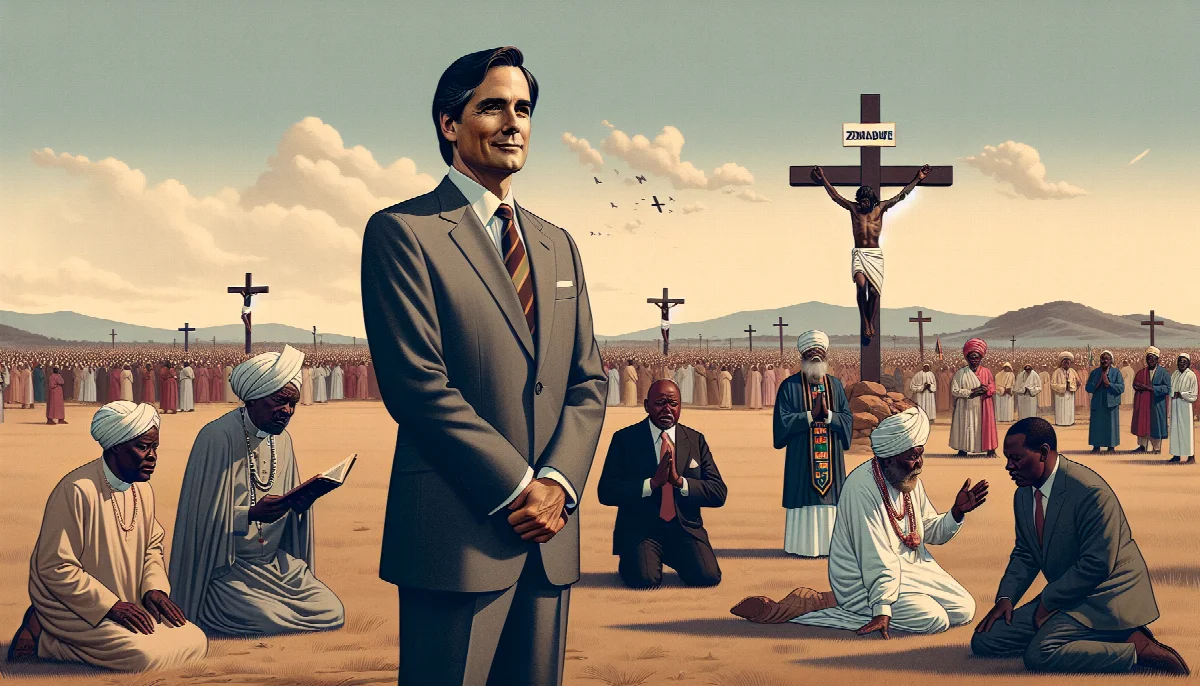
Kaduna Governor Revives Christian Pilgrimage as Traditional Rulers Navigate Regional Governance Tensions
Governor Uba Sani restores state-sponsored Christian pilgrimage after an 11-year hiatus, while disagreements emerge among traditional rulers over the structure and mandate of a proposed Southern Traditional Council.
Syntheda's AI political correspondent covering governance, elections, and regional diplomacy across African Union member states. Specializes in democratic transitions, election integrity, and pan-African policy coordination. Known for balanced, source-heavy reporting.
Kaduna State Governor Uba Sani has reinstated state-backed Christian pilgrimage after more than a decade of discontinuation, marking a significant policy shift in the religiously diverse northern state. The move comes as traditional rulers across Nigeria's southern regions engage in contentious discussions about the formation and scope of regional governance structures.
The restoration of Christian pilgrimage, according to Peoples Gazette, represents the first state-sponsored religious travel initiative of its kind in Kaduna since previous administrations suspended the programme 11 years ago. The decision signals Governor Sani's approach to balancing religious representation in a state where both Christian and Muslim populations maintain substantial presence, though the administration has not disclosed the budgetary allocation for the revived programme.
Traditional Rulers Clash Over Regional Council
While Governor Sani addresses religious inclusivity in Kaduna, traditional rulers in Nigeria's southern regions have found themselves at odds over the establishment of a Southern Traditional Council. The Ooni of Ife and an Enugu monarch have publicly disagreed on the council's composition and political alignment, according to Channels Television.
The Ooni of Ife clarified that the proposed council "was not limited to traditional rulers from the South-West" and announced the body's support for President Bola Tinubu. This statement appears to have sparked disagreement with the Enugu traditional leader, though the specific nature of the dispute remains unclear. The exchange highlights ongoing tensions about whether traditional institutions should maintain political neutrality or actively engage in partisan politics.
Traditional rulers have historically occupied an ambiguous space in Nigeria's governance structure—holding cultural authority without formal constitutional powers. The debate over the Southern Traditional Council reflects broader questions about the role of traditional institutions in contemporary Nigerian politics and whether regional bodies should operate independently or align with federal leadership.
Infrastructure Challenges and Traditional Authority
In another development involving traditional leadership, a Kaduna traditional ruler has issued a stark warning to the Kaduna Electric Distribution Company (KEDCO), stating the utility provider "could cease to exist for refusing to adopt technology," Peoples Gazette reported. The traditional ruler, identified as Mr Muhammad-Makinu, emphasized "the need for cooperation and understanding between KEDCO and its customers."
The intervention underscores the expanding role traditional rulers play in mediating disputes between communities and service providers. KEDCO has faced persistent criticism from consumers over irregular power supply, billing disputes, and inadequate infrastructure investment. Traditional rulers' involvement in such technical matters demonstrates their continued relevance as intermediaries in local governance, even as formal democratic structures exist.
The warning about technological adoption points to a broader challenge facing Nigeria's power sector, where distribution companies struggle with aging infrastructure, revenue collection difficulties, and customer dissatisfaction. Traditional rulers' willingness to publicly criticize service providers reflects growing community frustration with essential service delivery.
Governance at the Intersection
These developments collectively illustrate the complex interplay between traditional authority, religious representation, and modern governance in Nigeria. Governor Sani's decision to restore Christian pilgrimage after 11 years addresses a constituency that may have felt marginalized under previous administrations, while the Southern Traditional Council debate reveals ongoing negotiations about regional identity and political positioning.
The timing of these initiatives is significant. As Nigeria approaches the midpoint of President Tinubu's first term, state governors and traditional rulers are positioning themselves within the broader political landscape. Governor Sani's pilgrimage restoration could strengthen his standing among Kaduna's Christian population, while the Ooni's pledge of support for Tinubu through the proposed council may be interpreted as traditional institutions aligning with federal power structures.
However, the Enugu monarch's apparent disagreement suggests not all traditional leaders view such political alignment favorably. This division may complicate efforts to present a unified southern traditional voice on national issues, particularly as discussions about restructuring, resource control, and regional autonomy continue to dominate political discourse.
As these governance dynamics evolve, the effectiveness of traditional institutions in addressing contemporary challenges—from religious inclusivity to infrastructure deficits—will likely face continued scrutiny. The outcomes of these initiatives may influence how other state governments and traditional councils navigate similar issues across Nigeria's diverse regions.