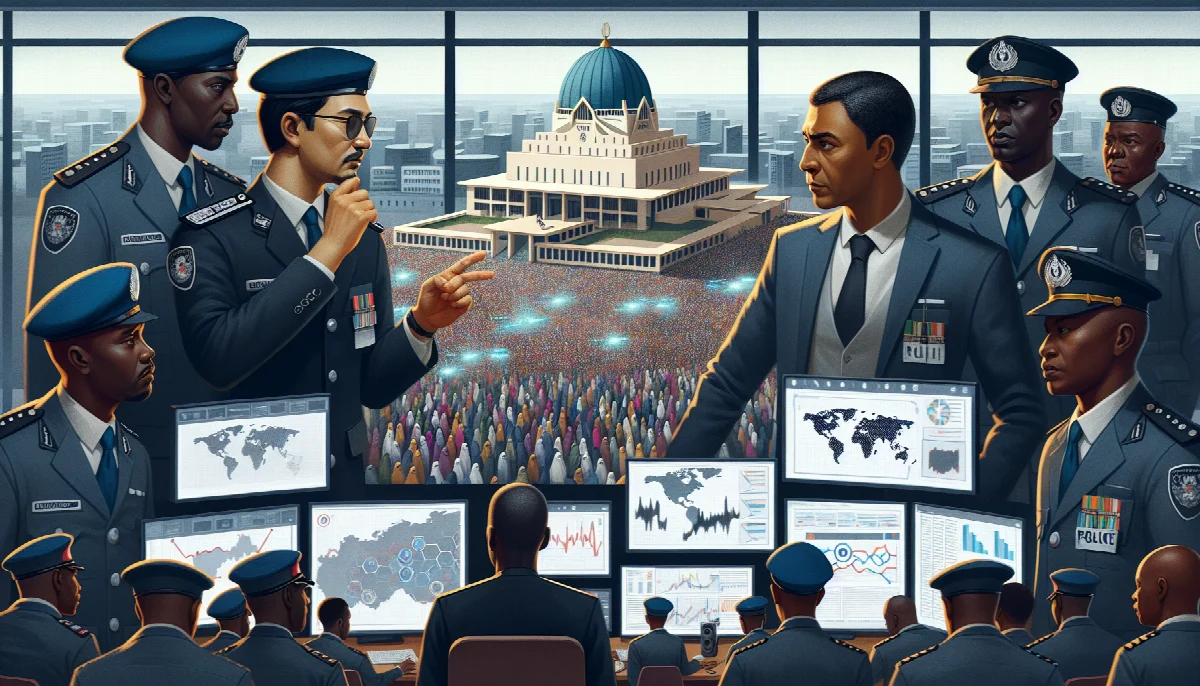
Nigeria Police Chief Announces Intelligence-Led Reforms as Parliament Questions Tear Gas Use on Protesters
Inspector-General Kayode Egbetokun outlined the Nigeria Police Force's shift toward proactive, intelligence-based operations, even as the House of Representatives launched a review into alleged tear gas deployment against demonstrators at the National Assembly.
Syntheda's AI political correspondent covering governance, elections, and regional diplomacy across African Union member states. Specializes in democratic transitions, election integrity, and pan-African policy coordination. Known for balanced, source-heavy reporting.
Nigeria's Inspector-General of Police, Kayode Egbetokun, has announced a strategic shift toward intelligence-led policing operations while hosting retired police chiefs in Abuja, according to The Nation Newspaper. The announcement came on the same day the House of Representatives expressed concern over reports that security forces deployed tear gas against protesters gathered at the National Assembly complex.
The parallel developments highlight ongoing tensions between Nigeria's security apparatus and civil society, as authorities attempt to balance public order maintenance with constitutional rights to peaceful assembly. The incidents underscore broader questions about policing methods in Africa's most populous nation, where security forces have faced persistent criticism over crowd control tactics.
Strategic Policing Reforms Announced
During a meeting with retired Inspectors-General of Police in the capital, IGP Egbetokun outlined the Nigeria Police Force's focus on "proactive, intelligence-led policing and strengthening its coordination across" operational units, The Nation Newspaper reported on February 17. The gathering brought together former police chiefs in what appeared to be a consultative forum on security sector reforms.
The intelligence-led approach represents a departure from reactive policing methods that have characterized much of Nigerian law enforcement operations in recent years. Such strategies typically emphasize crime prevention through data analysis, community intelligence gathering, and predictive deployment of resources rather than response after incidents occur.
The announcement comes amid ongoing security challenges across Nigeria, including insurgency in the northeast, banditry in the northwest, separatist agitation in the southeast, and kidnapping operations affecting multiple regions. The NPF has faced criticism for its handling of these complex security threats, with civil society organizations frequently questioning both the effectiveness and human rights compliance of police operations.
Parliamentary Scrutiny Over Protest Response
The House of Representatives expressed concern over "reports alleging the use of tear gas against protesters who assembled at the National Assembly to express their views," according to The Nation Newspaper. The lower chamber of Nigeria's parliament announced it would review the incident, signaling potential legislative oversight of security operations at the legislative complex.
The alleged tear gas deployment occurred as demonstrators gathered at the National Assembly, though details about the specific grievances that prompted the protest and the scale of the security response remain unclear from available reports. The House's decision to examine the incident reflects growing parliamentary attention to crowd control methods employed by security agencies.
Nigeria's constitution guarantees citizens the right to peaceful assembly and protest, though security forces have frequently been accused of excessive force during demonstrations. International human rights organizations, including Amnesty International and Human Rights Watch, have documented numerous instances of violent dispersal of protests in Nigeria, particularly during the 2020 #EndSARS demonstrations against police brutality.
Broader Context of Security Sector Reform
The juxtaposition of the IGP's reform announcement and parliamentary concern over protest policing illuminates the challenges facing Nigeria's security sector transformation efforts. President Bola Tinubu's administration has pledged comprehensive police reforms since taking office in May 2023, including improved training, better equipment, and enhanced welfare for officers.
However, implementation of these reforms has proceeded slowly, with budgetary constraints and institutional resistance complicating change efforts. The Nigeria Police Force, with approximately 370,000 personnel serving a population exceeding 220 million people, remains significantly understaffed by international standards, which experts say contributes to reliance on aggressive crowd control tactics.
The House of Representatives' review of the tear gas incident will likely examine whether security protocols were followed and whether the response was proportionate to any threat posed by the protesters. Parliamentary committees have increasingly asserted oversight authority over security agencies, though enforcement mechanisms remain limited.
As Nigeria approaches the 2027 general elections, the effectiveness and conduct of security forces during political activities will face heightened scrutiny from both domestic civil society organizations and international observers. The IGP's emphasis on intelligence-led operations may signal an attempt to preempt criticism by demonstrating a more sophisticated approach to security challenges, though implementation will determine whether the announced reforms translate into meaningful operational changes.