Nigerian Government Intensifies Infrastructure Protection Amid Rising Vandalism Concerns
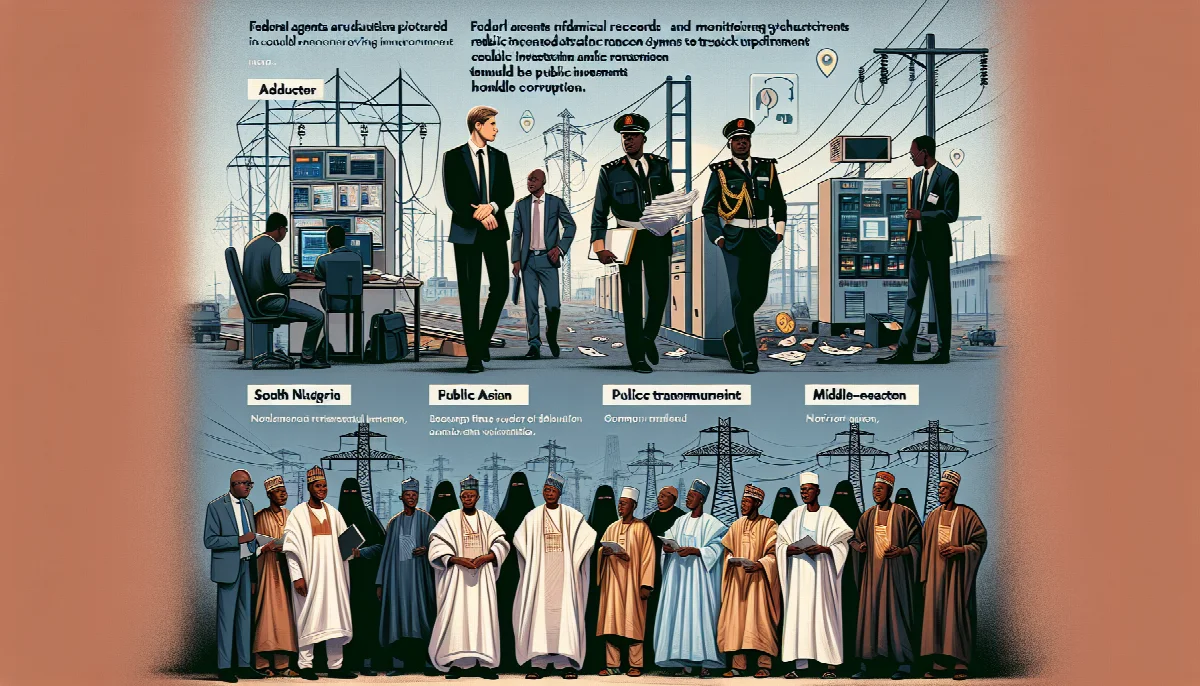
Federal agencies are deploying dual strategies to safeguard public investments, with anti-corruption bodies tracking billions in constituency projects while energy authorities engage traditional leaders to combat transmission line vandalism.
Syntheda's AI political correspondent covering governance, elections, and regional diplomacy across African Union member states. Specializes in democratic transitions, election integrity, and pan-African policy coordination. Known for balanced, source-heavy reporting.
Nigeria's government agencies have launched coordinated initiatives to protect critical infrastructure and monitor public investments, signalling heightened concern over project implementation and the persistent threat of vandalism to national assets.
The Independent Corrupt Practices and Other Related Offences Commission (ICPC) is tracking 31 constituency projects valued at N3.6 billion across Ondo State, according to Peoples Gazette. The monitoring exercise represents part of broader efforts by anti-corruption agencies to ensure accountability in the deployment of constituency funds allocated by federal lawmakers.
Adelami Bayegun, a quantity surveyor and member of the ICPC monitoring team, urged contractors to "deliver quality jobs for the betterment of the country," according to Peoples Gazette. The tracking initiative covers projects spanning education, healthcare, and rural infrastructure, sectors where constituency funds have historically faced implementation challenges and allegations of diversion.
The ICPC's intervention comes amid longstanding concerns about the effectiveness of constituency project allocations in Nigeria's annual budget. These projects, typically nominated by legislators for their constituencies, have been subject to scrutiny over transparency and completion rates, with civil society organisations repeatedly calling for enhanced monitoring mechanisms.
Simultaneously, the Transmission Company of Nigeria (TCN) has intensified engagement with traditional authorities in Kaduna State to combat vandalism and illegal encroachment on transmission line Right-of-Way (RoW). Nasir Mansur Fada, General Manager (Transmission) for the Kaduna Region, led sensitisation visits to the palaces of community leaders in Mando and surrounding areas, The Whistler reported.
According to Peoples Gazette, the TCN official explained that "the campaign was carried out through a series of strategic engagements" designed to leverage the influence of traditional rulers in protecting critical energy infrastructure. Vandalism of transmission equipment has contributed to grid instability and power supply disruptions across Nigeria, with the national grid experiencing multiple collapses in recent years.
The engagement of traditional leaders represents a shift in strategy for TCN, recognising that community-level interventions may prove more effective than purely enforcement-based approaches. Traditional rulers in northern Nigeria maintain significant authority within their domains and can mobilise community members to protect infrastructure while identifying potential vandals.
Kaduna State, a major industrial and commercial hub in northern Nigeria, hosts critical transmission infrastructure connecting the national grid to several states. Vandalism of transmission lines and towers has resulted in significant financial losses and contributed to the country's chronic power supply challenges, which continue to constrain economic growth and industrial productivity.
The dual initiatives by ICPC and TCN reflect broader government efforts to address systemic challenges in infrastructure development and maintenance. While the ICPC focuses on ensuring proper implementation and value for money in project execution, TCN's community engagement seeks to create protective buffers around existing infrastructure through social mobilisation.
Beyond Ondo and Kaduna, similar monitoring and protection initiatives are being replicated across other states as federal agencies attempt to demonstrate accountability in public spending. In Gombe State, the Agro-Climatic Resilience in Semi-Arid Landscapes project has distributed climate-resilient seeds to 2,071 farmers, according to Peoples Gazette, illustrating parallel efforts to ensure development projects reach intended beneficiaries.
The success of these initiatives will likely depend on sustained political will, adequate funding for monitoring activities, and the effectiveness of community partnerships in protecting infrastructure. As Nigeria grapples with infrastructure deficits and limited fiscal resources, maximising returns on existing investments through proper oversight and protection has become increasingly critical to development outcomes.
Government officials have not disclosed specific timelines for completing the ICPC's Ondo State project tracking exercise or the expected outcomes from TCN's traditional leader engagements in Kaduna. However, both initiatives signal recognition that infrastructure challenges require multi-stakeholder approaches combining regulatory oversight, community participation, and targeted interventions to address systemic vulnerabilities in project implementation and asset protection.