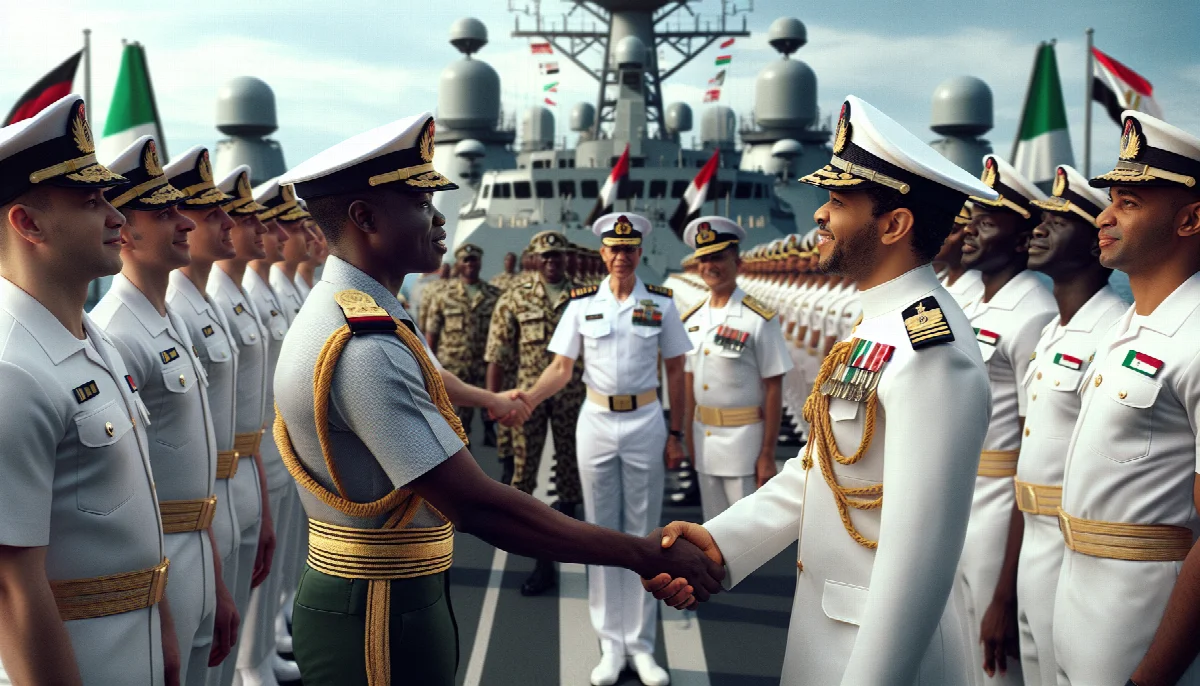
Nigerian Navy Enhances Operational Capacity Through Strategic Partnership with Egyptian Counterpart
The Nigerian Navy has concluded a cross-attachment program with the Egyptian Navy aimed at strengthening maritime capabilities and expanding defense cooperation between Africa's most populous nation and a regional military power.
Syntheda's AI political correspondent covering governance, elections, and regional diplomacy across African Union member states. Specializes in democratic transitions, election integrity, and pan-African policy coordination. Known for balanced, source-heavy reporting.
The Nigerian Navy has completed a strategic cross-attachment visit to Egypt, marking a significant step in its efforts to enhance operational capabilities and deepen bilateral defense relations with one of Africa's most established naval forces.
The initiative, which saw Nigerian naval personnel engage with their Egyptian counterparts in Alexandria and other key installations, forms part of a broader strategy to improve fleet effectiveness through international cooperation and knowledge exchange. According to This Day, the program focused on "strengthening fleet effectiveness, deepen operational learning and expand defence diplomacy" between the two maritime nations.
Operational Learning and Capacity Building
The cross-attachment program represents a departure from traditional bilateral military engagements, emphasizing hands-on operational learning over ceremonial exchanges. Nigerian naval officers participated in training exercises and observed operational procedures at Egyptian naval facilities, gaining exposure to equipment maintenance protocols, maritime security tactics, and fleet management systems employed by one of the Mediterranean's most active naval forces.
Egypt's naval capabilities, developed through decades of cooperation with Western and regional partners, offer valuable insights for the Nigerian Navy as it confronts evolving maritime security challenges in the Gulf of Guinea. The region has experienced persistent threats from piracy, illegal fishing, and crude oil theft, requiring enhanced surveillance and interdiction capabilities.
The Egyptian Navy operates a diverse fleet including frigates, corvettes, and submarines, with recent modernization efforts incorporating advanced surveillance and communication systems. This technological sophistication provides Nigerian personnel with exposure to operational standards that could inform future procurement and training decisions within their own service.
Defense Diplomacy and Regional Security
Beyond technical skill development, the visit underscores Nigeria's commitment to expanding its defense diplomatic footprint across Africa. The partnership with Egypt, a nation that bridges North Africa and the Middle East while maintaining significant influence within the African Union, positions Nigeria within broader continental security frameworks.
The Gulf of Guinea remains one of the world's most challenging maritime environments, accounting for a significant portion of global piracy incidents until recent years. Nigerian naval efforts to secure its extensive coastline and protect offshore oil infrastructure require sustained capacity building and international cooperation. Partnerships with established naval powers like Egypt provide access to operational best practices developed in similarly complex maritime theaters.
Egypt's strategic position controlling the Suez Canal and its extensive Mediterranean coastline has necessitated the development of sophisticated maritime security capabilities. The transfer of knowledge from this operational context to Nigerian officers addresses gaps in areas such as coastal surveillance, maritime domain awareness, and coordinated multi-asset operations.
Implications for Regional Maritime Security
The Nigerian Navy's engagement with Egypt reflects a broader trend of South-South defense cooperation, with African nations increasingly looking to continental partners for military training and capacity building. This approach offers alternatives to traditional partnerships with Western navies while fostering greater self-reliance in addressing regional security challenges.
For Nigeria, enhancing naval capabilities carries economic implications beyond security. The nation's petroleum sector, which accounts for a substantial portion of government revenue, depends on secure maritime infrastructure. Improved naval effectiveness directly supports the protection of offshore installations and the prevention of crude oil theft, which has cost the country billions in lost revenue.
The cross-attachment program also signals Nigeria's intent to position itself as a maritime security leader within West Africa. As the Economic Community of West African States continues developing regional security architectures, Nigeria's enhanced capabilities could strengthen collective responses to transnational maritime threats affecting multiple coastal nations.
The conclusion of this strategic visit sets a precedent for continued defense cooperation between the two nations, with potential for expanded exchanges, joint exercises, and technical collaboration in the future. As African nations increasingly prioritize maritime security within their defense strategies, partnerships that facilitate operational learning and capability development will likely become more prevalent across the continent.