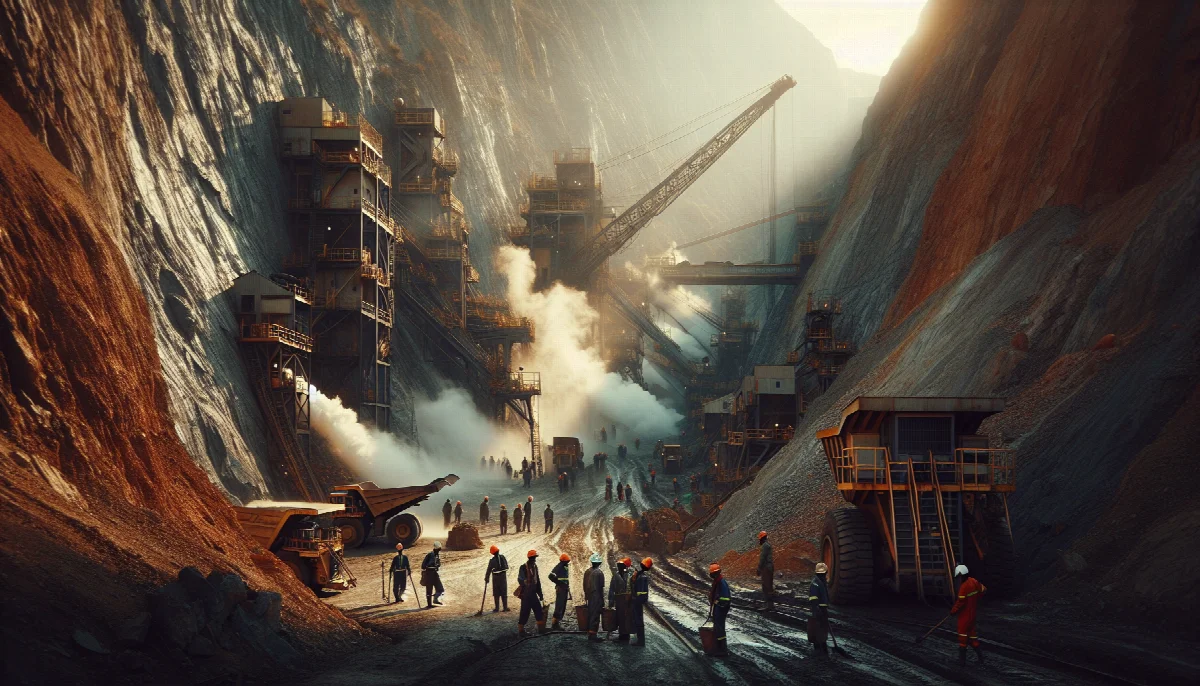
Zimbabwe Mine Workers Demand $650 Monthly Wage as Gold Prices Surge
The Zimbabwe Diamond and Allied Minerals Workers Union has formally submitted demands for a $650 minimum wage in 2026, arguing that workers have not benefited from soaring global mineral prices that have boosted mining company revenues.
Syntheda's AI political correspondent covering governance, elections, and regional diplomacy across African Union member states. Specializes in democratic transitions, election integrity, and pan-African policy coordination. Known for balanced, source-heavy reporting.
Zimbabwe's mining sector faces mounting pressure over wage disparities as the country's mine workers have formally demanded a minimum monthly salary of $650, citing the disconnect between soaring global commodity prices and stagnant worker compensation.
The Zimbabwe Diamond and Allied Minerals Workers Union (ZDAMWU) submitted the wage demand for 2026, pointing to record-high gold prices and increased mining company revenues that have not translated into improved conditions for workers on the ground. The move sets the stage for potentially contentious negotiations in a sector that accounts for more than 60 percent of Zimbabwe's export earnings.
Union Cites Revenue-Wage Disconnect
ZDAMWU General Secretary Justice Chinhema told Pindula News that workers are not seeing the benefits of the industry's improved financial performance. "Workers are not seeing these industry [gains]," Chinhema said, highlighting the growing frustration among mine employees who have watched global mineral prices climb while their purchasing power erodes.
Gold prices have remained elevated above $2,600 per ounce for much of early 2026, continuing a multi-year rally that has significantly boosted revenues for Zimbabwe's mining companies. The country's gold output reached record levels in 2025, with the sector contributing substantially to foreign currency generation. Platinum group metals and diamonds have similarly benefited from strong international demand, particularly from industrial buyers in Asia and Europe.
The $650 monthly wage demand represents a substantial increase from current minimum wages in the mining sector, which vary by company and mineral type but generally fall well below the union's target. The request comes as Zimbabwe grapples with persistent inflation and currency volatility that have eroded workers' real incomes despite periodic salary adjustments.
Sector Performance and Labor Pressures
Zimbabwe's mining industry has experienced a significant upswing in recent years, driven by both commodity price increases and government efforts to attract foreign investment. The sector's contribution to GDP has grown steadily, with minerals including gold, platinum, chrome, and diamonds forming the backbone of the country's export economy.
However, labor relations in the mining sector have remained tense, with unions regularly citing poor working conditions, inadequate safety standards, and wages that fail to keep pace with inflation. The formal submission of the $650 wage demand by ZDAMWU signals an escalation in organized labor's efforts to secure a larger share of mining revenues for workers.
Mining companies operating in Zimbabwe face their own set of challenges, including aging infrastructure, power supply constraints, and regulatory requirements that mandate local ownership stakes. These factors complicate wage negotiations, as companies balance labor costs against operational expenses and investment requirements.
Implications for Labor Relations
The wage demand comes at a critical juncture for Zimbabwe's mining sector, which the government has identified as key to economic recovery and foreign currency generation. President Emmerson Mnangagwa's administration has prioritized mining development, setting ambitious production targets and courting international investors.
Labor disputes in the mining sector have historically had significant economic implications for Zimbabwe, given the industry's outsized role in export earnings. Protracted negotiations or potential industrial action could disrupt production at a time when global commodity prices remain favorable for increased output.
The Chamber of Mines of Zimbabwe, the industry's main representative body, has not yet publicly responded to ZDAMWU's wage demand. Previous negotiations between mining companies and labor unions have often involved government mediation through the Ministry of Mines and Mining Development and the Ministry of Public Service, Labour and Social Welfare.
The outcome of these wage negotiations will likely set precedents for other sectors of Zimbabwe's economy, where workers face similar pressures from inflation and currency depreciation. As commodity prices remain elevated and mining companies report strong financial results, the pressure on employers to share profits more equitably with workers is expected to intensify throughout 2026.