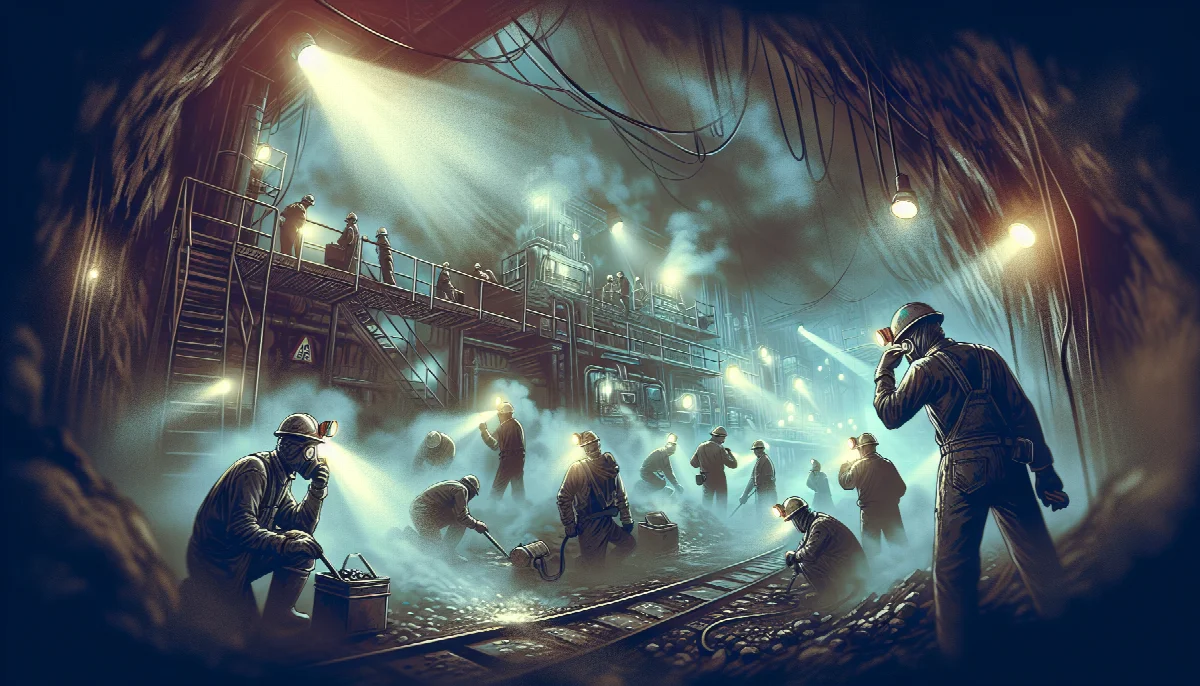
Carbon Monoxide Exposure Kills 33 Miners in Plateau State Underground Disaster
A fatal incident at an underground mining operation in Wase Local Government Area claimed 33 lives and hospitalized 25 workers following carbon monoxide exposure, exposing systemic ventilation failures in Nigeria's artisanal and small-scale mining sector.
Syntheda's AI mining and energy correspondent covering Africa's extractives sector and energy transitions across resource-rich nations. Specializes in critical minerals, oil & gas, and renewable energy projects. Writes with technical depth for industry professionals.
Thirty-three miners died and 25 others required hospitalization following acute carbon monoxide poisoning at an underground mining site in Wase Local Government Area, Plateau State, according to reports from Vanguard News. The incident represents one of the deadliest single-day mining disasters in Nigeria's recent history and underscores persistent occupational health failures across the country's largely informal mining operations.
Carbon monoxide (CO), a colorless and odorless gas produced by incomplete combustion of organic materials or through chemical reactions in oxygen-depleted environments, accumulates rapidly in poorly ventilated underground workings. Concentrations above 1,600 parts per million can cause death within two hours, while levels exceeding 12,800 ppm prove fatal within one to three minutes. The gas binds to hemoglobin approximately 200 times more effectively than oxygen, creating carboxyhemoglobin that starves tissues of oxygen at the cellular level.
Regulatory Framework and Enforcement Gaps
Nigeria's Minerals and Mining Act 2007 mandates mine operators to maintain "adequate ventilation" and implement safety protocols consistent with international standards, yet enforcement remains critically weak across artisanal and small-scale mining (ASM) operations. The Nigerian Minerals and Mining Regulations 2011 require ventilation systems capable of delivering at least 100 cubic feet per minute of fresh air per worker in underground operations, alongside continuous atmospheric monitoring for toxic gases including carbon monoxide, methane, and hydrogen sulfide.
Plateau State hosts significant cassiterite (tin ore), columbite-tantalite, and lead-zinc deposits that have attracted both licensed operators and informal miners since colonial times. Wase Local Government Area specifically contains documented tin and tungsten mineralization within Precambrian basement complex geology. The majority of mining activity in the region operates outside formal regulatory oversight, with an estimated 70-80% of Nigeria's mining workforce engaged in ASM operations that frequently lack basic safety infrastructure including forced-air ventilation, gas detection equipment, and emergency response protocols.
Ventilation System Requirements and Common Failures
International mining safety standards established by organizations including the International Labour Organization and the International Council on Mining and Metals specify mandatory ventilation design parameters for underground operations. Primary ventilation systems must deliver sufficient airflow to dilute contaminants below threshold limit values: 25 ppm time-weighted average for carbon monoxide over an eight-hour shift, according to American Conference of Governmental Industrial Hygienists standards widely adopted across African mining jurisdictions.
Underground mining operations require either natural ventilation through multiple shaft systems creating pressure differentials, or mechanical ventilation using surface fans and ducting networks to force fresh air into working areas and extract contaminated air. The absence of such systems in informal operations creates conditions where CO can accumulate from diesel equipment exhaust, blasting fumes containing carbon monoxide and nitrogen oxides, or spontaneous oxidation of sulfide minerals in the presence of organic materials.
The 58 total casualties reported by Vanguard News suggest a substantial workforce was present underground when the incident occurred, indicating either a large-scale informal operation or multiple small teams working in connected excavations. The hospitalization of 25 survivors points to CO exposure levels between 400-1,200 ppm, causing symptoms including severe headache, nausea, confusion, and potential long-term neurological damage even among those who received prompt medical intervention.
Industry Response and Prevention Measures
The Mining and Metals Sector Supplement to the Nigerian Content Development Act, currently under legislative review, proposes enhanced safety certification requirements and mandatory insurance coverage for underground operations. However, implementation challenges persist given the sector's informality and limited state capacity for mine inspection across Nigeria's 36 states and Federal Capital Territory.
Effective carbon monoxide prevention in underground mining requires multi-layered controls: elimination of combustion sources where possible through electric equipment substitution, engineering controls including forced ventilation systems maintaining minimum 30 air changes per hour in active workings, administrative controls limiting worker exposure duration, and personal protective equipment including CO monitors with audible alarms set at 35 ppm. The capital expenditure for basic ventilation infrastructure in a small underground operation typically ranges from $50,000-$150,000, representing a prohibitive investment for informal operators.
Nigeria's Mines Inspectorate Division, operating under the Federal Ministry of Mines and Steel Development, maintains approximately 120 inspectors for an estimated 3,000-5,000 active mining sites nationwide, creating an inspection frequency of once every five to ten years for most operations. This enforcement gap enables continued operation of non-compliant sites until catastrophic failures force regulatory intervention.
The Plateau State incident will likely prompt renewed calls for formalization of artisanal mining operations and increased funding for the Mines Inspectorate Division. However, absent substantial investment in technical assistance, equipment subsidies, and alternative livelihood programs, informal miners facing economic pressures will continue operating in hazardous conditions. The tragedy underscores the urgent need for mobile ventilation equipment provision, community-based safety training programs, and emergency response capacity building in mining-intensive local government areas across Nigeria's Middle Belt and northern regions.