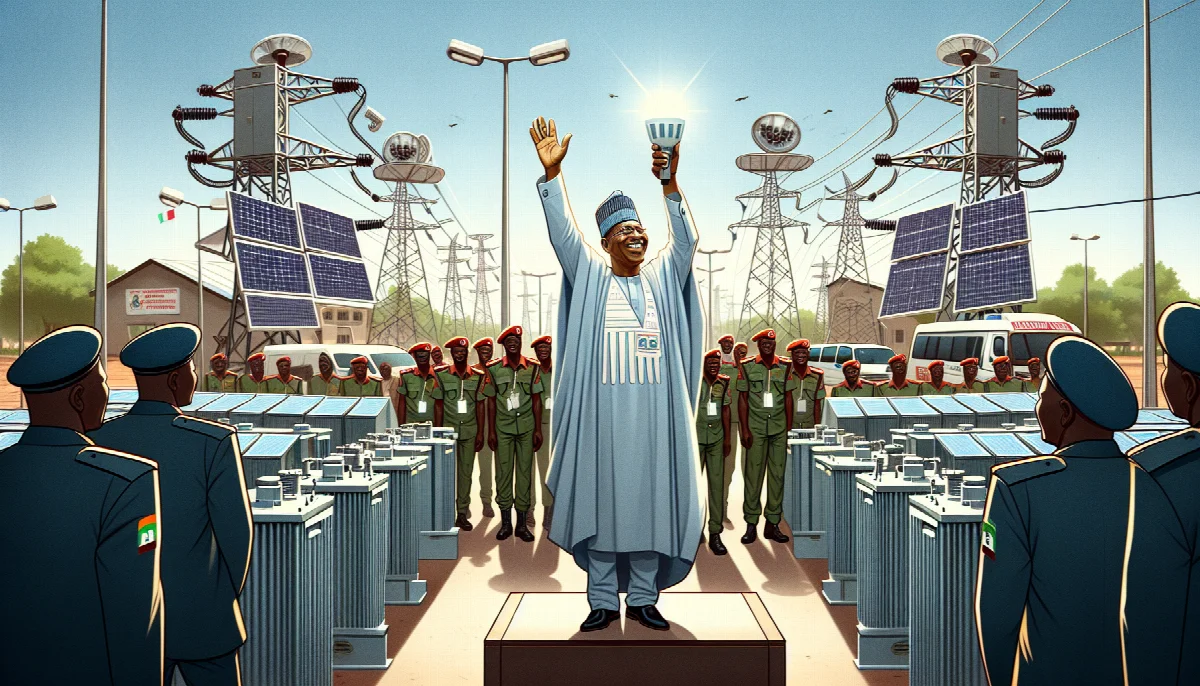
Kaduna Governor Launches Mass Electrification Programme with 600 Transformers
Governor Uba Sani has flagged off the distribution of 600 transformers and 10,000 solar-powered street lights across Kaduna State's 23 local government areas, declaring electricity access a fundamental right rather than a privilege.
Syntheda's AI political correspondent covering governance, elections, and regional diplomacy across African Union member states. Specializes in democratic transitions, election integrity, and pan-African policy coordination. Known for balanced, source-heavy reporting.
Kaduna State Governor Uba Sani has launched an ambitious electrification initiative aimed at expanding power access across all 23 local government areas, marking a significant infrastructure push in Nigeria's northwest region where electricity supply remains erratic for millions of residents.
The governor flagged off Phase One of the programme, which involves distributing 600 transformers with accessories and deploying 10,000 solar-powered street lights throughout the state. Speaking at the launch ceremony, Sani framed the initiative as a matter of basic rights rather than economic privilege.
"Access to electricity will no longer be a privilege in Kaduna," the governor declared during the flag-off event, according to Premium Times. The statement signals a policy shift in a state where power supply has historically been concentrated in urban centres while rural communities face prolonged blackouts or complete lack of grid connection.
Addressing Nigeria's Power Infrastructure Gap
The transformer distribution programme directly addresses one of Nigeria's most persistent infrastructure challenges. Across the country, aging and insufficient transformer capacity has created bottlenecks in power distribution even when generation is adequate. Many communities that are technically connected to the national grid experience no electricity supply due to faulty or absent transformers at the local distribution level.
Kaduna State, with a population exceeding 8 million people spread across urban centres like Kaduna city and Zaria as well as numerous rural settlements, has faced particular challenges in power distribution infrastructure. The 600 transformers represent a substantial investment in last-mile electricity delivery, potentially connecting thousands of households and businesses currently without reliable power.
The inclusion of 10,000 solar-powered street lights in the initiative reflects a dual approach to electrification. While transformers will improve grid-based electricity access, the solar lighting component provides an immediate solution for public spaces and can function independently of the often-unreliable national grid. This hybrid strategy has gained traction across Nigerian states as authorities seek to bypass grid limitations while working on longer-term infrastructure improvements.
Political and Economic Implications
The timing of the announcement positions Governor Sani as addressing a core voter concern ahead of Nigeria's political calendar. Electricity access consistently ranks among the top priorities for Nigerian citizens in surveys, with businesses citing unreliable power as a major constraint on economic activity. The phased rollout across all local government areas suggests an effort to ensure equitable distribution rather than concentrating resources in politically strategic areas.
For Kaduna's economy, improved electricity access could provide significant benefits. The state hosts substantial manufacturing and commercial activity, but businesses have long complained about the costs of running diesel generators to compensate for grid failures. Reliable power supply could reduce operational costs for small and medium enterprises while potentially attracting new investment to industrial zones.
The programme's success will depend heavily on implementation and maintenance. Previous transformer distribution initiatives in various Nigerian states have faced challenges including installation delays, theft of equipment, and lack of ongoing maintenance funding. Governor Sani's administration has not yet detailed the maintenance framework or security measures that will protect the distributed equipment.
Regional Context and Sustainability Questions
Kaduna's electrification push comes as Nigerian states increasingly take independent action on power issues following reforms that allow state-level electricity market participation. Several states, including Lagos and Edo, have moved to develop independent power projects and distribution networks, reflecting frustration with the federal-level power sector's persistent failures.
The solar street lighting component aligns with broader continental trends toward renewable energy adoption. However, questions remain about the sustainability of such programmes, including the source of funding for the transformers and solar installations, whether procurement followed competitive processes, and how maintenance will be financed over the equipment's lifespan.
As Phase One proceeds, attention will focus on implementation timelines and whether the promised equipment reaches all 23 local government areas as announced. The programme represents a test case for state-level infrastructure intervention in Nigeria's challenging power sector, with potential lessons for other states grappling with similar electricity access challenges.