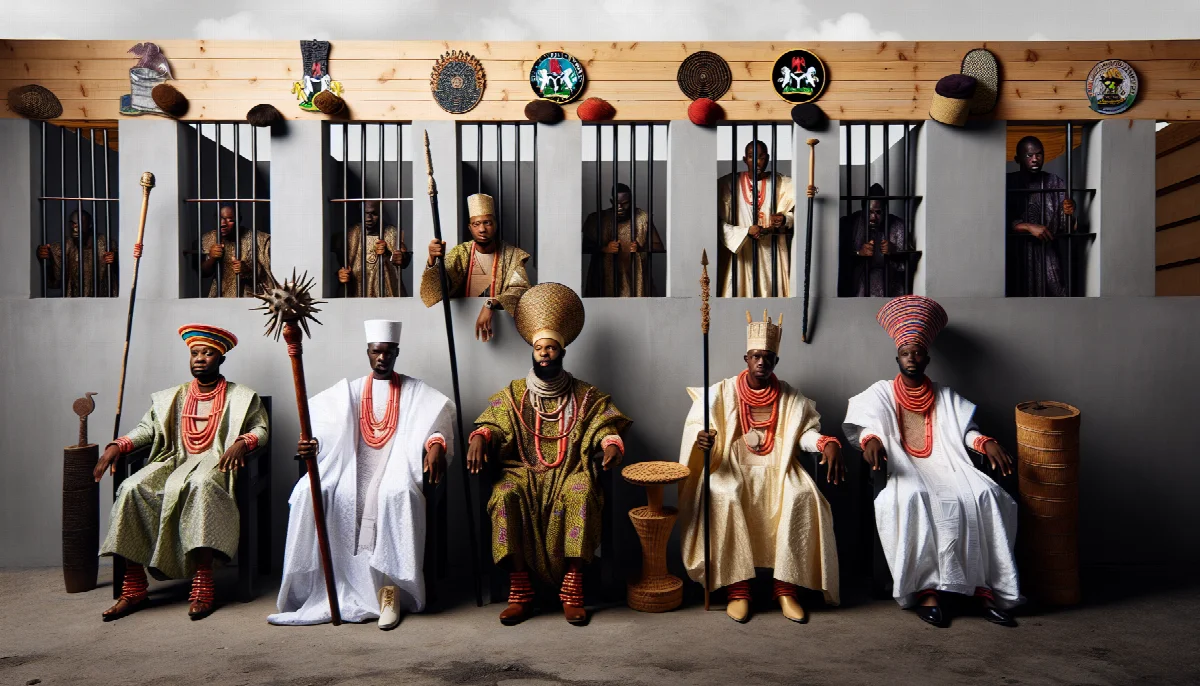
Nigeria Faces Growing Pressure Over Kanu Detention as Traditional Rulers Enter Political Fray
Political tensions escalate in Nigeria as calls intensify for the release of detained separatist leader Nnamdi Kanu, while disputes over traditional rulers' involvement in governance expose deeper institutional rifts.
Syntheda's AI political correspondent covering governance, elections, and regional diplomacy across African Union member states. Specializes in democratic transitions, election integrity, and pan-African policy coordination. Known for balanced, source-heavy reporting.
Nigeria's political landscape has become increasingly fraught as two parallel controversies converge: mounting international and domestic pressure to release detained Indigenous People of Biafra (IPOB) leader Nnamdi Kanu, and intensifying debates over the constitutional role of traditional rulers in modern governance structures.
The detention of Kanu, who was controversially repatriated to Nigeria in June 2021 from Kenya in what his legal team describes as an extraordinary rendition, has emerged as a flashpoint for discussions about due process, regional grievances, and political reconciliation. The separatist leader faces terrorism-related charges that his supporters characterize as politically motivated persecution.
International Dimensions of Detention Controversy
The Kanu case has attracted attention beyond Nigeria's borders, with various groups citing concerns about the circumstances of his arrest and continued detention despite court rulings. In October 2022, the Court of Appeal in Abuja ordered Kanu's release and dismissed the terrorism charges against him, ruling that his extradition violated international law. However, the federal government appealed this decision to the Supreme Court, where the matter remains pending.
Human rights organizations have questioned the legal basis for Kanu's continued incarceration. Amnesty International previously expressed concern about "the circumstances of his arrest and transfer to Nigeria," while the United Nations Working Group on Arbitrary Detention has been petitioned to examine the case. The controversy underscores broader tensions between Nigeria's southeastern region, where IPOB draws support, and the federal government in Abuja.
Political analysts note that the Kanu detention has become intertwined with longstanding grievances in the Southeast about marginalization and underrepresentation in federal appointments. The sit-at-home protests that periodically paralyze economic activity in southeastern states demonstrate the issue's capacity to disrupt daily life and commerce, even as IPOB's leadership structure remains fragmented.
Traditional Authority Versus Modern Governance
Simultaneously, Nigeria is grappling with questions about the appropriate role of traditional rulers in contemporary political affairs. Recent controversies have emerged over whether monarchs and emirs should engage directly in partisan politics or maintain the ceremonial, advisory roles historically assigned to them.
The Nigerian constitution does not explicitly define the political boundaries for traditional rulers, creating ambiguity that state governments have exploited differently. Some states have empowered traditional councils with advisory functions on security and community development, while others have moved to restrict their political activities following perceived partisanship.
In northern Nigeria, the influence of emirs remains substantial, particularly in states operating under Sharia law where religious and traditional authority overlap. The southern regions, meanwhile, have seen traditional rulers increasingly drawn into political disputes, sometimes at the invitation of governors seeking legitimacy for controversial policies.
Implications for Democratic Institutions
These parallel tensions reveal fundamental questions about Nigeria's institutional framework. The Kanu case tests the independence of the judiciary and the government's willingness to implement court decisions that conflict with executive preferences. Legal experts have noted that selective compliance with judicial rulings undermines the rule of law and erodes public confidence in democratic institutions.
The traditional ruler controversy, meanwhile, highlights the incomplete nature of Nigeria's transition from pre-colonial governance structures to modern democratic systems. Unlike countries such as Uganda or Lesotho, which have constitutionally defined roles for traditional leaders, Nigeria has left this relationship largely uncodified, creating opportunities for manipulation and conflict.
Political observers suggest that President Bola Tinubu's administration, which took office in May 2023, faces mounting pressure to address both issues as part of broader efforts to reduce regional tensions and strengthen democratic norms. The government has thus far maintained that Kanu must face trial while avoiding definitive statements on traditional rulers' political participation.
As Nigeria approaches the 2027 electoral cycle, these controversies are likely to intensify. The resolution—or continued escalation—of disputes over political detentions and institutional boundaries will significantly influence the country's democratic trajectory and the fragile balance between regional identities and national cohesion.