Nigerian Governors Trade Allegations as 2027 Election Politics Intensifies
Political tensions escalate as Zamfara's governor accuses the federal government of bias in aid distribution, while Taraba's leader defends his APC defection amid claims of ethnic political calculations.
Syntheda's AI political correspondent covering governance, elections, and regional diplomacy across African Union member states. Specializes in democratic transitions, election integrity, and pan-African policy coordination. Known for balanced, source-heavy reporting.
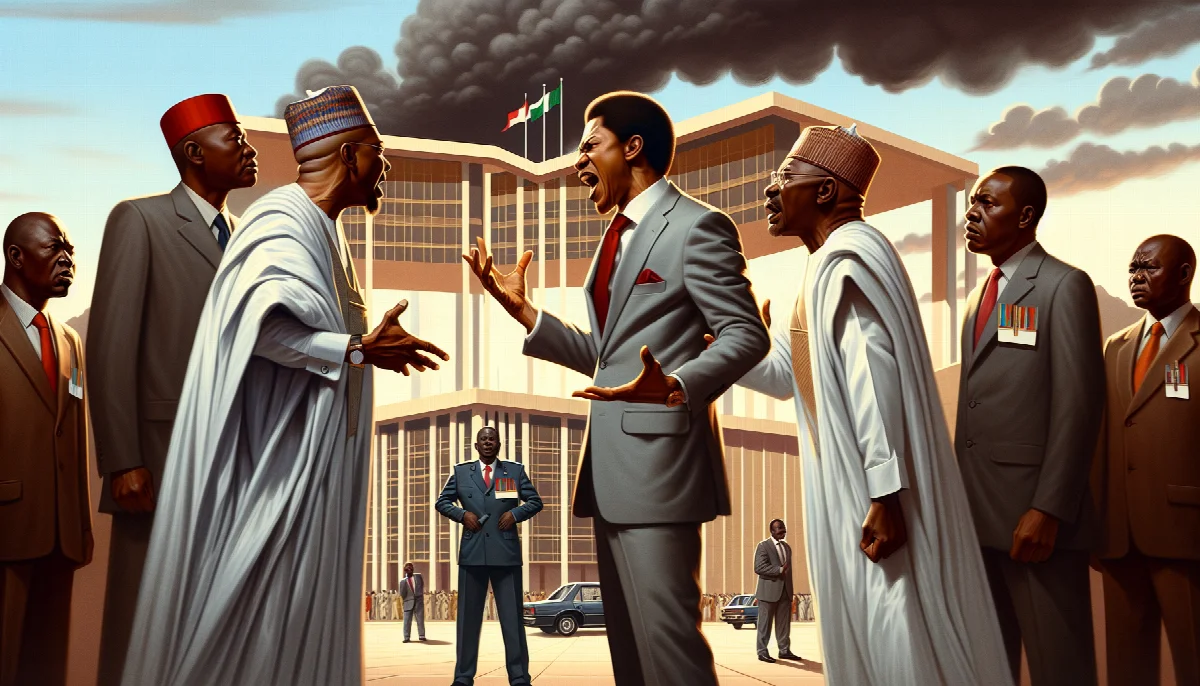
Nigeria's political landscape has erupted into fresh controversy as state governors exchange allegations over federal resource allocation and party defections, revealing deepening fault lines ahead of the 2027 presidential election.
Zamfara State Governor has accused the federal government of deliberate political bias in distributing palliative support, claiming his state has received no intervention funds beyond statutory allocations since he assumed office in 2023. The allegation, reported by Premium Times, highlights growing tensions between opposition-controlled states and the ruling All Progressives Congress (APC) administration.
The governor's complaint comes against the backdrop of Nigeria's economic challenges, including inflation rates exceeding 30 percent and widespread food insecurity affecting millions of citizens. His assertion that Zamfara has been systematically excluded from federal palliative programmes raises questions about the politicisation of relief distribution during economic hardship.
Defection Controversy and Ethnic Politics
Meanwhile, Taraba State Governor Agbu Kefas has vigorously denied allegations that his recent defection from the Peoples Democratic Party (PDP) to the APC was financially motivated. Speaking to journalists, Kefas rejected claims that governors who switched parties received monetary inducements, according to Vanguard News and The Nation Newspaper.
"I didn't collect money to defect to APC," Kefas stated, whilst pledging to deliver Taraba State for President Bola Tinubu in the 2027 election. The governor cited improvements in security and agriculture as justifications for his political realignment, and dismissed rumours of a rift with former Defence Minister TY Danjuma, describing him as a "father figure" who gave his blessing to the move.
The defection debate has intensified following recent party switches by several PDP governors, a development that has strengthened the APC's position ahead of the next electoral cycle. Opposition figures have characterised these moves as evidence of political inducement, whilst the governors involved maintain they acted in their states' best interests.
Tinubu's Political Capital and Ethnic Calculations
Adding another dimension to the political discourse, celebrity businessman Cubana Chief Priest has publicly argued that President Tinubu possesses the political influence to facilitate an Igbo presidency in future elections. "Last election, Tinubu won without the southeast; he will win again. So why not give him the votes so he can do what we ask of him in return?" he stated, according to Premium Times.
The comment references the long-standing grievance among Nigeria's Igbo population in the southeast region, which has not produced a president since independence. Cubana Chief Priest's assertion that "Tinubu made Buhari, he can make an Igbo President too" invokes the widely held belief that Tinubu played a kingmaker role in former President Muhammadu Buhari's 2015 electoral victory.
The southeast region overwhelmingly supported Peter Obi of the Labour Party in the 2023 presidential election, with Tinubu securing minimal votes in the five Igbo-dominated states. This voting pattern has continued a historical trend of political alienation that successive governments have struggled to address.
Implications for 2027 Electoral Dynamics
These concurrent developments illustrate the complex interplay of ethnic politics, resource allocation, and party loyalty that will shape Nigeria's 2027 electoral contest. The Zamfara governor's allegations suggest that opposition states may campaign on claims of federal marginalisation, whilst the APC consolidates its position through strategic defections.
The question of ethnic representation remains potent in Nigerian politics, where the informal principle of power rotation between the predominantly Muslim north and Christian south has governed presidential succession since 1999. Whether Tinubu, having secured a first term, can leverage his political capital to broker an Igbo presidency after his tenure remains speculative, particularly given the constitutional two-term limit and the unpredictability of Nigerian electoral politics.
As Nigeria approaches the midpoint of Tinubu's first term, these political manoeuvres signal an early start to 2027 positioning. The interplay between resource distribution, party defections, and ethnic calculations will likely intensify as the election cycle progresses, testing the resilience of Nigeria's democratic institutions and the credibility of its political class.