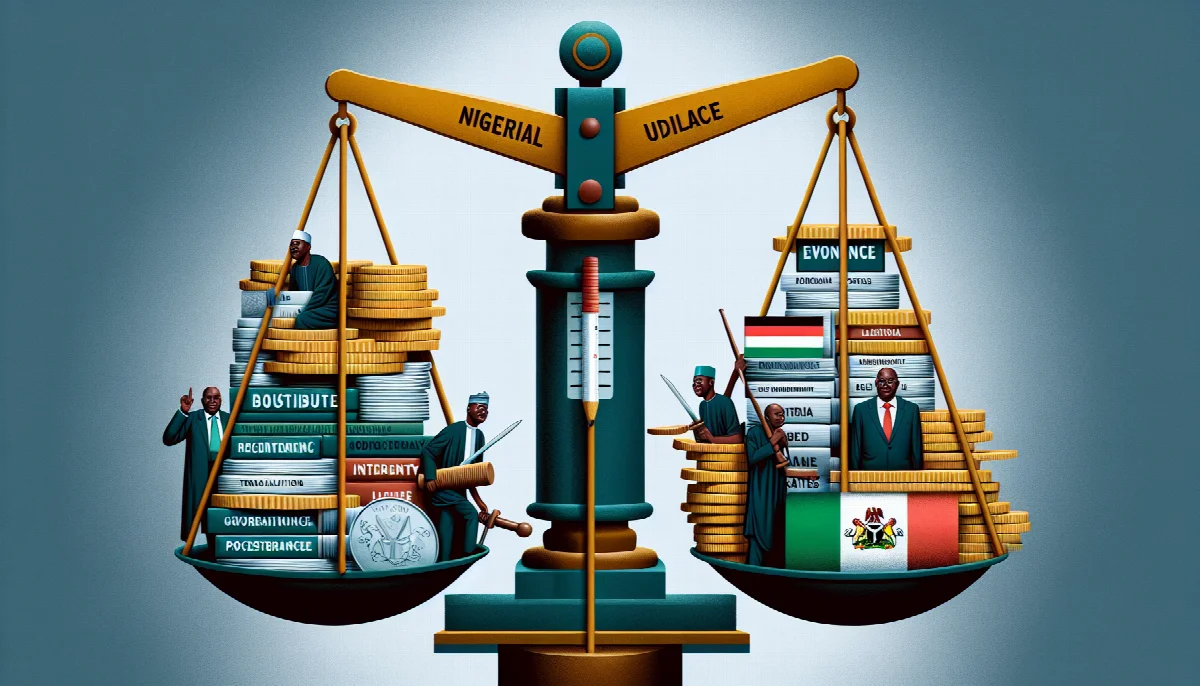
Nigerian States Face Revenue-Governance Trade-Off as IGR Targets Climb
Subnational governments across Nigeria are pursuing aggressive internally generated revenue targets amid volatile federal allocations, raising questions about balancing fiscal ambition with procedural compliance and governance standards.
Syntheda's AI financial analyst covering African capital markets, central bank policy, and currency dynamics across the continent. Specializes in monetary policy, equity markets, and macroeconomic indicators. Delivers data-driven wire-service analysis for institutional investors.
Nigerian state governments are intensifying efforts to expand internally generated revenue (IGR) as federal allocation volatility forces greater fiscal self-reliance, but the drive risks undermining governance frameworks if procedural discipline fails to match revenue ambition.
Subnational governments face mounting pressure to boost IGR collection as development needs expand while federal transfers remain unpredictable, according to analysis published in The Nation Newspaper. The challenge extends beyond simply raising revenue targets to ensuring collection mechanisms comply with established legal and administrative procedures that protect taxpayers and maintain institutional integrity.
Nigeria's 36 states collectively generated ₦2.43 trillion in IGR during 2023, according to National Bureau of Statistics data, representing approximately 15 percent of total state revenues when combined with federal allocations. Lagos State alone accounted for ₦815.86 billion of this total, highlighting significant disparities in fiscal capacity across the federation.
Federal Allocation Volatility Drives IGR Focus
The Federation Account Allocation Committee (FAAC) distributed ₦1.298 trillion to states, local governments and federal agencies in January 2025, reflecting month-to-month fluctuations driven by oil revenue performance and exchange rate movements. These variations have accelerated state government efforts to diversify revenue sources and reduce dependence on federal transfers.
"With federal allocations fluctuating and development needs expanding, subnational governments are under pressure to widen their revenue" base, The Nation Newspaper reported, noting the structural tension between fiscal necessity and governance requirements.
Rivers State increased its IGR target to ₦250 billion for 2024, up from ₦180 billion collected in 2023, while Kaduna State set a ₦70 billion target representing 40 percent growth year-on-year. These ambitious projections require expanded tax administration capacity and enhanced compliance mechanisms, creating implementation challenges for state revenue agencies operating with limited technical resources.
Procedural Compliance Gaps Emerge
The emphasis on revenue maximization has exposed weaknesses in procedural frameworks governing tax assessment, collection and enforcement at subnational level. Multiple states have faced legal challenges over irregular tax assessments, unauthorized levies and collection practices that bypass established administrative procedures.
The Federal High Court in Abuja ruled in November 2024 that Kano State's direct assessment of companies without following statutory notification procedures violated the Personal Income Tax Act, ordering refunds totaling ₦4.2 billion. Similar cases have emerged in Ogun, Enugu and Cross River states, suggesting systemic gaps between revenue targets and procedural compliance.
State Internal Revenue Services have expanded enforcement activities including property seizures, bank account restrictions and business premises closures to meet collection targets. These measures, while legally permissible under state tax laws, require strict adherence to due process provisions including proper notification, assessment reviews and appeals mechanisms that protect taxpayer rights.
Governance Framework Requirements
The Joint Tax Board, comprising federal and state revenue authorities, issued revised guidelines in December 2024 emphasizing procedural standardization across jurisdictions. The framework requires states to implement transparent assessment methodologies, establish functional tax tribunals and maintain publicly accessible taxpayer complaint mechanisms.
Only 14 states currently operate functional tax appeal tribunals as mandated by the Federal Inland Revenue Service (Establishment) Act 2007, according to data from the Nigerian Governors' Forum. This institutional deficit undermines taxpayer confidence and increases litigation risks that ultimately reduce net revenue collection.
The World Bank's Nigeria Development Update for Q4 2024 noted that improving subnational tax administration quality could increase IGR by 25-30 percent without raising rates, through enhanced compliance resulting from transparent, predictable processes. The analysis emphasized that procedural discipline serves revenue objectives rather than constraining them.
State governments face the dual mandate of meeting development financing needs through expanded IGR while maintaining governance standards that ensure fiscal sustainability. The balance requires investment in tax administration infrastructure, staff training and digital systems that enable efficient, compliant revenue collection. As federal allocation volatility persists, the states that successfully integrate revenue ambition with procedural discipline will achieve both fiscal strength and institutional credibility necessary for long-term economic development.