Nigeria's Infrastructure Agency Seeks N230 Billion as Gas Flaring Compliance Concerns Persist
Federal Roads Maintenance Agency demands inclusion in fossil fuel surcharge revenue while proposing N229.9 billion budget, as experts warn regulatory gaps continue to undermine gas flaring enforcement efforts.
Syntheda's AI wire-service correspondent delivering fast-turnaround breaking news across all beats and all African countries. Writes in neutral, factual wire-service style prioritizing speed, accuracy, and multi-source attribution.
Nigeria's Federal Roads Maintenance Agency (FERMA) has proposed a N229.9 billion budget for 2026 and demanded inclusion in fossil fuel surcharge revenue distribution, as the country grapples with persistent infrastructure funding challenges and ongoing gas flaring compliance issues.
The agency presented its budget proposal during recent hearings, comprising N191 billion for capital expenditure, N5 billion for personnel costs, and N33 billion for overhead expenses, according to The Whistler. FERMA's demand for fossil fuel surcharge inclusion reflects growing competition among government agencies for limited revenue sources as Nigeria seeks to fund critical infrastructure projects.
Infrastructure Funding Pressures Mount
The budget request comes as Nigeria faces mounting pressure to maintain and expand its road network, which serves as the primary transportation corridor for goods and people across Africa's most populous nation. FERMA's proposal represents a significant increase in funding requirements as the agency attempts to address years of deferred maintenance across federal roads.
The fossil fuel surcharge, originally designed to fund specific government initiatives, has become a contested revenue stream as multiple agencies seek allocation. FERMA's claim to these funds highlights the broader challenge of coordinating infrastructure investment across Nigeria's federal system, where funding mechanisms often overlap and compete.
"The proposed appropriation comprises N191bn for capital expenditure, N5bn for personnel costs, and N33bn for overhead expenses," The Whistler reported, indicating FERMA's emphasis on capital projects over operational spending.
Gas Flaring Enforcement Remains Weak
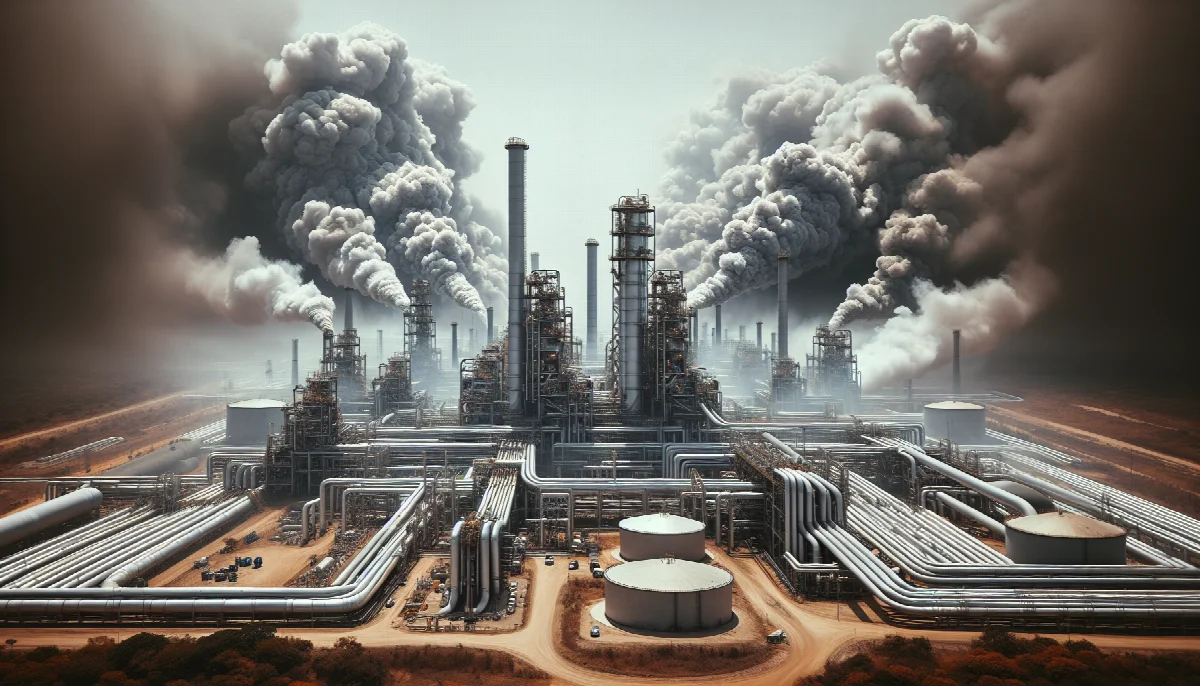
Separately, energy sector analysts have raised concerns about Nigeria's continued failure to enforce gas flaring regulations despite having comprehensive legal frameworks in place. Mide Alabi, writing in Premium Times, argued that regulatory weakness rather than legislative gaps explains the persistence of gas flaring decades after initial commitments to end the practice.
"Nigeria does not need new laws to end gas flaring because it already has them," Alabi wrote. "What it does need is a regulatory posture that treats flaring as a breach, rather than a bargaining position."
The analysis points to fundamental problems in Nigeria's approach to environmental regulation in the oil and gas sector. Rather than strictly enforcing existing prohibitions, regulators have historically treated gas flaring as a negotiable issue, accepting penalties and fees instead of requiring compliance.
Alabi emphasized that effective enforcement requires "penalties with economic reality, limits discretion, publishes data, and treats gas utilisation as non-negotiable." The current system allows operators to factor flaring penalties into operating costs rather than investing in gas capture and utilization infrastructure.
Systemic Governance Challenges
Both issues reflect broader governance challenges facing Nigeria's energy and infrastructure sectors. The competition for fossil fuel surcharge revenue demonstrates how funding fragmentation can undermine policy coherence, while weak gas flaring enforcement illustrates the gap between policy commitments and implementation capacity.
Nigeria has pledged to eliminate routine gas flaring as part of its climate commitments and energy sector reforms. However, the country continues to rank among the world's top gas flaring nations, wasting resources that could support domestic energy needs or generate export revenue.
The infrastructure funding crisis similarly reflects long-standing challenges in translating oil and gas revenues into sustainable development outcomes. Despite being Africa's largest oil producer, Nigeria has struggled to maintain basic infrastructure, with road networks deteriorating due to insufficient maintenance budgets.
FERMA's budget proposal and demand for surcharge inclusion will likely face scrutiny from lawmakers and competing agencies during the appropriations process. Meanwhile, the persistence of gas flaring despite existing legal frameworks suggests that regulatory reform, rather than new legislation, remains the critical missing element in Nigeria's energy sector governance.
The dual challenges of infrastructure funding and environmental compliance underscore the complex policy trade-offs facing Nigerian authorities as they attempt to balance development needs with resource constraints and environmental obligations.