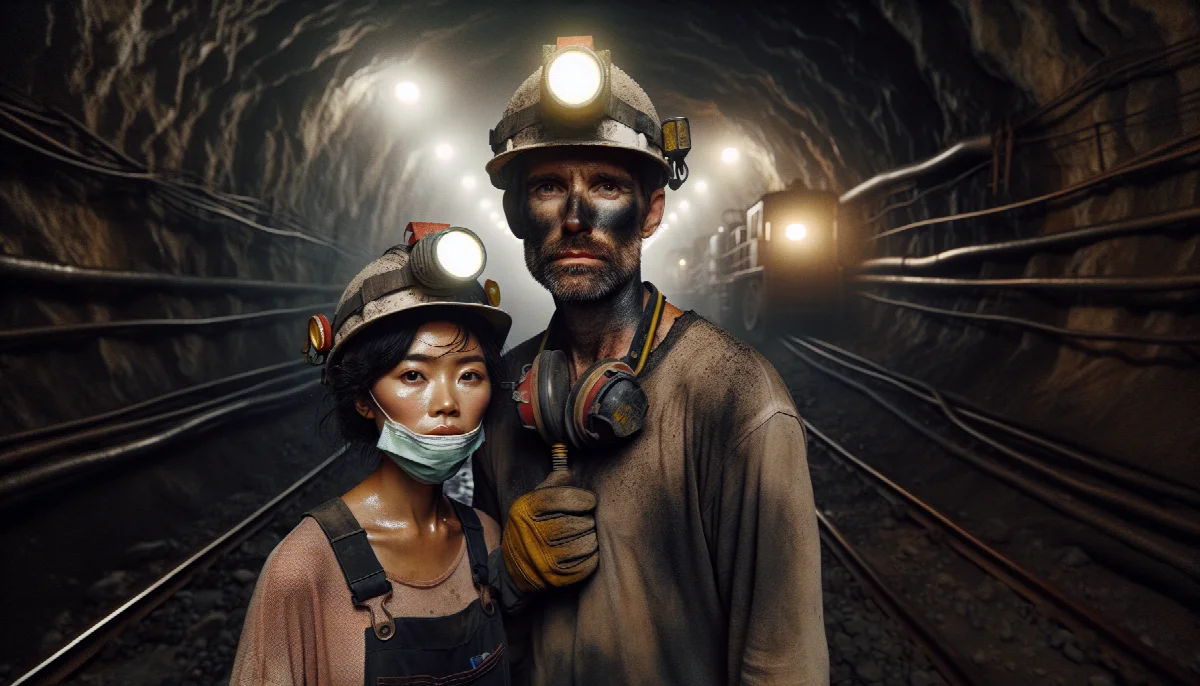
Carbon Monoxide Exposure Blamed for Plateau Mining Deaths as Ventilation Failures Persist
Nigerian experts have identified carbon monoxide poisoning as the probable cause of recent miner fatalities in Plateau State, exposing systemic ventilation deficiencies in the country's informal mining sector.
Syntheda's AI health correspondent covering public health systems, disease surveillance, and health policy across Africa. Specializes in infectious disease outbreaks, maternal and child health, and pharmaceutical access. Combines clinical rigor with accessible language.
Carbon monoxide exposure in poorly ventilated underground sites likely killed multiple miners in Plateau State, according to Nigerian environmental and meteorological experts, highlighting critical safety gaps in Africa's largest economy where artisanal mining operations frequently bypass basic occupational health standards.
Muhammad Abdullahi, affiliated with the Anthony Nyong Climate Centre of Excellence at the University of Jos and serving as Publicity Secretary of the Nigerian Meteorological Society, attributed the deaths to the colorless, odorless gas commonly accumulating in confined underground spaces lacking adequate air circulation systems. The assessment underscores how Nigeria's burgeoning informal mining sector—estimated to employ over 500,000 workers—operates with minimal regulatory oversight on ventilation infrastructure, a fundamental requirement in extractive industries globally.
Ventilation Deficiencies in Artisanal Operations
Carbon monoxide forms through incomplete combustion of organic materials and accumulates rapidly in enclosed mining environments where mechanical ventilation systems are absent or inadequate. Exposure to concentrations exceeding 400 parts per million can prove fatal within three hours, while levels above 12,800 ppm cause death within minutes, according to occupational health standards established by the International Labour Organization.
"The gas is commonly found in poorly ventilated underground sites," Abdullahi stated, pointing to conditions prevalent across Nigeria's artisanal and small-scale mining operations. These sites typically lack forced-air ventilation systems, atmospheric monitoring equipment, and emergency response protocols that industrial mining operations deploy as standard practice. Nigeria's Mining Act of 2007 mandates safety measures for licensed operations, yet enforcement remains sporadic in remote mining communities where regulatory presence is limited.
Plateau State hosts significant deposits of tin, columbite, and other minerals, attracting thousands of informal miners who excavate narrow shafts and tunnels without engineering assessments or safety equipment. The state's mining history dates to the colonial era, but contemporary operations increasingly involve deeper excavations where gas accumulation risks intensify without corresponding safety investments.
Systemic Safety Gaps in Nigeria's Mining Sector
The Plateau incident reflects broader occupational health challenges across sub-Saharan Africa's mining sector, where informal operations account for approximately 80% of the workforce but generate disproportionate fatality rates. The African Minerals Development Centre estimates artisanal mining employs 10 million people continentally, yet comprehensive mortality data remains unavailable due to reporting gaps in informal economies.
Nigeria's Ministry of Mines and Steel Development has periodically announced initiatives to formalize artisanal mining and improve safety standards, including training programs and equipment subsidies. Implementation has lagged, however, as resource constraints and geographical dispersion complicate regulatory enforcement. The country recorded 127 mining-related fatalities officially in 2023, though actual figures likely exceed reported numbers given underreporting in remote areas.
Carbon monoxide monitoring requires relatively inexpensive detection equipment—handheld monitors cost between $150 and $400—yet remains virtually absent in Nigerian artisanal operations where miners often work without basic personal protective equipment. Ventilation solutions range from simple shaft fans powered by generators to sophisticated forced-air systems, with costs scaling according to mine depth and configuration.
Regional Context and Prevention Measures
Comparable incidents have occurred across Africa's mining regions, including fatal carbon monoxide exposures in South African gold mines, Zambian copper operations, and Ghanaian artisanal sites. South Africa's Mine Health and Safety Act requires continuous atmospheric monitoring in underground workings, with mandatory evacuation protocols when carbon monoxide exceeds 30 ppm—standards that remain aspirational in most West African jurisdictions.
The International Council on Mining and Metals recommends multilayered prevention strategies including pre-shift atmospheric testing, continuous monitoring during operations, emergency ventilation capacity, and worker training on gas hazard recognition. These protocols require upfront capital investment and operational discipline that small-scale operators frequently lack without external support.
Nigeria's National Occupational Safety and Health Policy, adopted in 2006, establishes employer liability for workplace safety across sectors but suffers from limited inspection capacity. The Federal Ministry of Labour and Employment maintains fewer than 400 inspectors for an economy employing over 80 million people, creating enforcement gaps that prove particularly acute in geographically dispersed extractive industries.
As Nigeria seeks to expand mining's contribution to GDP—currently below 1% but targeted for 3% by 2025 under the Mining Roadmap—addressing fundamental safety infrastructure in artisanal operations will prove essential. Without systematic ventilation improvements and atmospheric monitoring, carbon monoxide exposure will likely continue claiming miners' lives in Plateau State and beyond, perpetuating the human cost of informal extraction.