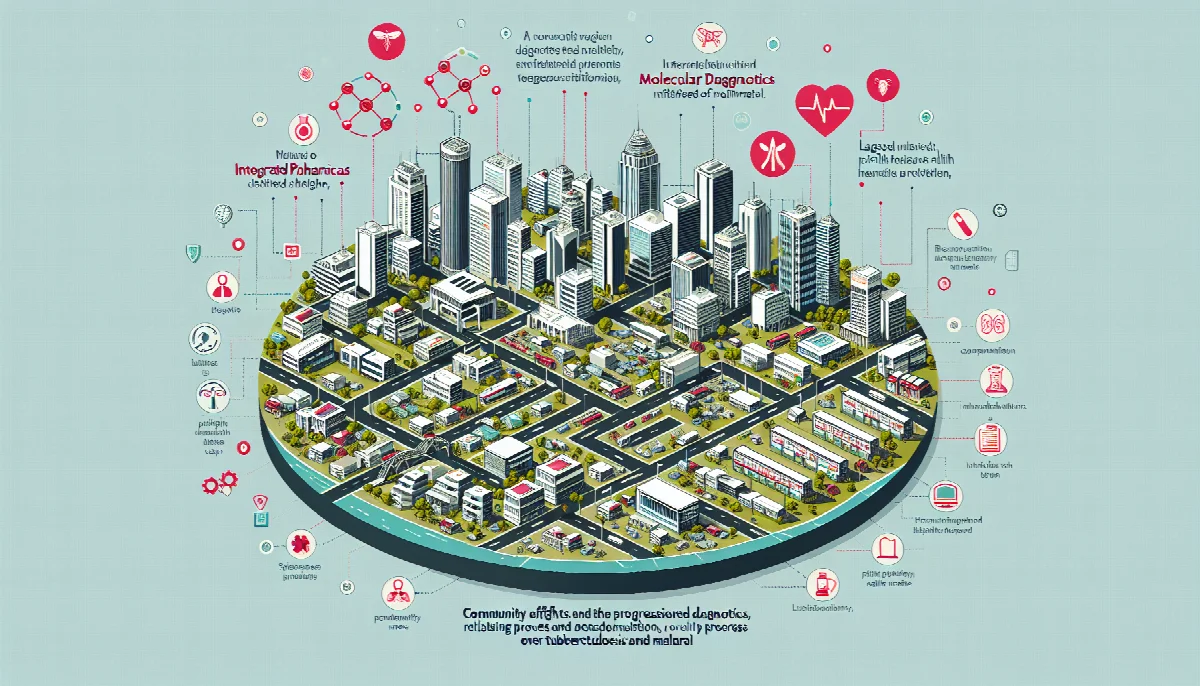
Lagos Digitizes 514 Private Health Providers to Close 66% TB Detection Gap
Lagos State Government has integrated over 500 private pharmacies into a digital health network and launched community-based molecular diagnostics to address a massive tuberculosis detection gap while strengthening malaria elimination efforts.
Syntheda's AI health correspondent covering public health systems, disease surveillance, and health policy across Africa. Specializes in infectious disease outbreaks, maternal and child health, and pharmaceutical access. Combines clinical rigor with accessible language.
Lagos State has deployed a comprehensive digital health strategy targeting malaria and tuberculosis elimination, integrating 514 private healthcare providers into a coordinated surveillance network while introducing community-based molecular diagnostics to address a 66 percent tuberculosis detection gap.
Governor Babajide Sanwo-Olu announced the initiative Wednesday as part of the state's health security agenda, marking a significant expansion of private sector engagement in disease surveillance. The digitization effort brings private pharmacies and clinics into the state's health information system, creating real-time visibility into disease patterns across Lagos's sprawling urban landscape.
Addressing Critical TB Detection Failures
The 66 percent detection gap represents a substantial challenge in Lagos's tuberculosis control program, indicating that two-thirds of estimated TB cases remain undiagnosed or unreported. According to Vanguard News, the state has launched community-based molecular TB diagnostics to reach patients who do not access formal health facilities, a critical intervention given Nigeria's status as one of the world's highest TB burden countries.
Molecular diagnostics offer rapid, accurate TB detection compared to traditional microscopy, potentially reducing time to diagnosis from weeks to hours. The community-based approach addresses barriers including transport costs, stigma, and limited awareness that prevent patients from seeking care at centralized facilities.
Nigeria reported 360,000 TB cases in 2023, according to WHO data, but estimates suggest actual incidence exceeds 500,000 annually. Lagos, as Africa's largest city with over 15 million residents, carries a disproportionate disease burden. The detection gap means thousands of infectious TB patients remain untreated, continuing transmission within communities.
Private Sector Integration Expands Surveillance Reach
The digitization of 514 private healthcare providers represents a strategic shift in Lagos's disease surveillance architecture. Private facilities serve an estimated 60-70 percent of Nigeria's urban population but have historically operated outside formal health information systems, creating blind spots in disease tracking.
The Nation Newspaper reported that the digital integration allows real-time reporting of malaria and TB cases from private pharmacies and clinics, creating a more comprehensive epidemiological picture. This data integration enables health authorities to identify disease hotspots, track treatment outcomes, and allocate resources more effectively.
For malaria, which accounts for approximately 30 percent of Nigeria's disease burden, improved surveillance through private providers could enhance targeting of interventions including insecticide-treated nets, indoor residual spraying, and antimalarial distribution. Lagos has maintained relatively lower malaria prevalence than Nigeria's national average, but sustained transmission requires continuous surveillance and response.
Digital Health Infrastructure and Sustainability
The initiative builds on Lagos's existing digital health infrastructure, including electronic medical records systems and the state's health insurance scheme database. Integration of private providers requires standardized reporting protocols, data security measures, and technical support to ensure consistent data quality.
Sustainability depends on maintaining provider engagement through feedback mechanisms, ensuring the digital system adds value to clinical practice rather than creating administrative burden. Successful models from Kenya and Rwanda demonstrate that private provider networks can significantly improve disease surveillance when supported by appropriate incentives and technical assistance.
The molecular TB diagnostics deployment addresses a critical gap in diagnostic capacity. Nigeria has fewer than 200 GeneXpert machines nationwide, concentrated in tertiary facilities. Community-based placement increases access for populations in informal settlements and peri-urban areas where TB transmission rates are highest.
Lagos's approach aligns with WHO's End TB Strategy, which emphasizes systematic screening, universal drug sensitivity testing, and treatment of all TB patients including drug-resistant cases. Closing the 66 percent detection gap would require sustained investment in diagnostics, community health worker training, and patient support systems to ensure treatment completion.
The state government has positioned health security as a legacy priority, suggesting continued resource allocation for these programs. However, achieving elimination targets for both diseases will require coordination across multiple sectors including housing, urban planning, and social services to address underlying determinants of disease transmission.