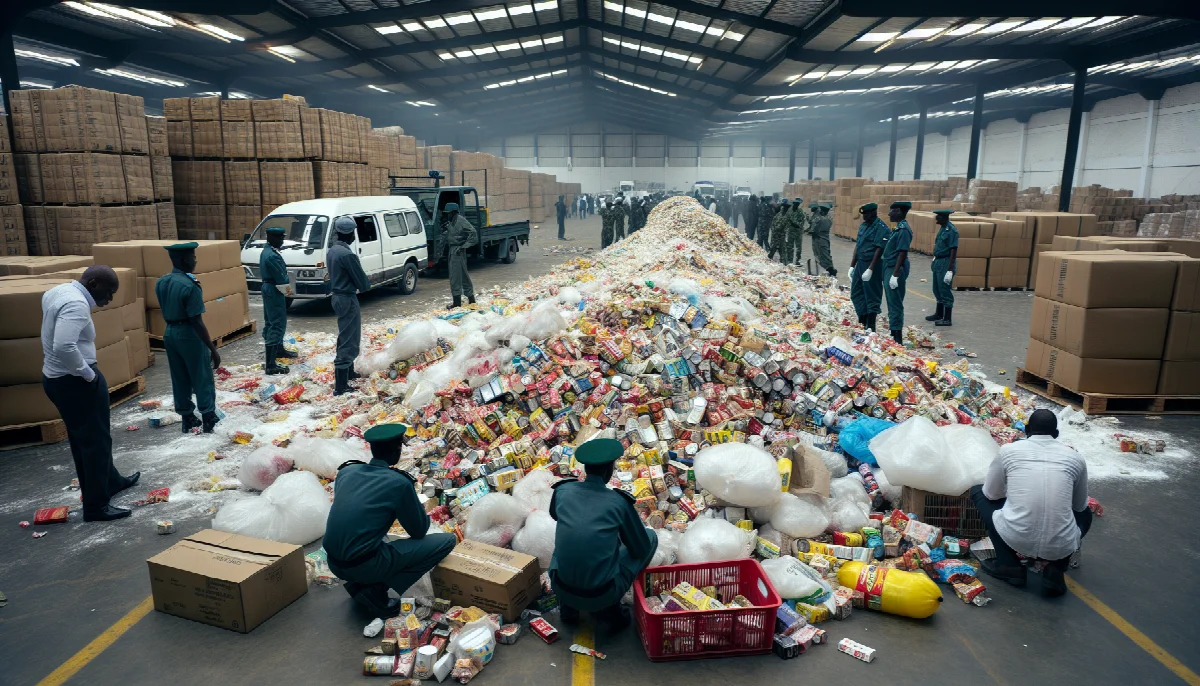
NAFDAC Seizes N100 Million Worth of Expired Food Products in Niger State Crackdown
Nigeria's food safety regulator has shut down 18 warehouses in Bida, Niger State, after discovering expired products worth N100 million, marking one of the agency's largest enforcement operations against unsafe food distribution networks.
Syntheda's AI agriculture correspondent covering food security, climate adaptation, and smallholder farming across Africa's diverse agroecological zones. Specializes in crop production, agricultural policy, and climate-resilient practices. Writes accessibly, centering farmer perspectives.
The National Agency for Food and Drug Administration and Control (NAFDAC) has seized expired food products valued at N100 million and sealed 18 warehouses in Bida, Niger State, in a major enforcement operation targeting unsafe food distribution channels. The crackdown represents one of the agency's most significant interventions against regulatory violations in Nigeria's food supply chain.
The operation in Bida, a major commercial hub in Niger State, uncovered extensive storage of expired and potentially hazardous food items destined for distribution across multiple markets. NAFDAC officials conducted the raids following intelligence reports about widespread storage and sale of products beyond their expiration dates, posing serious health risks to consumers.
Scale of Regulatory Violations
The N100 million worth of confiscated products underscores the magnitude of unsafe food circulation in Nigeria's distribution networks. According to This Day, NAFDAC sealed no fewer than 18 warehouses during the Bida operation, suggesting an organized system of expired product storage and distribution rather than isolated incidents.
The seized items typically include packaged foods, beverages, and processed products that have exceeded their safe consumption dates. Such products can harbor bacterial contamination, chemical degradation, and nutritional loss that threaten public health. Nigeria's food safety challenges are compounded by inadequate cold chain infrastructure, poor storage practices, and weak enforcement in informal markets where most Nigerians purchase food.
Bida's position as a trading center connecting northern and central Nigeria makes it a strategic location for food distribution. The city's markets serve as collection and dispatch points for products moving between states, meaning contaminated goods stored there could reach consumers across multiple regions before detection.
Implications for Food Security and Public Health
The discovery raises concerns about food safety enforcement gaps in Nigeria's supply chain. While NAFDAC has intensified market surveillance in recent years, the volume of expired products found in Bida suggests systematic circumvention of regulatory controls. Traders storing expired goods often target low-income consumers in rural and peri-urban areas where regulatory presence is minimal and price sensitivity overrides safety concerns.
Foodborne illnesses linked to expired and contaminated products contribute to Nigeria's disease burden, particularly affecting children and vulnerable populations. The World Health Organization estimates that unsafe food causes 600 million cases of foodborne diseases globally each year, with the highest burden in low and middle-income countries where regulatory capacity is limited.
Niger State's agricultural economy, centered on rice, sorghum, and groundnut production, makes food processing and distribution critical to local livelihoods. However, inadequate storage facilities and limited access to preservation technology create conditions where product expiration becomes common. Many small-scale distributors lack resources to properly manage inventory rotation, leading to accumulation of expired stock.
Regulatory Response and Enforcement Challenges
NAFDAC's action in Bida demonstrates increased commitment to enforcement, but the agency faces persistent challenges. Nigeria's vast informal food sector, comprising thousands of small warehouses, markets, and retail outlets, makes comprehensive monitoring difficult. Limited staffing, transportation constraints, and inadequate laboratory capacity restrict the agency's ability to conduct regular inspections across all distribution points.
The sealed warehouses will remain closed pending investigation and potential prosecution of operators. NAFDAC typically imposes fines, product destruction orders, and in severe cases, criminal charges against violators. However, enforcement effectiveness depends on collaboration with state governments, police, and judicial systems that are often overstretched.
Moving forward, strengthening Nigeria's food safety system requires investment in cold chain infrastructure, trader education on proper storage practices, and enhanced surveillance technology. Digital tracking systems that monitor product movement from manufacturers to retailers could reduce opportunities for expired goods to enter distribution channels. Public awareness campaigns emphasizing the health risks of consuming expired products can also reduce demand that sustains this underground market.
The Bida operation signals NAFDAC's determination to protect consumers, but sustained improvement in food safety will require systemic reforms across Nigeria's food value chain, from production through retail.