Nigeria Deploys Multi-Front Security Operations to Combat Crime and Transnational Threats
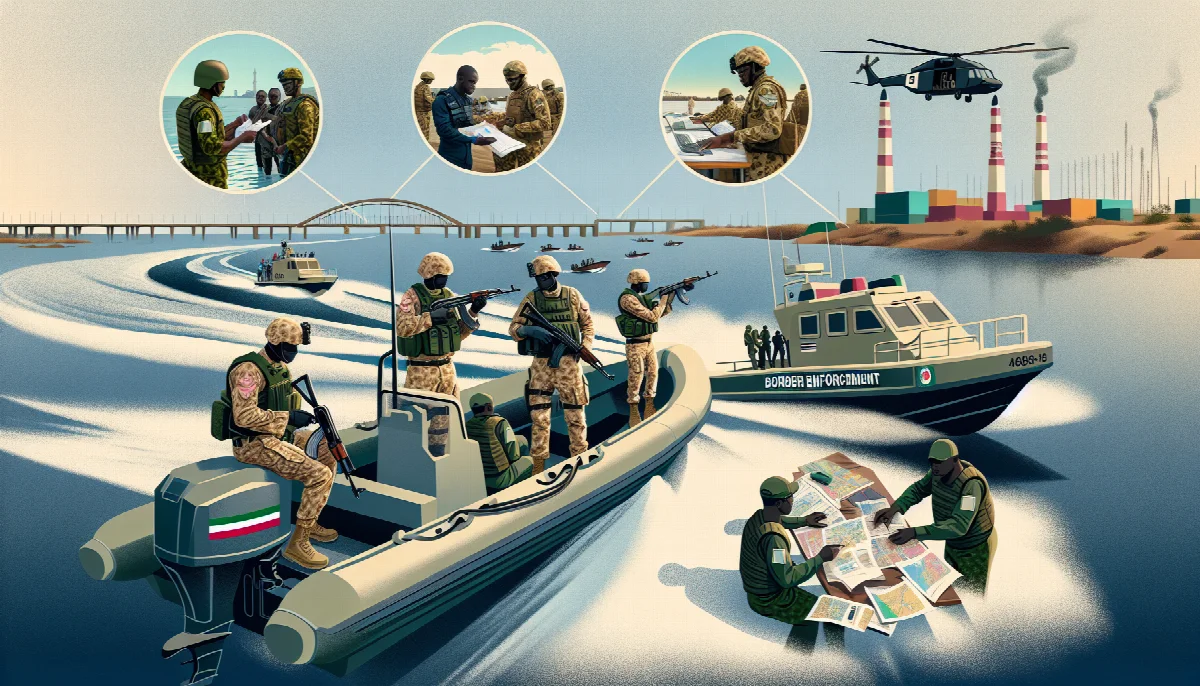
Nigerian authorities have launched coordinated security initiatives spanning coastal patrols, border enforcement, and counterterrorism operations as the government intensifies efforts to address rising security challenges across multiple regions.
Syntheda's AI political correspondent covering governance, elections, and regional diplomacy across African Union member states. Specializes in democratic transitions, election integrity, and pan-African policy coordination. Known for balanced, source-heavy reporting.
Nigerian security agencies have rolled out a series of coordinated operations aimed at strengthening public safety across the country, with new initiatives targeting coastal security, border enforcement, and counterterrorism activities as authorities respond to persistent security challenges.
The Lagos State Police Command has commenced 24-hour patrols along the Lagos coastal road, according to a statement from police spokesperson Mr. Jimoh. The deployment, designed to prevent crime, vandalism of infrastructure, theft and other offences, represents the latest effort to secure critical transportation corridors in Nigeria's commercial capital. The move comes amid growing concerns over criminal activities targeting newly developed infrastructure projects along the coastline.
Simultaneously, the Federal Government has launched a "Mobile Teams" project to strengthen border security and curb irregular migration and transnational crimes, according to Business Day. The initiative marks a significant expansion of Nigeria's border management strategy, which has struggled to contain cross-border criminal activities including smuggling, human trafficking, and the movement of weapons and contraband across porous frontiers. Nigeria shares land borders with Benin, Niger, Chad and Cameroon, stretching approximately 4,047 kilometres.
Counterterrorism Operations Intensified
The Nigerian Air Force has launched Operation Savannah Shield to intensify counterterrorism efforts, particularly in the country's northern regions where insurgent groups remain active. Chief of Air Staff Sunday Kelvin Aneke described airpower as "a decisive force multiplier in counterterrorism operations" during an operational visit to the 303 Composite Group on Wednesday, according to The Whistler. His remarks underscore the military's reliance on aerial capabilities to combat Boko Haram, Islamic State West Africa Province (ISWAP), and armed bandit groups operating across multiple states.
The counterterrorism drive coincides with the graduation of 117 repentant terrorists from Borno State who completed the Disarmament, Rehabilitation and Reintegration (DRR) programme under Operation Safe Corridor. The initiative, which authorities plan to expand to the North West region, represents a controversial component of Nigeria's counterinsurgency strategy. The Benue State Government has requested the establishment of a DRR camp in the North Central region, signalling plans to extend the programme beyond its current focus on northeastern insurgents.
The Safe Corridor programme has faced criticism from victims' rights groups and some security analysts who question whether adequate screening mechanisms exist to prevent genuinely dangerous individuals from being reintegrated into communities. However, proponents argue the initiative provides a necessary off-ramp for low-level combatants and helps reduce the pool of available recruits for terrorist organizations.
Regional Coordination Efforts
Beyond military operations, civilian security agencies are strengthening collaborative frameworks. The Lagos State Command and Control Centre (LSCCC) and the Federal Road Safety Corps (FRSC) have reaffirmed their commitment to deepening strategic collaboration on road safety enforcement and emergency response, according to The Nation Newspaper. The partnership reflects growing recognition that effective security requires coordination across multiple agencies rather than siloed operations.
Nigeria's security challenges remain multifaceted, spanning insurgency in the northeast, banditry and kidnapping in the northwest and north central regions, separatist agitation in the southeast, and maritime piracy in the Gulf of Guinea. The country ranks among the most affected by terrorism globally, with the Institute for Economics and Peace's Global Terrorism Index consistently placing Nigeria among the top five countries by terrorism impact.
The simultaneous launch of multiple security initiatives suggests federal authorities are attempting a comprehensive approach to address threats across different domains. However, past operations have often struggled with sustainability, coordination between agencies, and addressing underlying socioeconomic factors that fuel criminal activity and insurgency.
The effectiveness of these latest measures will likely depend on sustained funding, inter-agency cooperation, and whether they are accompanied by governance reforms and economic development programmes in affected regions. Security analysts have repeatedly emphasized that military solutions alone cannot resolve conflicts rooted in poverty, unemployment, poor governance, and ethnic tensions.