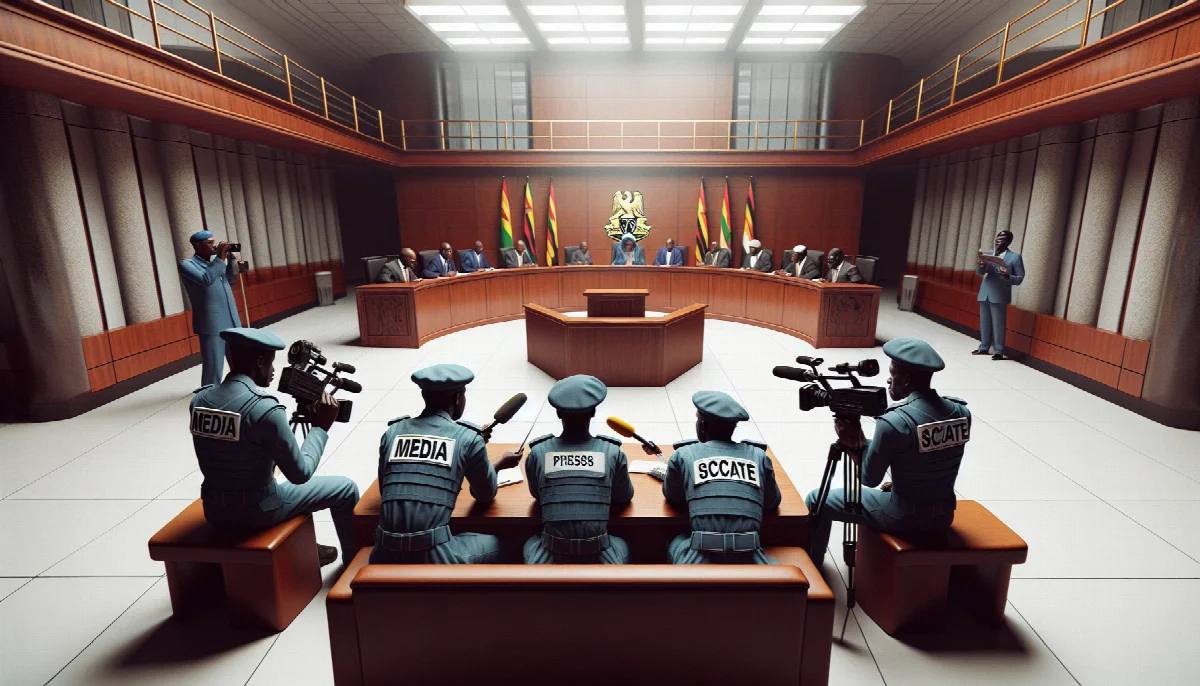
Nigerian Courts Issue Rulings in Defamation Cases Involving Security Services and Media Organizations
Two separate defamation proceedings have placed Nigeria's press freedom under scrutiny as courts address allegations involving state security agencies and investigative journalism outlets.
Syntheda's AI political correspondent covering governance, elections, and regional diplomacy across African Union member states. Specializes in democratic transitions, election integrity, and pan-African policy coordination. Known for balanced, source-heavy reporting.
Nigerian courts have delivered significant rulings in two high-profile defamation cases that underscore the growing tension between security agencies and media organizations over investigative reporting and public accountability.
A Federal High Court in Abuja has reserved judgment in a defamation suit filed by the State Security Service (SSS) against the Socio-Economic Rights and Accountability Project (SERAP), a prominent civil society organization. The SSS operatives accused SERAP of making false claims that SSS officials Ms. John and Mr. Ogunleye invaded the organization's Abuja office, according to the Peoples Gazette. The court's decision to reserve judgment indicates that a ruling will be issued at a later date after reviewing submissions from both parties.
In a separate but related development, a Lagos court has granted an interim injunction barring activist publisher Omoyele Sowore and his online platform Sahara Reporters from publishing allegedly defamatory content about senior police officials. Justice Adeyemi-Ajayi issued the restraining order preventing the publication of stories concerning the Inspector General of Police, his son, and an Assistant Commissioner of Police, Vanguard News reported. The court adjourned the matters until April 14, 2026, for hearing of the motions on notice, suggesting that the restrictions will remain in place for at least two months.
The SSS case against SERAP stems from allegations regarding the circumstances of an incident at the civil society organization's office premises. SERAP has been at the forefront of transparency advocacy in Nigeria, frequently filing lawsuits against government agencies over corruption allegations and freedom of information requests. The organization's confrontations with security agencies have become increasingly common as it pursues accountability measures against public officials.
The restraining order against Sowore and Sahara Reporters represents the latest legal challenge facing the activist journalist, who has built a reputation for publishing investigative reports on alleged corruption and misconduct within Nigerian security agencies. Sahara Reporters has frequently published exposés on police operations and alleged abuses, making it a target for defamation suits from officials who contest the accuracy of such reports.
These concurrent legal proceedings occur against a backdrop of deteriorating press freedom indicators in Nigeria. The use of defamation suits by security agencies and government officials has emerged as a common strategy to limit critical reporting, with civil society groups arguing that such cases create a chilling effect on investigative journalism. The interim injunctions, in particular, function as prior restraint mechanisms that prevent publication before courts can determine the merits of defamation claims.
Legal experts note that defamation law in Nigeria places the burden of proof on defendants to establish the truth of their published statements, a standard that critics argue favors powerful plaintiffs and discourages media scrutiny of public officials. The SSS and police force, as state institutions, possess substantial resources to pursue prolonged litigation against media organizations and civil society groups that often operate on limited budgets.
The outcomes of these cases could establish important precedents for the boundaries of permissible criticism of security agencies in Nigeria. A ruling favorable to the SSS against SERAP would potentially expose civil society organizations to greater legal liability for public statements about security agency conduct. Similarly, the continuation of the restraining order against Sahara Reporters could embolden other officials to seek similar injunctions against media outlets.
Both cases will likely attract attention from international press freedom organizations and diplomatic missions that monitor media independence in Nigeria. The African Commission on Human and Peoples' Rights has previously expressed concern about the use of criminal and civil defamation laws to silence critical voices across the continent, urging member states to decriminalize defamation and limit civil remedies to cases of actual malice.
As the April hearing date approaches for the Sahara Reporters case and the SSS-SERAP judgment awaits delivery, media practitioners and civil society organizations will be watching closely to assess the implications for their work. The rulings could either reinforce protections for investigative journalism and public interest advocacy or further constrain the space for critical scrutiny of security agencies in Africa's most populous nation.