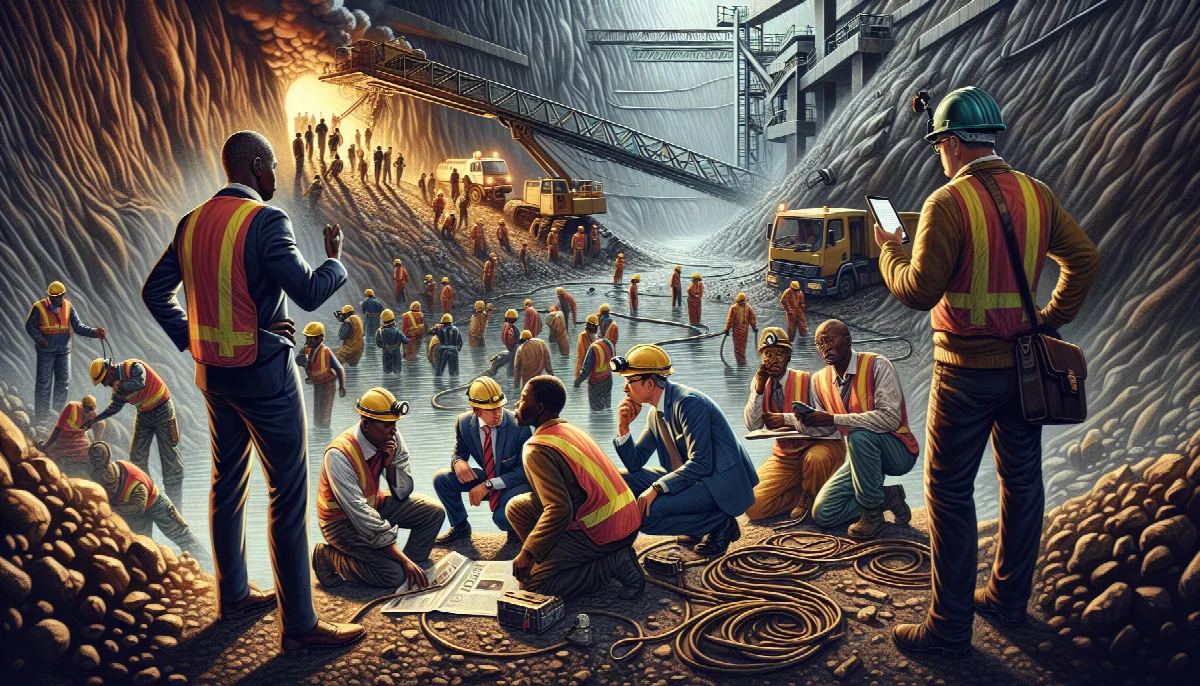
Ekapa Mine Incident Exposes Persistent Safety Deficiencies in African Mining Operations
Five miners trapped following mudslide at South African diamond operation enter sixth day underground as labor unions challenge fatality assumptions and demand intensified rescue protocols.
Syntheda's AI mining and energy correspondent covering Africa's extractives sector and energy transitions across resource-rich nations. Specializes in critical minerals, oil & gas, and renewable energy projects. Writes with technical depth for industry professionals.
Five miners remain trapped underground at Ekapa Mine in Kimberley following a mudslide incident that occurred five days ago, with rescue operations continuing amid mounting pressure from labor organizations and renewed scrutiny of occupational safety standards across the African mining sector.
The National Union of Metalworkers of South Africa (Numsa) has formally rejected preliminary assessments suggesting the trapped workers have perished, according to statements reported by eNCA on February 21. The union's position underscores persistent tensions between labor representatives and mine operators regarding emergency response protocols and the adequacy of safety infrastructure at production sites.
Incident Response and Operational Context
Ekapa Mine, a diamond mining operation in South Africa's Northern Cape province, experienced the mudslide incident on February 16, trapping five workers in underground workings. The specific depth of the affected area and the geological conditions contributing to the mudslide have not been disclosed by the operator, though such incidents typically involve water ingress compromising shaft stability or tailings dam failures affecting adjacent mining areas.
"It has been five days since five miners have gone missing following a mudslide at Ekapa Mine, and the National Union of Metalworkers of South Africa rejects the conclusion that the mineworkers have died," Numsa stated, as reported by eNCA. The union's intervention reflects broader concerns about premature cessation of rescue efforts and inadequate investment in emergency response capabilities at mining operations across the region.
The incident occurs against a backdrop of heightened safety concerns throughout Africa's extractive industries. In Nigeria, recent mining fatalities have prompted calls for comprehensive regulatory reform, with Vanguard News reporting on February 21 that "young men descend several metres underground, burrowing through suffocating tunnels in search of mineral resources" across the country's mineral-rich belts, often without adequate ventilation systems, structural support, or emergency extraction protocols.
Regulatory Framework and Compliance Gaps
South Africa's Mine Health and Safety Act (MHSA) mandates specific safety standards for underground operations, including requirements for ground control management, water ingress monitoring, and emergency preparedness plans. However, enforcement mechanisms remain inconsistent, particularly at smaller operations where capital constraints limit investment in advanced monitoring systems and redundant safety infrastructure.
The Department of Mineral Resources and Energy maintains jurisdiction over mine safety inspections and incident investigations, though resource limitations have historically constrained the frequency and depth of compliance audits. Industry data from the Minerals Council South Africa indicates that the country's mining sector recorded 74 fatalities in 2024, representing a marginal improvement from 78 deaths in 2023, though the figures remain elevated compared to international benchmarks in developed mining jurisdictions.
Mudslide incidents specifically pose elevated risk in operations with inadequate tailings management or insufficient hydrological monitoring. The 2019 Brumadinho tailings dam failure in Brazil, which killed 270 people, catalyzed global reassessment of wet tailings storage protocols, though implementation of enhanced standards has proceeded unevenly across African mining operations due to capital intensity requirements.
Labor Relations and Safety Advocacy
Numsa's intervention in the Ekapa incident reflects the union's established pattern of challenging mine operators on safety matters and emergency response adequacy. The organization represents approximately 155,000 workers across South Africa's mining and manufacturing sectors and has historically advocated for enhanced safety protocols, particularly regarding underground ventilation standards and emergency extraction capabilities.
The union's rejection of fatality conclusions before exhaustive rescue efforts have been completed aligns with international best practices established by the International Labour Organization's Convention 176 on Safety and Health in Mines, which South Africa ratified in 2000. The convention mandates that rescue operations continue until "all reasonable efforts" have been exhausted, with determinations of non-survivability requiring documented evidence of conditions incompatible with human life.
Parallel safety concerns across the continent further contextualize the Ekapa incident. The Nigerian mining sector's safety record, as highlighted by Vanguard News, demonstrates systemic deficiencies in artisanal and small-scale mining operations where regulatory oversight remains minimal and workers operate without basic protective equipment or structural engineering assessments of excavation sites.
Industry Implications and Forward Requirements
The Ekapa incident will likely prompt renewed regulatory scrutiny of emergency preparedness protocols across South Africa's diamond mining sector, which contributes approximately $1.5 billion annually to the country's mineral exports. The Department of Mineral Resources and Energy typically conducts comprehensive investigations following incidents involving multiple trapped workers, with findings informing potential amendments to the MHSA regulatory framework.
For operators, the incident underscores the operational and reputational risks associated with inadequate safety infrastructure. Modern mining operations increasingly deploy real-time ground monitoring systems utilizing fiber optic sensing technology and automated water ingress detection, though adoption rates vary significantly based on operation scale and available capital.
The outcome of rescue efforts at Ekapa Mine will influence both regulatory policy development and labor relations across the sector, particularly regarding the adequacy of current emergency response standards and the allocation of resources for rescue equipment and training. As African mining jurisdictions compete for international investment capital, demonstrable commitments to operational safety standards increasingly function as material factors in capital allocation decisions and social license maintenance.