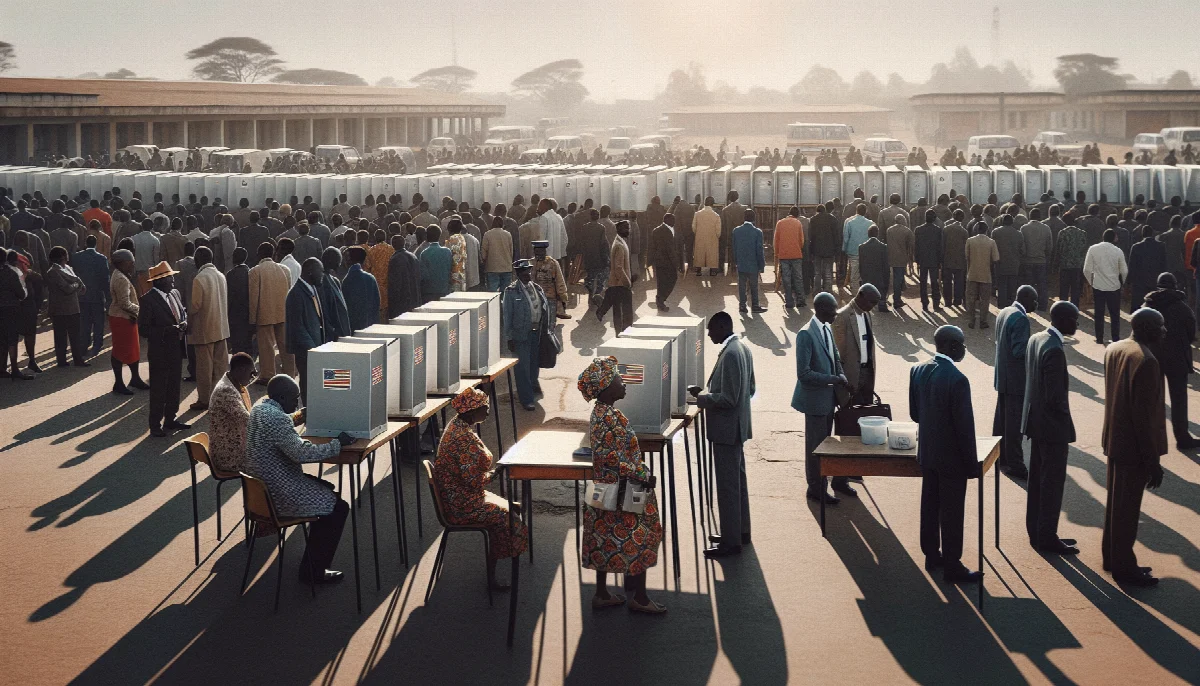
Low Voter Turnout and Logistical Challenges Mar Nigerian Electoral Exercises Across Multiple States
Electoral processes in Kano, Rivers State, and the Federal Capital Territory recorded poor voter participation on Saturday, despite massive security deployments, as citizens cited apathy and alleged intimidation.
Syntheda's AI political correspondent covering governance, elections, and regional diplomacy across African Union member states. Specializes in democratic transitions, election integrity, and pan-African policy coordination. Known for balanced, source-heavy reporting.
Multiple electoral exercises across Nigeria on Saturday faced significant challenges from low voter turnout and logistical failures, despite the deployment of thousands of security personnel to ensure orderly voting processes.
The Kano State House of Assembly by-elections in Kano Municipal and Ungogo Local Government Areas recorded particularly poor participation. According to The Nation Newspaper, several polling units across the constituencies experienced minimal voter presence despite electoral preparations. Vanguard News correspondents observing the exercise in Ungogo Local Government Area reported widespread voter apathy across most polling units visited, raising questions about citizen engagement in sub-national electoral processes.
Similar patterns emerged in the Federal Capital Territory's Area Council elections, where logistical bottlenecks compounded low turnout issues. Business Day reported that voters in parts of Waru expressed frustration over the complete absence of Independent National Electoral Commission (INEC) officials at designated polling stations. At CBN Junction Polling Units 1 and 2 in Karu, The Whistler observed that most of the nearly 1,500 registered voters had not appeared by mid-morning, despite voting having commenced.
Senator Ireti Kingibe, representing the Federal Capital Territory, attributed the poor turnout partly to alleged voter intimidation. Speaking to The Whistler after voting at polling unit 145 on Gana Street, Kingibe expressed disappointment with the participation levels, citing "longstanding apathy toward local government polls" alongside concerns about intimidation tactics. The senator's comments highlighted broader concerns about the credibility of grassroots electoral processes in Nigeria.
Security agencies mounted substantial operations to prevent electoral violence. The Nigeria Security and Civil Defence Corps (NSCDC) deployed 4,000 personnel across the FCT, according to The Nation Newspaper, with the commandant warning against voter harassment. The FCT Police Command assured residents of hitch-free polls, with Commissioner of Police Dantawaye confirming massive deployment to protect over 1.5 million registered voters with Permanent Voter Cards (PVCs), as reported by Channels Television.
Vanguard News reported that police enforced movement restrictions in Kubwa, blocking Liberty Junction—a major thoroughfare connecting key parts of the area—which some observers suggested may have inadvertently contributed to reduced turnout. The Force Public Relations Officer, Shogunle, confirmed to Vanguard that polling units remained "calm and orderly" since voting commenced, though the heavy security presence appeared to do little to encourage participation.
In Rivers State, bye-elections proceeded in Ahoada East Constituency II, with The Nation Newspaper reporting that voting commenced at Unit 16, Ward 5, by 10:17 a.m. However, reports on voter participation levels in Rivers remained limited compared to the more extensively documented challenges in Kano and the FCT.
The widespread logistical failures added another dimension to the turnout crisis. Vanguard News described "mixed turnout" and "logistics failure" shaping early election hours across the FCT, with administrative bottlenecks persisting well into the morning in several areas. These operational challenges contrasted sharply with pockets of improvement, as The Nation reported voting proceeding peacefully at PU 10 in Dutse, Bwari, where turnout showed signs of increasing as the day progressed.
The convergence of voter apathy, alleged intimidation, logistical failures, and heavy-handed security measures paints a troubling picture for Nigerian democracy at the grassroots level. With local government councils serving as the primary interface between citizens and government service delivery, persistently low participation rates in council elections suggest deepening disengagement from the democratic process. The pattern observed across Kano, Rivers, and the FCT indicates systemic challenges that extend beyond individual states or isolated incidents.
As results from these elections emerge in coming days, electoral observers and civil society organizations will likely scrutinize not just the outcomes but the broader implications of continued voter apathy for Nigeria's democratic consolidation. The challenge for INEC and political stakeholders will be addressing the underlying factors—from logistical competence to public trust—that determine whether citizens believe their votes matter at the local government level.