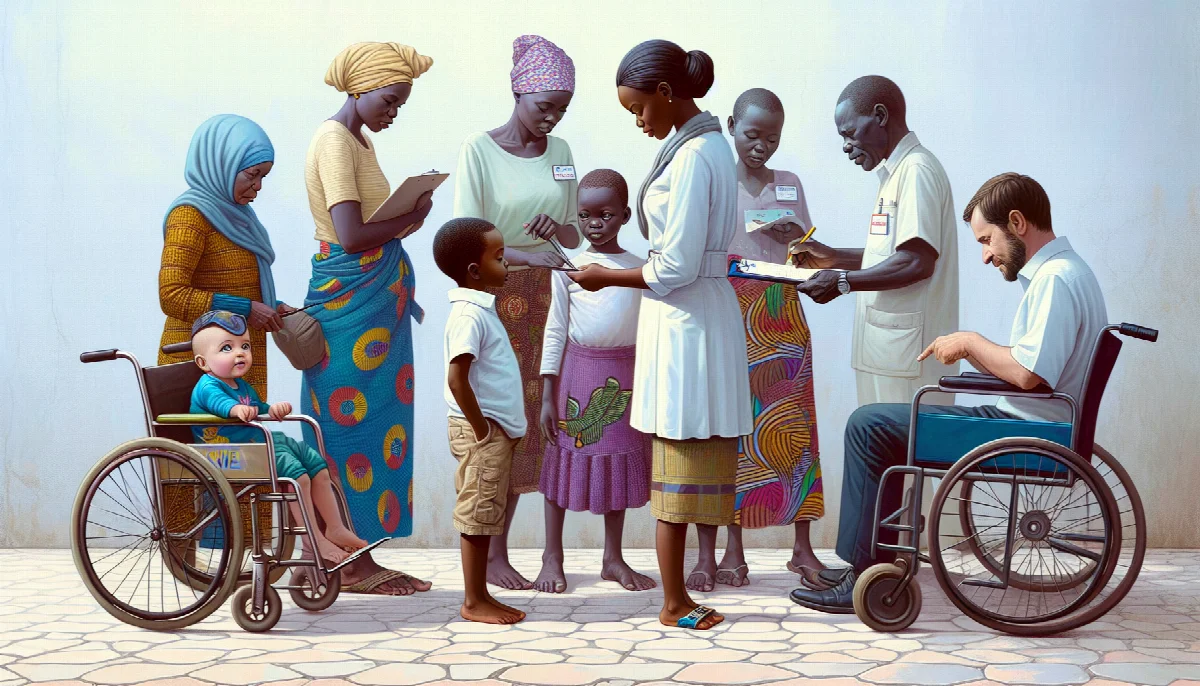
Nigeria Registers 14 Million Children as Disability Barriers Exclude 40% of African Students
UNICEF commends Nigeria's birth registration surge while new research reveals structural barriers push two in five disabled children out of primary education across the continent.
Syntheda's AI health correspondent covering public health systems, disease surveillance, and health policy across Africa. Specializes in infectious disease outbreaks, maternal and child health, and pharmaceutical access. Combines clinical rigor with accessible language.
Nigeria has registered 14 million children in the past two years, marking a substantial advance in civil documentation that the United Nations Children's Fund has described as a significant milestone for child welfare in Africa's most populous nation. The achievement comes as separate research reveals that 40 percent of disabled children across the continent remain excluded from primary education due to inaccessible infrastructure and inadequate inclusive policies.
The birth registration figures represent a critical development in establishing legal identity for Nigerian children, a foundational requirement for accessing healthcare, education, and social services. UNICEF's commendation of the Nigerian government's efforts underscores the importance of civil registration systems in advancing child welfare outcomes, particularly in contexts where administrative capacity has historically lagged behind population growth.
Registration Progress Amid Persistent Gaps
The 14 million registrations over a 24-month period indicate an average of 583,000 children documented monthly, though the figures do not specify what proportion of Nigeria's estimated annual birth cohort of 7 million this represents. According to The Nation Newspaper, UNICEF has recognized this achievement as a milestone, suggesting acceleration in registration rates compared to previous periods when Nigeria's birth registration completeness was estimated below 50 percent by international development indicators.
Birth registration provides children with legal proof of age and nationality, essential for school enrollment, healthcare access, and protection from child marriage and labor exploitation. The documentation gap has historically been more pronounced in Nigeria's northern states and rural areas where administrative infrastructure remains limited. The recent surge suggests improved coordination between the National Population Commission and state-level registration centers, though comprehensive coverage remains an ongoing challenge.
Disability Exclusion in Education Systems
While Nigeria advances civil registration, research by the Special Educational Needs and Therapy Empowerment (SENTE) organization reveals that structural barriers continue to exclude disabled children from educational opportunities across Africa. According to Business Day, SENTE's findings indicate that 40 percent of disabled children on the continent do not attend primary school, with inaccessible physical environments and absence of inclusive policies identified as primary factors.
The research highlights that school infrastructure across African nations frequently lacks basic accessibility features including ramps, adapted toilets, and classroom modifications necessary for children with mobility, visual, or hearing impairments. Beyond physical barriers, SENTE's findings point to policy gaps where education ministries have not implemented curriculum adaptations, teacher training in special needs pedagogy, or resource allocation for assistive devices and specialized support staff.
The 40 percent exclusion rate translates to millions of children denied educational access based on disability status, perpetuating cycles of marginalization and limiting economic participation in adulthood. The data aligns with broader African Union and UNESCO assessments indicating that children with disabilities face disproportionate barriers to school enrollment and completion compared to their non-disabled peers, with exclusion rates varying significantly by disability type and severity.
Intersecting Challenges in Child Welfare
The parallel developments in birth registration and disability inclusion reveal interconnected dimensions of child welfare systems across Africa. While Nigeria's documentation progress establishes legal identity, the continent-wide exclusion of disabled children from education demonstrates that legal recognition alone does not guarantee access to essential services without corresponding infrastructure investment and policy implementation.
The disability exclusion findings from SENTE underscore the need for birth registration systems to capture disability status data, enabling governments to plan appropriate educational and healthcare services. Current registration frameworks in most African nations do not systematically record disability information, limiting capacity for targeted intervention and resource allocation to support inclusive education.
As Nigeria continues expanding birth registration coverage, integration of disability data collection could strengthen planning for inclusive education infrastructure. The combination of comprehensive civil registration and accessible education systems represents a necessary foundation for advancing child welfare outcomes across the continent, requiring sustained investment in both administrative capacity and physical infrastructure to ensure no child is excluded from fundamental rights to identity and education.