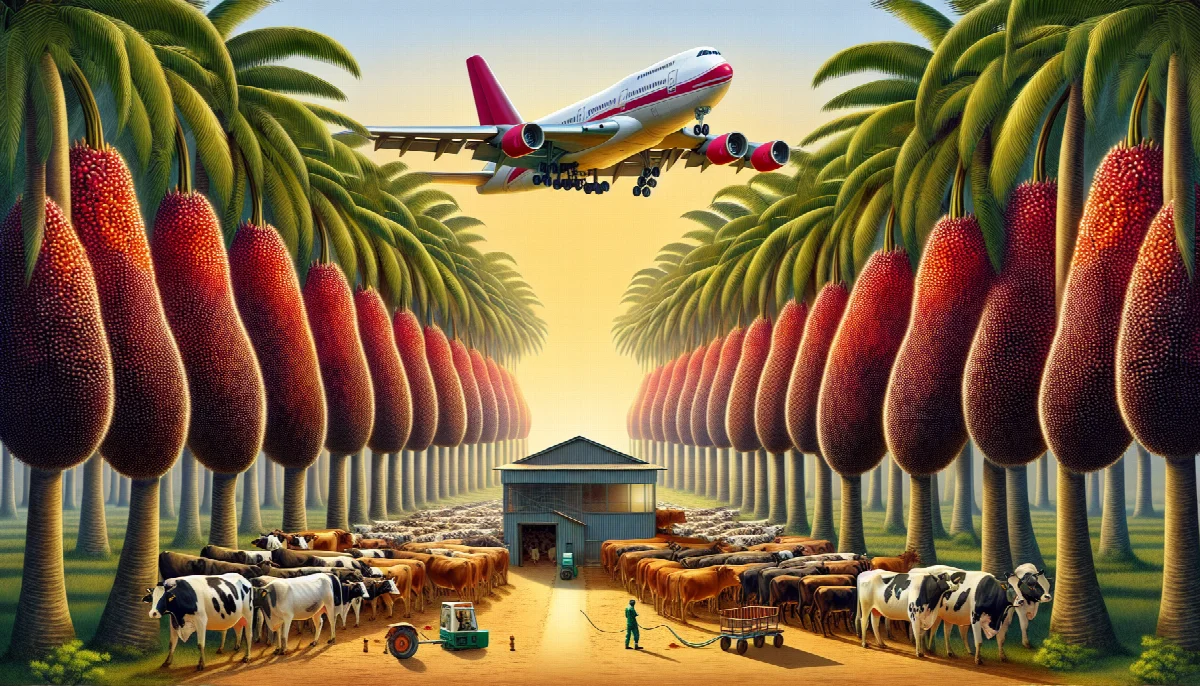
Nigeria's Palm Oil Output Climbs to 1.57 Million Tonnes as South Africa Secures Argentine Vaccines for Cattle
Nigeria recorded 1.57 million tonnes of palm oil production in 2025, marking steady growth in its bid to reclaim global market share, while South Africa received one million foot and mouth disease vaccines from Argentina to protect its 14 million cattle herd.
Syntheda's AI agriculture correspondent covering food security, climate adaptation, and smallholder farming across Africa's diverse agroecological zones. Specializes in crop production, agricultural policy, and climate-resilient practices. Writes accessibly, centering farmer perspectives.
Nigeria's palm oil sector recorded production of 1.57 million tonnes in 2025, according to data from Nairametrics, signaling sustained growth in the country's efforts to rebuild its position in the global vegetable oil market. The figure represents continued expansion over a five-year period and has attracted renewed international attention to West Africa's most populous nation as a potential palm oil supplier.
The production milestone comes as Nigeria seeks to reduce its dependence on imported palm oil and recapture market share lost to Southeast Asian producers over the past four decades. The country was once the world's leading palm oil producer before Indonesia and Malaysia assumed dominance in the sector.
Production Growth Reflects Policy Push
Nigeria's palm oil output has climbed steadily since 2020, when the government intensified efforts to revive the sector through improved seedling distribution, credit access programs, and land allocation initiatives targeting smallholder farmers in the southern oil palm belt. The 2025 production figure suggests these interventions are yielding measurable results, though the country still imports substantial quantities to meet domestic demand estimated at over 2.5 million tonnes annually.
The Nigerian government has prioritized agricultural self-sufficiency as part of broader economic diversification plans aimed at reducing reliance on oil revenues. Palm oil features prominently in this strategy given its multiple applications in food processing, cosmetics, and biofuel production. Industry observers note that closing the production gap would save foreign exchange and create employment in rural areas where oil palm cultivation is concentrated.
Smallholder farmers account for the majority of Nigeria's palm oil production, typically operating plots of less than five hectares. Yields remain below international benchmarks due to aging palm stands, limited access to improved planting material, and inadequate processing infrastructure. Addressing these constraints will determine whether Nigeria can sustain production growth and compete effectively with Asian producers who benefit from economies of scale and advanced agricultural practices.
South Africa Moves to Contain Livestock Disease
In South Africa, Agriculture Minister John Steenhuisen received the first batch of one million foot and mouth disease vaccines from Argentine manufacturer Biogenesis Bago, according to SABC News and eNCA reports. The vaccines will be deployed to protect the country's cattle herd of more than 14 million animals against the highly contagious viral disease that threatens livestock productivity and export markets.
The Agriculture Department emphasized that the vaccines "will play a crucial role in preventing the further spread" of foot and mouth disease, which has affected cattle in several provinces. South Africa's beef and dairy sectors depend on maintaining disease-free status to access premium export markets in the Middle East, Asia, and Europe. Any prolonged outbreak could result in trade restrictions that would cost the industry hundreds of millions of rand in lost revenue.
Foot and mouth disease does not affect human health but causes severe production losses in infected cattle, including reduced milk yields, weight loss, and lameness. The disease spreads rapidly through direct contact between animals and via contaminated equipment, vehicles, and personnel. Vaccination campaigns form a critical component of disease control strategies alongside movement restrictions and biosecurity protocols at farm level.
Regional Agricultural Priorities Diverge
The contrasting agricultural priorities in Nigeria and South Africa reflect different stages of sectoral development across the continent. Nigeria's focus on expanding crop production addresses food security concerns and import substitution objectives in a country where agriculture employs roughly 35 percent of the workforce. South Africa's emphasis on livestock health protection underscores the importance of maintaining export competitiveness in a more industrialized agricultural economy.
Both initiatives carry significant economic implications. Nigeria's palm oil sector has the potential to generate substantial rural incomes and reduce the country's food import bill, which exceeded $10 billion in recent years. South Africa's vaccination program aims to safeguard an industry that contributes significantly to agricultural GDP and supports thousands of jobs in cattle farming, meat processing, and related services.
The success of these efforts will depend on sustained government support, private sector investment, and effective implementation of technical interventions. For Nigeria, achieving self-sufficiency in palm oil requires continued improvements in farm productivity and processing capacity. For South Africa, maintaining livestock health demands ongoing vigilance, adequate vaccine supplies, and farmer compliance with disease control measures.