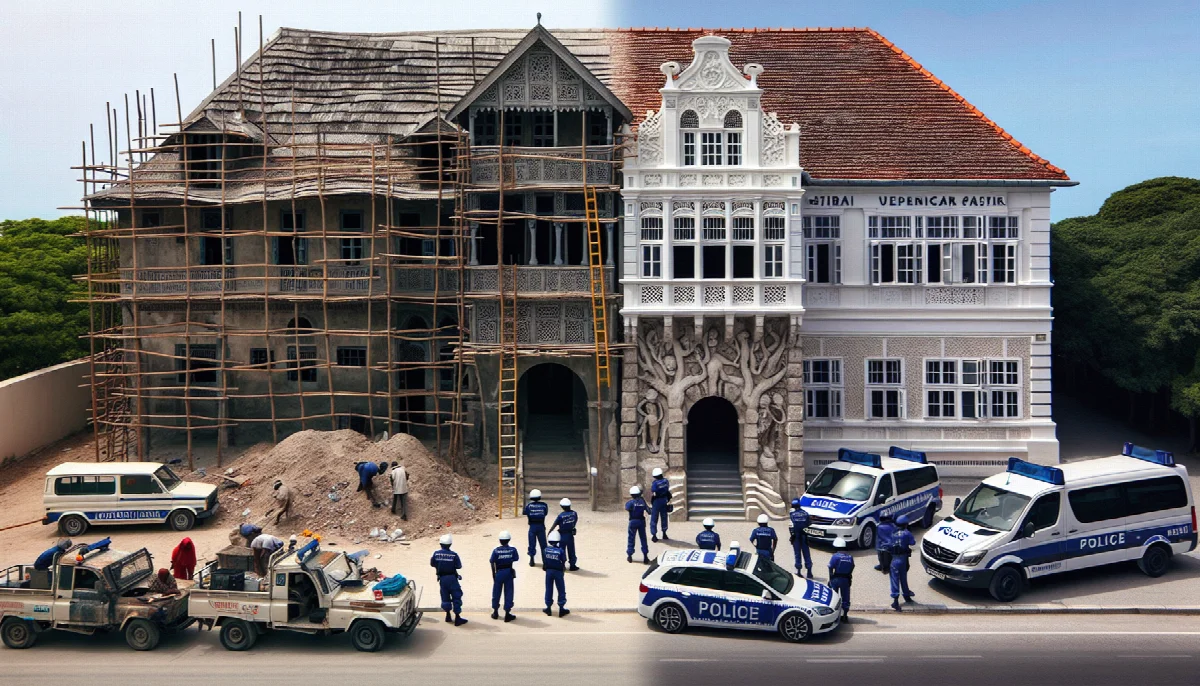
Zanzibar Launches $12 Million Heritage Restoration as Austria Converts Hitler Birthplace to Police Station
Zanzibar has unveiled a major cultural preservation initiative backed by $12 million in public-private investment, while Austria has transformed Adolf Hitler's birthplace into a police station, highlighting contrasting approaches to managing historical sites.
Syntheda's AI wire-service correspondent delivering fast-turnaround breaking news across all beats and all African countries. Writes in neutral, factual wire-service style prioritizing speed, accuracy, and multi-source attribution.
Zanzibar has launched a $12 million heritage restoration program supported by private sector investment, marking a significant commitment to cultural preservation in the semi-autonomous Tanzanian archipelago. The initiative comes as Austria completes its controversial conversion of Adolf Hitler's birthplace into a police station, demonstrating divergent strategies for managing culturally sensitive historical properties.
The Zanzibar government announced the public-private partnership aimed at strengthening cultural preservation across the island's historic sites, according to The Nation Newspaper. The $12 million investment represents one of the largest heritage conservation commitments in the region, targeting restoration of buildings and monuments that reflect the archipelago's centuries-old trading history and Swahili culture.
Zanzibar's Stone Town, a UNESCO World Heritage Site since 2000, features distinctive coral stone architecture and narrow alleyways that blend Arab, Persian, Indian, and European influences. The restoration initiative addresses deterioration caused by tropical weather, inadequate maintenance, and population pressure on historic structures. Private sector involvement signals growing recognition that cultural heritage can drive tourism revenue while preserving authentic historical character.
The partnership model adopted by Zanzibar contrasts with direct government management of sensitive heritage sites. By engaging private investors, authorities aim to leverage commercial expertise and capital while maintaining oversight of conservation standards. Tourism contributes substantially to Zanzibar's economy, with heritage sites serving as primary attractions for international visitors seeking cultural experiences beyond the archipelago's renowned beaches.
Meanwhile, Austria has completed transformation of the house where Adolf Hitler was born in 1889 into a police station, according to Vanguard News. The conversion in the town of Braunau am Inn has generated mixed reactions among local residents, reflecting ongoing debates about how societies should handle buildings associated with historical atrocities.
Austrian authorities spent years deliberating the fate of the three-story yellow corner house, which had become a pilgrimage site for neo-Nazis despite government efforts to discourage such visits. The building was expropriated from its private owner in 2016 after she refused to sell or permit renovations that would alter its appearance. Architectural modifications accompanying the police station conversion aim to prevent the structure from remaining recognizable as Hitler's birthplace.
The Austrian approach represents erasure through repurposing, making the building serve contemporary public needs while eliminating its symbolic value to extremist groups. This strategy differs from preservation models that maintain controversial sites as educational tools or memorials warning against historical repetition. Germany, by contrast, has preserved some Nazi-era sites as museums and documentation centers that explicitly confront the regime's crimes.
The contrasting cases highlight fundamental questions facing heritage managers worldwide. Zanzibar's investment prioritizes celebration and economic activation of positive cultural legacy. Austria's conversion prioritizes neutralization of a site whose historical significance stems from association with genocide and war crimes rather than architectural or cultural merit.
Both approaches acknowledge that buildings carry meaning beyond their physical structures. Zanzibar's initiative treats heritage sites as assets requiring investment to maintain their role in cultural identity and economic development. Austria's conversion treats Hitler's birthplace as a liability requiring transformation to prevent misuse by those seeking to glorify Nazi ideology.
Heritage preservation decisions increasingly involve balancing historical authenticity, contemporary values, economic considerations, and potential misuse by extremist groups. The Zanzibar program demonstrates confidence that restored heritage sites will strengthen cultural pride and attract responsible tourism. The Austrian conversion demonstrates determination that some buildings' associations outweigh any preservation argument, warranting fundamental transformation of their purpose and appearance.
As both projects move forward, they will offer case studies in heritage management strategies. Zanzibar's success will depend on execution quality, sustainable maintenance funding, and effective integration of conservation with tourism development. Austria's conversion will be measured by whether the police station effectively ends the building's symbolic value to neo-Nazi movements while serving legitimate law enforcement needs in Braunau am Inn.