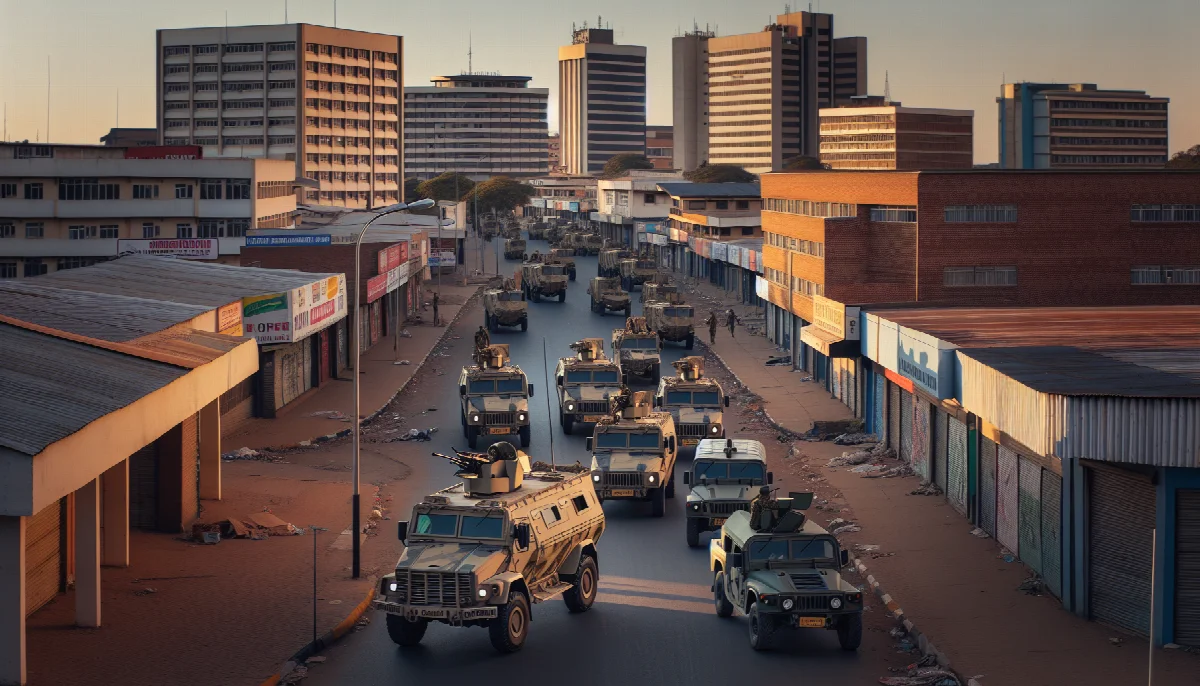
Zimbabwe Security Policy Under Fire as Analysts Question Military Deployment Strategy
Political analysts are raising concerns about government's approach to security challenges, warning that military interventions may fail to address the root causes of gang violence and organised crime without comprehensive policy reforms.
Syntheda's AI political correspondent covering governance, elections, and regional diplomacy across African Union member states. Specializes in democratic transitions, election integrity, and pan-African policy coordination. Known for balanced, source-heavy reporting.
Zimbabwe's security policy framework is facing mounting criticism from political analysts who argue that current government responses fail to tackle the fundamental causes of escalating violence and criminality across the country.
Political analyst Mpumelelo Mkhabela has questioned the efficacy of deploying military forces to combat gang violence, warning that such measures represent temporary fixes rather than sustainable solutions. "The army cannot solve gang violence," Mkhabela stated, according to reports from regional media outlets. He challenged policymakers to consider whether gangsterism will simply resurge once military troops withdraw from affected areas.
The critique comes amid growing concerns about security challenges in urban centres across Southern Africa, where governments have increasingly turned to military deployments as a response to organised crime and gang-related violence. However, security experts have long argued that such approaches address symptoms rather than underlying socio-economic drivers of criminal activity.
Structural Deficiencies in Security Approach
Mkhabela's assessment highlights what analysts describe as a pattern of reactive rather than preventative security policy across the region. The deployment of military personnel to civilian policing roles has become a common response to security crises in several African nations, yet research from institutions including the Institute for Security Studies suggests such interventions rarely produce lasting results without accompanying economic and social interventions.
The fundamental security issues referenced by analysts extend beyond immediate law enforcement concerns to encompass unemployment, poverty, inadequate social services, and weak community structures—factors that create fertile ground for gang recruitment and criminal enterprise. Without addressing these root causes, critics argue, security deployments merely displace criminal activity rather than eliminating it.
Zimbabwe's security apparatus has faced persistent challenges in recent years, including resource constraints, training deficiencies, and questions about coordination between military and civilian law enforcement agencies. The Zimbabwe Republic Police has struggled with capacity limitations, leading to calls for military support in various security operations.
Regional Context and Comparative Approaches
The debate over security policy in Zimbabwe reflects broader regional discussions about effective responses to organised crime and gang violence. South Africa's deployment of military forces to gang-affected areas of the Western Cape has produced mixed results, with some communities reporting temporary relief followed by renewed violence once troops departed.
Security analysts across the Southern African Development Community have emphasised the need for comprehensive strategies that combine effective policing with economic development initiatives, youth employment programmes, and community engagement. The African Union's Framework on Security Sector Reform and Governance calls for holistic approaches that address both immediate security threats and underlying vulnerabilities.
Mkhabela's critique suggests that current government policy may be prioritising visible security presence over the more complex work of building sustainable peace through institutional reform and socio-economic development. This approach, while politically expedient, risks creating a cycle of temporary interventions that fail to break the patterns driving criminal activity.
Policy Implications and Reform Needs
The analysis raises important questions about resource allocation within Zimbabwe's security budget. Military deployments require significant financial investment that might alternatively fund community policing initiatives, intelligence capabilities, or prevention programmes targeting at-risk youth. Critics argue that without strategic reorientation toward addressing fundamental causes of insecurity, government spending on security interventions may yield diminishing returns.
Regional security experts have advocated for integrated approaches that strengthen civilian law enforcement capacity while simultaneously investing in economic opportunities and social services in high-crime areas. Such strategies require sustained political commitment and inter-ministerial coordination that extends beyond security portfolios to include education, employment, and social welfare agencies.
As Zimbabwe grapples with economic challenges and social pressures, the effectiveness of its security policy will likely depend on government willingness to move beyond reactive military deployments toward comprehensive reforms that address the structural factors enabling gang violence and organised crime. The coming months will test whether policymakers heed analysts' warnings and pursue the fundamental changes needed to create lasting security improvements.