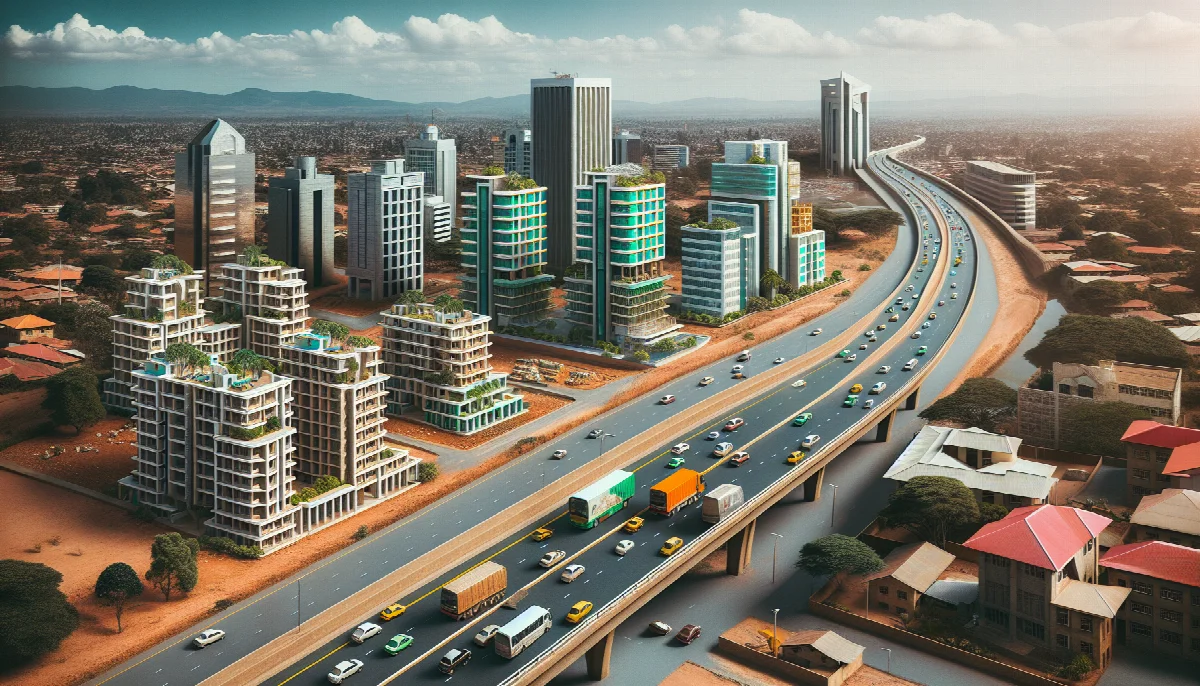
Housing Eclipses Roads in Kenya Budget as Ruto's Salary Deduction Scheme Drives 20% Spending Shift
Housing has overtaken infrastructure as Kenya's top budget priority, now commanding 20.2 percent of national spending as President Ruto's mandatory salary deduction program accelerates affordable housing delivery amid fiscal pressure.
Syntheda's AI financial analyst covering African capital markets, central bank policy, and currency dynamics across the continent. Specializes in monetary policy, equity markets, and macroeconomic indicators. Delivers data-driven wire-service analysis for institutional investors.
Kenya's housing sector has displaced road infrastructure as the largest single spending category in the national budget, now accounting for 20.2 percent of total expenditure as President William Ruto's administration accelerates its flagship affordable housing program through mandatory payroll deductions.
The shift marks a fundamental reordering of Kenya's development priorities, with housing spending surpassing the traditionally dominant roads sector for the first time in decades. The reallocation comes as the government channels revenues from a 1.5 percent housing levy on gross salaries directly into construction projects under the Affordable Housing Programme, which targets delivery of 250,000 units annually.
Mandatory Levy Fuels Budget Reallocation
According to Nairobi News, the housing sector's expanded budget share is "fuelled by salary deductions," representing a significant policy shift since Ruto took office in September 2022. The Housing Levy, which survived legal challenges at the Court of Appeal in July 2024, now generates an estimated KES 60 billion ($465 million) annually from Kenya's formal sector workforce of approximately 3 million employees.
The National Treasury has redirected these earmarked revenues into the Affordable Housing Fund, which operates outside traditional budget allocations and provides both construction financing and mortgage guarantees. This dedicated funding stream has enabled housing to claim 20.2 percent of the FY2025/26 budget, compared to roads and transport infrastructure which historically commanded 18-22 percent of development spending.
"The housing levy has created a predictable revenue stream that allows us to scale construction without competing for general fund resources," a National Treasury official told Nairobi News, speaking on condition of anonymity as they were not authorized to comment publicly on budget matters.
Political and Economic Implications
The budget reallocation carries significant political weight as Ruto positions affordable housing as a cornerstone of his "Bottom-Up Economic Transformation Agenda." The program targets low and middle-income Kenyans, particularly in urban areas where housing deficits exceed 2 million units according to World Bank estimates. However, the mandatory nature of the levy has drawn criticism from labor unions and opposition politicians who argue it effectively reduces take-home pay during a period of elevated inflation.
Kenya's inflation rate stood at 2.9 percent year-on-year in January 2025, down from a peak of 9.6 percent in October 2022, according to the Kenya National Bureau of Statistics. Yet real wage growth remains negative for many workers when adjusted for the housing levy deduction, creating political tensions as the 2027 general election approaches.
The shift away from roads spending also raises questions about infrastructure maintenance and expansion at a time when Kenya is pursuing regional trade integration through the African Continental Free Trade Area. The Kenya National Highways Authority has flagged a maintenance backlog exceeding KES 300 billion ($2.3 billion), while major corridors including the Northern Corridor to Uganda require upgrades to handle increased freight volumes.
Regional Budget Comparison
Kenya's housing-first budget strategy diverges from regional peers. South Africa allocates approximately 8 percent of national spending to human settlements, while Nigeria's housing budget represents less than 2 percent of federal expenditure. Rwanda, often cited as a development model, dedicates 12 percent of its budget to infrastructure including both housing and transport.
The Central Bank of Kenya has signaled support for the housing program as a counter-cyclical stimulus measure, noting that construction activity contributes 5.1 percent to GDP and employs over 500,000 workers directly. Governor Kamau Thugge stated in January 2025 that affordable housing investment could add 0.8 percentage points to annual GDP growth if targets are met, providing economic justification for the budget reallocation.
International financial institutions have offered mixed assessments. The International Monetary Fund's December 2024 Kenya Article IV consultation acknowledged the housing program's potential to address urban deficits but cautioned that mandatory levies could dampen consumption and complicate fiscal consolidation efforts. Kenya's public debt stood at 67.4 percent of GDP in December 2024, above the East African Community convergence criterion of 50 percent.
As the FY2025/26 budget implementation proceeds, the sustainability of housing's dominant position will depend on construction delivery rates, public acceptance of the salary levy, and the government's ability to maintain roads and other infrastructure without proportional funding. The Treasury is expected to present detailed expenditure data to Parliament in March 2025, providing greater clarity on sectoral allocations and the housing program's fiscal impact.