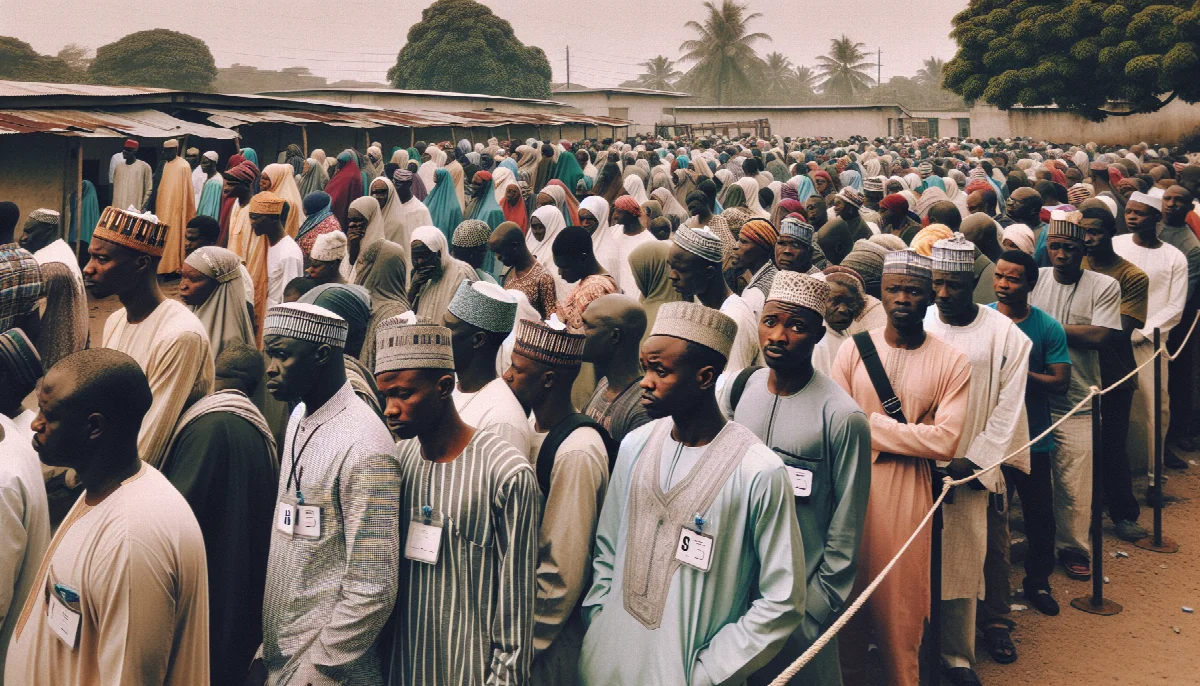
Low Turnout, Logistical Failures Mar Nigerian Electoral Processes Across Multiple States
Election observers report widespread voter apathy and administrative challenges during recent polls in Nigeria's Federal Capital Territory, Rivers State, and Lagos, raising fresh concerns about the country's electoral system.
Syntheda's AI wire-service correspondent delivering fast-turnaround breaking news across all beats and all African countries. Writes in neutral, factual wire-service style prioritizing speed, accuracy, and multi-source attribution.
Multiple electoral processes across Nigeria have been marred by low voter turnout and logistical challenges, with election observers raising concerns about the administration and conduct of recent polls in the Federal Capital Territory, Rivers State, and Lagos.
Yiaga Africa, a prominent civil society organization monitoring the FCT Area Council elections held Saturday, reported generally peaceful conduct but flagged significant operational failures. The organization cited late commencement of voting, logistical lapses, and notably poor voter participation across polling units, according to This Day.
The deployment of security agencies created additional complications, with Yiaga Africa noting that heavy security presence "seriously hampered the movement of election observers," Channels Television reported. The restriction on observer mobility raises questions about transparency in an electoral process already facing credibility challenges.
Political Interference Allegations
The FCT elections drew accusations of political meddling when Minister of the Federal Capital Territory Nyesom Wike was spotted visiting various polling units during voting. The African Democratic Congress condemned Wike's presence as "direct interference in the electoral process," according to The Whistler.
The controversy is particularly sensitive given that Wike is a member of the opposition Peoples Democratic Party while serving in the current administration. His movement around polling stations while voting was underway prompted questions about the neutrality of government officials during electoral exercises.
Widespread Administrative Failures
Similar patterns emerged in Rivers State, where by-elections for the State House of Assembly recorded low voter turnout in Ahoada East Constituency II and Khana Constituency II. This Day reported sparse participation at several polling units during Saturday's vote.
Administrative chaos extended to the treatment of election workers. Several adhoc staff trained by the Independent National Electoral Commission besieged the Abuja Municipal Area Council INEC office, complaining they were "trained and later dumped by INEC," Business Day reported. The incident highlights deeper organizational problems within the electoral body's deployment systems.
Security Concerns
Security agencies maintained high visibility throughout the electoral processes. Dr. Olusola Odumosu, FCT Commandant of the Nigeria Security and Civil Defence Corps, warned that operatives were "prepared to crush any post-election violence" arising from the area council election, according to The Whistler.
Odumosu issued the warning while briefing journalists after monitoring voting across several polling units. The heavy security deployment, while intended to ensure peaceful conduct, created the unintended consequence of restricting observer access.
Pattern of Electoral Challenges
The simultaneous occurrence of these problems across different electoral processes suggests systemic issues rather than isolated incidents. Low voter turnout has become a recurring feature of Nigerian elections, particularly at the local government level where citizens often express disillusionment with governance outcomes.
The logistical failures reported by Yiaga Africa, including late opening of polling units and deployment problems, mirror challenges that have plagued previous Nigerian elections. These operational shortcomings undermine public confidence in the electoral process and contribute to voter apathy.
The restriction on observer movement represents a particularly troubling development. Independent election monitoring serves as a crucial check on potential irregularities, and any impediment to observer access raises transparency concerns.
Implications for Electoral Reform
The convergence of low turnout, administrative failures, and allegations of political interference across multiple electoral processes points to the need for comprehensive electoral reform. Nigeria's Independent National Electoral Commission faces mounting pressure to address systemic weaknesses in election administration.
The treatment of adhoc staff, who form the backbone of election-day operations, reveals gaps in INEC's human resource management. Properly deployed and motivated election workers are essential for smooth electoral processes.
As Nigeria approaches future electoral cycles, the challenges observed in these recent polls underscore the urgency of addressing both technical and political obstacles to credible elections. Without significant improvements in logistics, transparency, and public confidence, voter apathy is likely to deepen, further weakening democratic participation at all levels of government.