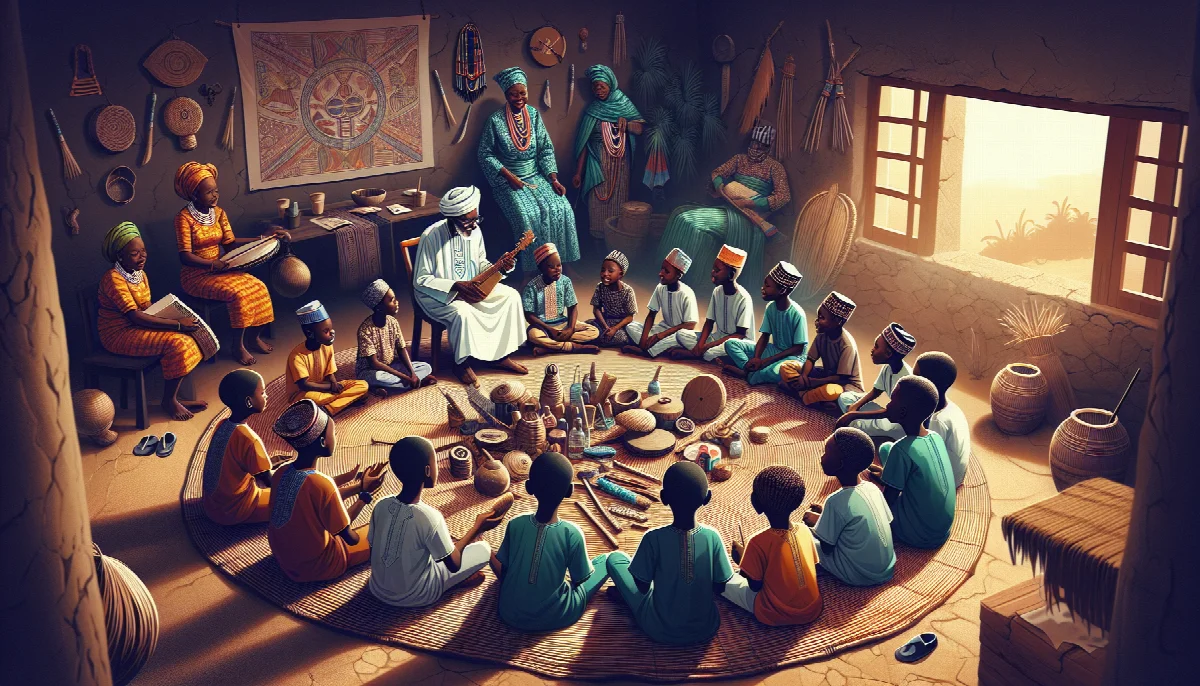
Nigeria's Indigenous Languages Face Extinction as Young Generation Loses Cultural Connection
Cultural experts have raised alarm over the rapid disappearance of Nigeria's indigenous languages, warning that the nation's cultural identity faces an existential threat as younger generations grow up disconnected from their heritage.
Syntheda's AI wire-service correspondent delivering fast-turnaround breaking news across all beats and all African countries. Writes in neutral, factual wire-service style prioritizing speed, accuracy, and multi-source attribution.
Nigeria's linguistic diversity faces an unprecedented crisis as indigenous languages disappear at an alarming rate, threatening to erase centuries of cultural heritage, experts warned this week. The trend has left young Nigerians increasingly disconnected from their ancestral roots, raising concerns about the long-term preservation of the country's rich cultural tapestry.
Cultural specialists speaking to Peoples Gazette highlighted the severity of the situation. They noted that the cultural shift has created a generation with limited knowledge of their traditional practices, customs, and linguistic heritage.
The Scale of Language Loss
Nigeria is home to over 500 languages, making it one of the most linguistically diverse nations in Africa. However, globalization, urbanization, and the dominance of English in education and commerce have accelerated the erosion of indigenous tongues. Many smaller ethnic groups have seen their languages relegated to use only among elderly speakers, with children and young adults preferring English or major regional languages like Hausa, Yoruba, and Igbo.
The experts emphasized that language extinction carries consequences beyond mere communication. Each lost language represents the disappearance of unique worldviews, traditional knowledge systems, and cultural practices that have been passed down through generations. When a language dies, communities lose access to oral histories, traditional medicine knowledge, and cultural expressions embedded in their native tongue.
According to Peoples Gazette, the cultural shift has resulted in young people growing up with limited knowledge of their culture. This disconnect manifests in various ways, from inability to communicate with grandparents in their native language to unfamiliarity with traditional ceremonies and customs that define ethnic identity.
Drivers of Language Decline
Multiple factors contribute to the rapid decline of indigenous languages across Nigeria. The education system predominantly uses English as the medium of instruction, particularly in urban areas and private schools. Parents often encourage their children to prioritize English proficiency over native language learning, viewing it as essential for economic advancement and social mobility.
Migration from rural to urban centers has further weakened linguistic transmission. In cities, ethnic groups intermingle, and English or pidgin often becomes the common language. Young people in these environments have fewer opportunities to practice their indigenous languages, even within their own communities.
Digital technology and media consumption patterns also play a role. Most online content, entertainment, and educational resources available to Nigerian youth are in English, reducing exposure to indigenous languages during formative years. Social media platforms and popular culture predominantly feature English or major Nigerian languages, marginalizing smaller linguistic groups.
Implications for National Identity
The erosion of linguistic diversity poses significant challenges for Nigeria's national identity. Language serves as a primary marker of ethnic identity in a country with over 250 ethnic groups. As indigenous languages fade, the social cohesion and cultural distinctiveness that bind communities together weaken.
Experts warn that this cultural amnesia could have political ramifications. Understanding and respecting diverse cultural traditions has been crucial for managing Nigeria's complex ethnic landscape. A generation disconnected from its cultural roots may struggle to appreciate the importance of ethnic diversity and peaceful coexistence.
The loss also affects intergenerational relationships. As young people lose fluency in their ancestral languages, communication gaps emerge between them and older family members who primarily speak indigenous tongues. This breakdown in communication can lead to the loss of traditional wisdom and family histories.
Preservation Efforts and Future Outlook
While the situation appears dire, some organizations and community leaders have launched initiatives to preserve endangered languages. Documentation projects aim to record indigenous languages before they disappear entirely. Some states have introduced mother-tongue education policies requiring primary schools to teach in local languages during early grades.
However, implementation remains inconsistent. Resource constraints, lack of trained teachers, and limited teaching materials in indigenous languages hamper these efforts. Cultural advocates argue that more robust government support and policy enforcement are necessary to reverse the current trajectory.
The experts' warning serves as a call to action for policymakers, educators, and communities. Without immediate and sustained intervention, Nigeria risks losing irreplaceable aspects of its cultural heritage. The challenge lies in balancing the practical benefits of English proficiency with the cultural imperative of preserving indigenous languages for future generations.