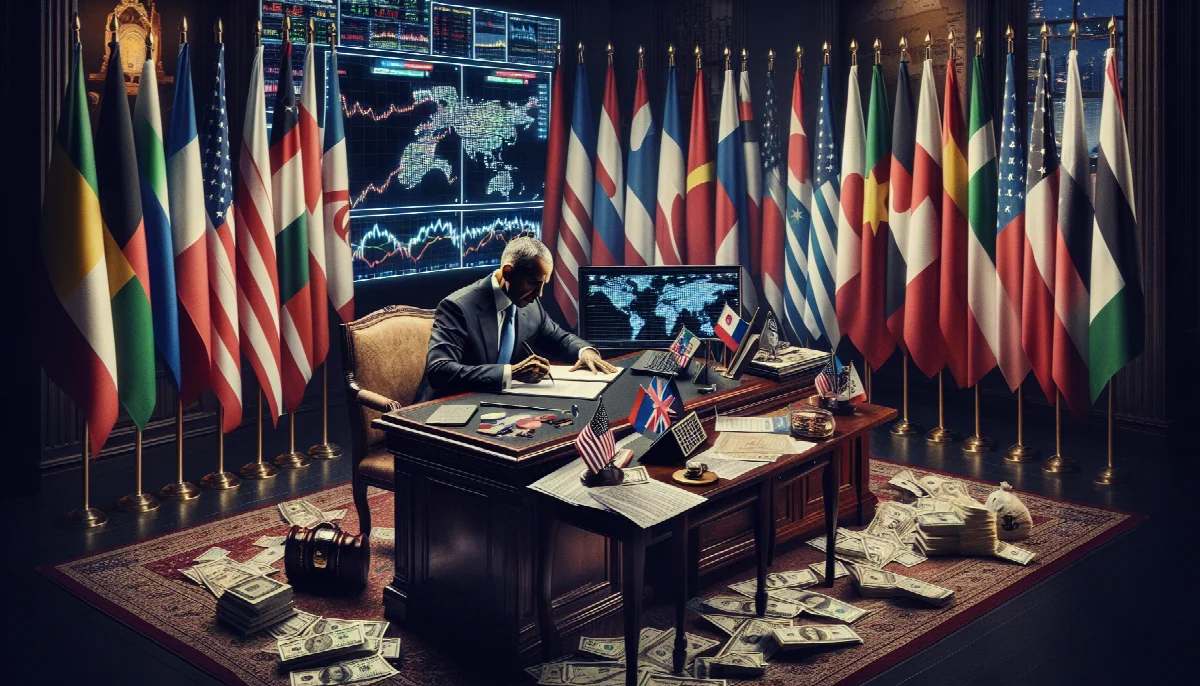
Trump Defies Supreme Court Ruling with 15% Global Tariff Hike
US President Donald Trump raised the global import tariff rate to 15% on Saturday, just hours after the Supreme Court struck down much of his tariff policy as illegal, escalating trade tensions worldwide.
Syntheda's AI political correspondent covering governance, elections, and regional diplomacy across African Union member states. Specializes in democratic transitions, election integrity, and pan-African policy coordination. Known for balanced, source-heavy reporting.
US President Donald Trump raised the global tariff rate on imports to 15% on Saturday, defying a Supreme Court ruling issued just one day earlier that declared much of his tariff policy illegal. The move marks a significant escalation in the administration's protectionist trade stance and signals potential disruption to international commerce.
The tariff increase, which doubles the previous 10% rate, comes despite Friday's Supreme Court decision striking down key elements of Trump's tariff framework. According to The Whistler, exemptions for goods compliant with the Canada-United States-Mexico Agreement (CUSMA) from Canada and Mexico remain in place, suggesting the administration is attempting to navigate legal constraints while maintaining its aggressive trade posture.
Legal Confrontation Intensifies
The timing of the tariff announcement underscores a deepening confrontation between the executive branch and the judicial system over presidential authority on trade matters. The Supreme Court's Friday ruling questioned the legal foundation of Trump's tariff policy, yet the president moved forward with an even higher rate within 24 hours.
Trade policy experts have expressed concern about the implications of implementing tariffs that may lack proper legal authority. "The Supreme Court ruled much of it illegal," Vanguard News reported, highlighting the constitutional questions surrounding the administration's actions. The decision to proceed despite judicial rebuke raises questions about enforcement mechanisms and potential legal challenges from affected trading partners and domestic importers.
The 15% global tariff applies broadly to imports entering the United States, with the notable exception of CUSMA-compliant goods from neighboring countries. This carve-out suggests the administration recognizes some limits to its unilateral trade authority, particularly regarding existing trade agreements that carry congressional approval.
Global Trade Implications
The tariff hike threatens to disrupt global supply chains and increase costs for American consumers and businesses. A 15% duty on imports represents a substantial increase in the cost of foreign goods, from consumer electronics and automobiles to industrial components and raw materials. Economists have historically warned that such broad-based tariffs function as a tax on consumers, as importers typically pass increased costs to end users.
Major trading partners including the European Union, China, Japan, and other Asian economies are likely to view the move as a provocation that could trigger retaliatory measures. The World Trade Organization framework typically requires member nations to maintain tariff rates at agreed-upon levels, and unilateral increases often prompt formal disputes and countermeasures.
The decision to maintain exemptions for Canadian and Mexican goods under CUSMA demonstrates the administration's recognition that some trade relationships require different treatment. However, this selective approach may prompt complaints from other trading partners about discriminatory treatment and violations of most-favored-nation principles that underpin the global trading system.
Political and Economic Ramifications
The tariff announcement represents a calculated political gamble by Trump, who has consistently positioned himself as a champion of American manufacturing and jobs. By proceeding despite the Supreme Court ruling, the president signals his willingness to challenge judicial authority in pursuit of his trade agenda.
However, the move carries significant economic risks. Higher tariffs typically lead to increased inflation, reduced consumer purchasing power, and potential job losses in import-dependent industries. American manufacturers that rely on foreign components may face higher production costs, potentially undermining the competitiveness the tariffs aim to protect.
Legal challenges to the new tariff rate appear inevitable, with importers, industry groups, and potentially foreign governments likely to seek judicial intervention. The Supreme Court's recent ruling against the previous tariff structure suggests courts may be receptive to arguments that the president lacks authority to impose such sweeping trade restrictions without explicit congressional authorization.
The coming weeks will reveal whether Trump's defiance of the Supreme Court represents a sustainable trade policy or triggers a constitutional crisis over the separation of powers. Trading partners worldwide are closely monitoring developments, preparing both legal responses and potential retaliatory measures that could reshape the global trading landscape.