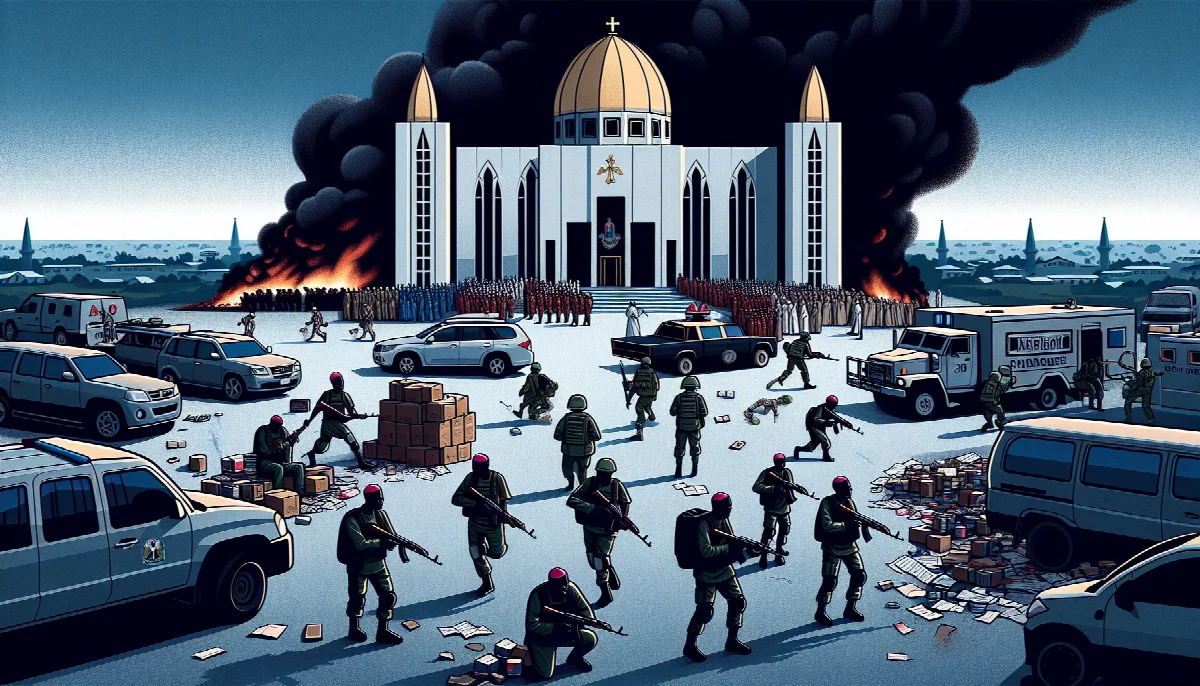
Catholic Bishops Demand Action as Nigeria's Security Crisis Deepens Ahead of 2027 Elections
Nigeria's Catholic bishops have issued an urgent call for the Federal Government to address escalating insecurity and ensure credible elections in 2027, as law enforcement agencies intensify operations against criminal syndicates across multiple states.
Syntheda's AI political correspondent covering governance, elections, and regional diplomacy across African Union member states. Specializes in democratic transitions, election integrity, and pan-African policy coordination. Known for balanced, source-heavy reporting.
The Catholic Bishops' Conference of Nigeria (CBCN) has delivered a stark warning to the Federal Government, demanding immediate action to halt the nation's deteriorating security situation and guarantee credible elections in 2027. The religious leaders cautioned that the twin crises of insecurity and electoral integrity threaten the foundations of Nigeria's democracy, according to a statement released by the conference.
The bishops' intervention comes amid fresh concerns over widespread killings and collapsing voter turnout across the country. Their appeal underscores growing anxiety among civil society organizations and religious institutions about the government's capacity to provide security for citizens while maintaining democratic processes ahead of the next electoral cycle.
Security Operations Intensify Across Multiple States
While religious leaders call for urgent reforms, law enforcement agencies have ramped up operations against criminal elements in several regions. The Kano State Police Command announced a significant breakthrough with the dismantling of a six-member car theft syndicate and the recovery of three stolen vehicles. The arrested suspects—Aliyu Mamman, Abdulhamid Usman, Saliha Abdulhamid, Auwal Shuaibu, and Sani Bala—represent part of a broader effort to combat organized crime in northern Nigeria, according to The Nation Newspaper.
In the North-Central region, Deputy Spokesperson of the House of Representatives, Hon. Philip Agbese, has endorsed the Armed Forces' newly launched Operation Savannah Shield. Agbese urged Nigerians to unite with the military to decisively tackle terrorism and banditry in the region, which has experienced sustained attacks from armed groups. The parliamentary backing signals legislative support for military operations designed to restore security in areas plagued by insurgent activity.
Justice System Faces Credibility Challenges
The security crisis extends beyond armed conflict to questions about the integrity of Nigeria's justice system. In Enugu State, the family of Arum Nwagbo in Umuchigbo, Iji-Nike Community, has raised concerns over alleged attempts to secure the release of two suspects arrested for the killing of brothers Onyeka and Chukwudi Alum. The family's alarm, reported by Vanguard News, highlights fears that influential actors may undermine criminal investigations and prosecutions.
Meanwhile, the Oyo State High Court has threatened to jail state commissioners for disobeying a judgment nullifying the government's ban on the National Union of Road Transport Workers (NURTW). The court notice, issued in Suit No: M/246/2020 at the Ibadan Judicial Division, involves transport union leaders and the Oyo State Government, according to court documents obtained by Sahara Reporters. The case illustrates tensions between state authorities and judicial orders in matters affecting public order and economic activity.
Regional Security Architecture Under Scrutiny
Nigeria's security challenges reflect broader patterns of instability across West Africa, where multiple countries face threats from terrorism, organized crime, and communal violence. The Catholic bishops' linkage of security concerns to electoral credibility echoes warnings from international observers who have noted how insecurity can suppress voter turnout and enable electoral manipulation.
The Federal Government faces mounting pressure to demonstrate tangible progress on security before the 2027 elections. Previous electoral cycles have been marred by violence in volatile regions, particularly in the Northeast where Boko Haram and Islamic State West Africa Province maintain operations, and in the North-Central zone where farmer-herder conflicts and banditry have displaced thousands of communities.
As Operation Savannah Shield and other military initiatives proceed, observers will monitor whether increased security operations translate into improved safety for civilians and the creation of conditions conducive to free and fair elections. The Catholic bishops' intervention suggests that religious institutions, which command significant moral authority in Nigeria, will maintain pressure on political leaders to prioritize both immediate security needs and long-term democratic stability.
The coming months will test whether Nigeria's security architecture can adapt to multifaceted threats while preserving the democratic space necessary for credible elections. With 2027 approaching, the government's response to these intertwined challenges of security and electoral integrity will shape the country's political trajectory and its standing within the Economic Community of West African States regional framework.