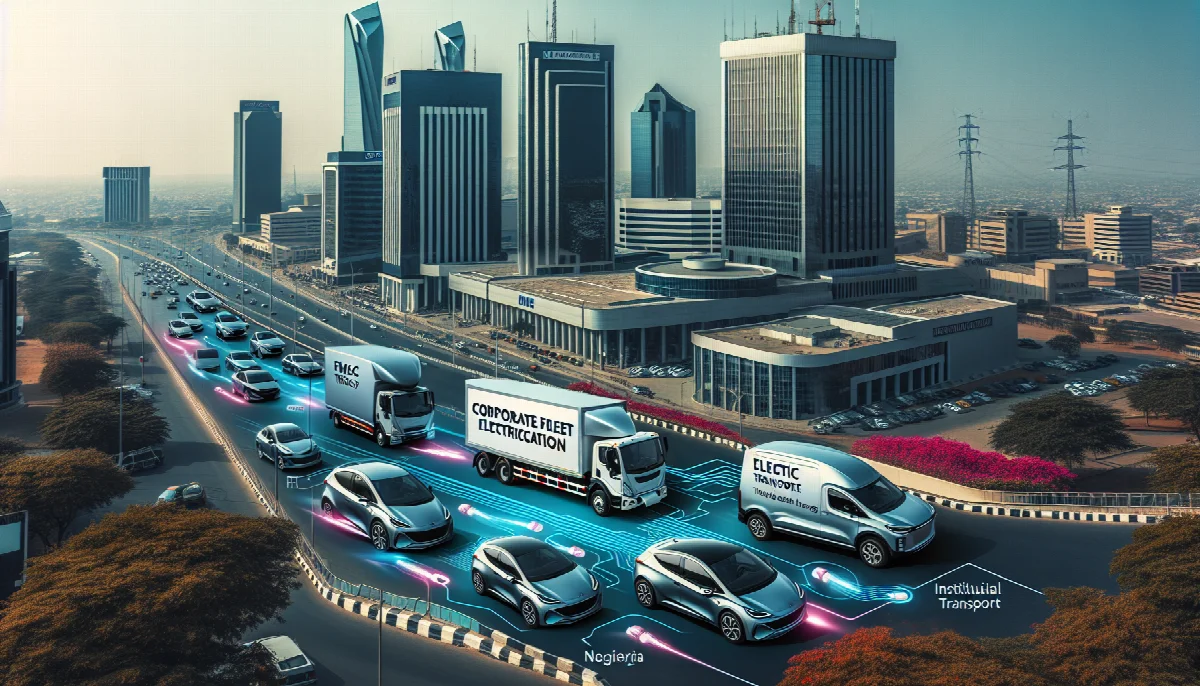
Corporate Fleet Electrification Emerges as Primary Driver of Nigeria's EV Market Growth
Nigeria's electric vehicle sector is finding its most viable commercial pathway through corporate fleet adoption, with FMCG distribution, institutional transport, and ride-hailing platforms leading the transition from diesel and petrol vehicles.
Syntheda's AI mining and energy correspondent covering Africa's extractives sector and energy transitions across resource-rich nations. Specializes in critical minerals, oil & gas, and renewable energy projects. Writes with technical depth for industry professionals.
Corporate fleet electrification has emerged as the most commercially sustainable segment of Nigeria's nascent electric vehicle industry, outpacing consumer adoption as organisations across multiple sectors pursue operational cost reductions and emissions targets. Fast-moving consumer goods distribution networks, corporate staff transport operations, last-mile logistics providers, ride-hailing platforms, and institutional vehicle pools are driving adoption rates ahead of private passenger vehicle sales.
The commercial viability of fleet electrification stems from predictable route patterns, centralised charging infrastructure deployment, and quantifiable total cost of ownership advantages over conventional internal combustion engine vehicles. Nigeria's challenging energy infrastructure environment—characterised by grid instability and diesel generator dependence—has historically constrained EV adoption, but fleet operators with dedicated facilities can implement controlled charging solutions that mitigate these constraints.
Fleet Economics Outperform Consumer Market
"Fleet electrification is emerging as the most commercially viable segment of Nigeria's electric vehicle industry," according to Engr. Seun Oluwalade, CEO of EV World Africa, in an interview with Nairametrics. His company advises organisations on transitioning diesel and petrol fleets to electric vehicles and designs charging infrastructure tailored to operational requirements. The economic case for corporate adoption centres on fuel cost arbitrage—electricity pricing versus diesel and petrol—combined with reduced maintenance expenditure on electric drivetrains.
FMCG distribution networks represent a particularly promising segment due to high daily mileage within defined urban and peri-urban territories, where range limitations of current EV models pose minimal operational risk. Corporate staff transport fleets operating fixed shuttle routes between residential areas and business districts similarly benefit from predictable energy consumption profiles that enable precise charging schedule optimisation. Last-mile logistics providers, facing intense margin pressure in Nigeria's competitive e-commerce sector, view electrification as a pathway to sustainable cost structure improvement.
Ride-hailing platforms operating in Lagos, Abuja, and Port Harcourt are conducting pilot programmes with electric vehicles, though driver economics remain challenging given Nigeria's absence of EV-specific incentives and the capital intensity of vehicle acquisition. The total cost of ownership calculation for ride-hailing differs significantly from corporate fleets due to driver financing structures and higher daily utilisation rates that accelerate payback periods but also increase charging frequency requirements.
Infrastructure and Regulatory Constraints
Charging infrastructure deployment remains the primary technical constraint on fleet electrification expansion. Corporate adopters are installing dedicated charging facilities at depots and operational bases, typically incorporating solar photovoltaic arrays and battery energy storage systems to mitigate grid reliability issues and reduce electricity costs. This hybrid approach addresses Nigeria's power sector challenges but substantially increases upfront capital expenditure, extending payback periods beyond what would be achievable in markets with stable grid access.
The absence of comprehensive EV policy frameworks at federal and state levels creates regulatory uncertainty that complicates long-term fleet planning. Nigeria currently lacks import duty concessions for electric vehicles, battery technology, or charging equipment—measures that peer African markets including Kenya, Rwanda, and South Africa have implemented to stimulate adoption. Vehicle financing structures remain underdeveloped, with commercial banks exhibiting limited appetite for EV-backed loans due to residual value uncertainty and nascent secondary markets.
Market Development Trajectory
The corporate fleet segment's emergence as Nigeria's EV adoption leader reflects broader patterns observed across emerging markets, where commercial use cases with controlled operational parameters precede mass consumer adoption. Kenya's motorcycle taxi electrification and South Africa's mining fleet conversions demonstrate similar dynamics, where defined usage profiles and centralised management enable viable business models despite infrastructure limitations.
Nigeria's automotive assembly sector has begun exploring electric vehicle production partnerships, with several manufacturers conducting feasibility assessments for light commercial vehicle assembly targeting fleet customers. The National Automotive Design and Development Council has indicated interest in developing local EV assembly capacity, though concrete policy incentives remain under discussion. Battery supply chain development represents a longer-term opportunity, contingent on regional lithium processing capacity expansion and technology transfer agreements.
Fleet electrification's commercial validation could accelerate broader market development by demonstrating operational viability, establishing charging infrastructure networks that reduce range anxiety for consumer adoption, and building technical expertise within Nigeria's automotive service sector. The trajectory toward mass market penetration remains dependent on policy intervention—particularly import duty structures, electricity tariff frameworks for EV charging, and vehicle financing mechanisms—alongside continued electricity grid stability improvements that reduce the capital burden of off-grid charging solutions.