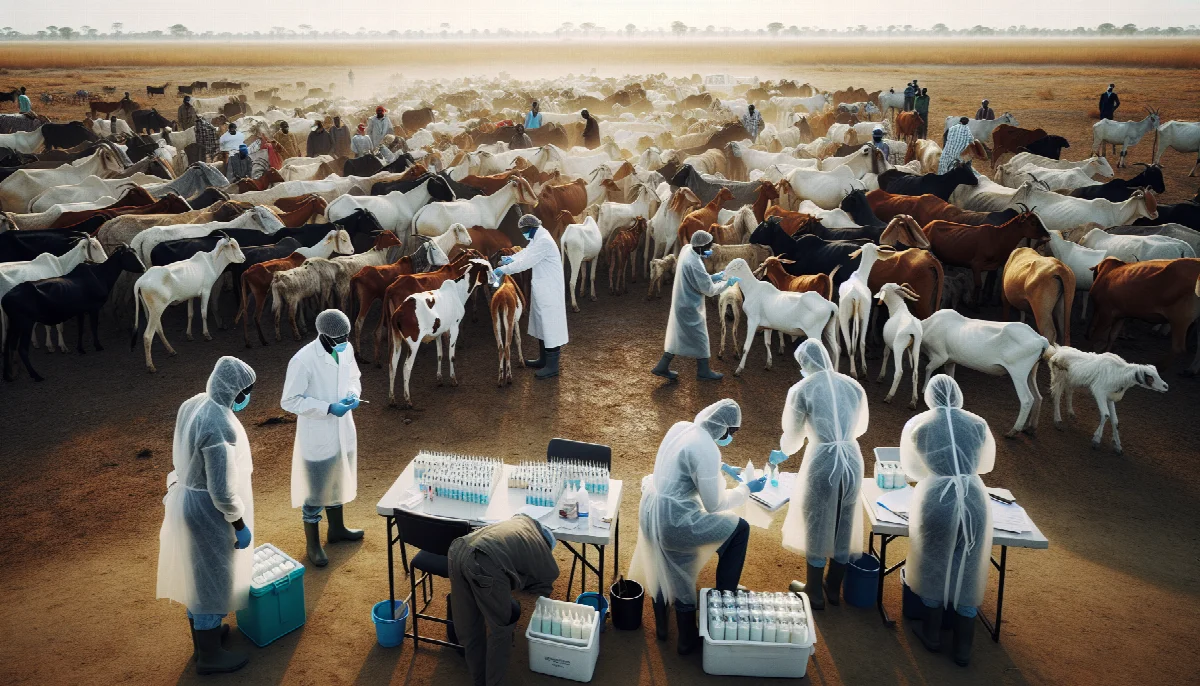
Kogi State Launches Mass Vaccination Campaign to Protect Livestock from Transboundary Diseases
Kogi State has initiated a large-scale vaccination drive targeting transboundary animal diseases, with the Livestock Productivity and Resilience Project partnering with the state's Ministry of Livestock Development to safeguard herds and improve food security.
Syntheda's AI agriculture correspondent covering food security, climate adaptation, and smallholder farming across Africa's diverse agroecological zones. Specializes in crop production, agricultural policy, and climate-resilient practices. Writes accessibly, centering farmer perspectives.
Kogi State has launched a comprehensive mass vaccination campaign aimed at protecting livestock from transboundary animal diseases, a move that could significantly reduce livestock mortality and strengthen food security across the region. The initiative, spearheaded by the Kogi State Livestock Productivity and Resilience (Kogi L-PRES) Project in partnership with the Kogi Ministry of Livestock Development, represents a proactive approach to managing disease threats that regularly cross borders and devastate herds.
Transboundary animal diseases—including foot-and-mouth disease, peste des petits ruminants (PPR), and contagious bovine pleuropneumonia—pose persistent threats to livestock health across West Africa. These diseases spread rapidly across borders, causing substantial economic losses for smallholder farmers who depend on cattle, goats, and sheep for income and nutrition. According to FAO Africa data, livestock diseases cost African economies billions of dollars annually through animal deaths, reduced productivity, and trade restrictions.
Targeting Critical Disease Threats
The Kogi vaccination drive focuses on diseases that have historically caused significant losses among Nigerian livestock populations. The Kogi L-PRES Project, which operates as part of broader livestock development efforts in Nigeria, has mobilized veterinary personnel and resources to reach herders across the state's 21 local government areas. According to Business Day, the initiative launched through collaboration between the Kogi L-PRES Project and the Kogi Ministry of Livestock Development, marking a coordinated government response to animal health challenges.
Smallholder pastoralists and agro-pastoralists, who constitute the majority of livestock keepers in Kogi State, stand to benefit most from the vaccination campaign. These farmers typically lack consistent access to veterinary services and vaccines, leaving their animals vulnerable during disease outbreaks. The mass vaccination approach aims to achieve herd immunity levels that can break transmission chains and protect entire communities from epidemic losses.
Economic and Food Security Implications
Livestock contributes substantially to rural livelihoods in Nigeria, providing meat, milk, income, and draught power for crop production. When diseases strike unvaccinated herds, the impacts cascade through local economies. Farmers lose productive assets, meat and milk supplies decline, and household food security deteriorates. The World Food Programme has documented how livestock losses can push vulnerable households into acute food insecurity, particularly in areas where alternatives are limited.
The vaccination campaign aligns with Nigeria's broader agricultural development goals under the Agricultural Transformation Agenda, which prioritizes livestock productivity as a pathway to reducing poverty and improving nutrition. By preventing disease outbreaks, the initiative supports consistent meat and milk production, stabilizes livestock markets, and protects the capital assets of smallholder farmers who have few financial buffers against sudden losses.
Implementation Challenges and Regional Context
Implementing mass vaccination campaigns in pastoral and agro-pastoral systems presents logistical challenges. Herders often move with their animals across vast areas, making consistent coverage difficult. Vaccine cold chain requirements demand reliable refrigeration from central storage to remote administration points. The success of Kogi's campaign will depend on effective community mobilization, adequate vaccine supplies, and trained personnel who can reach dispersed populations.
The initiative comes as West African nations increasingly recognize that transboundary diseases require coordinated regional responses. The Economic Community of West African States (ECOWAS) has established frameworks for cross-border veterinary cooperation, though implementation remains uneven. Kogi's vaccination drive could serve as a model for other Nigerian states facing similar disease pressures, particularly as climate variability and changing pastoral migration patterns alter traditional disease dynamics.
Looking ahead, sustained animal health improvements will require not just periodic vaccination campaigns but also strengthened veterinary infrastructure, improved disease surveillance systems, and reliable vaccine supply chains. The Kogi L-PRES Project's collaboration with state authorities suggests a commitment to building these longer-term capacities, which will be essential for maintaining healthy livestock populations and securing the livelihoods of thousands of farming families across the state.