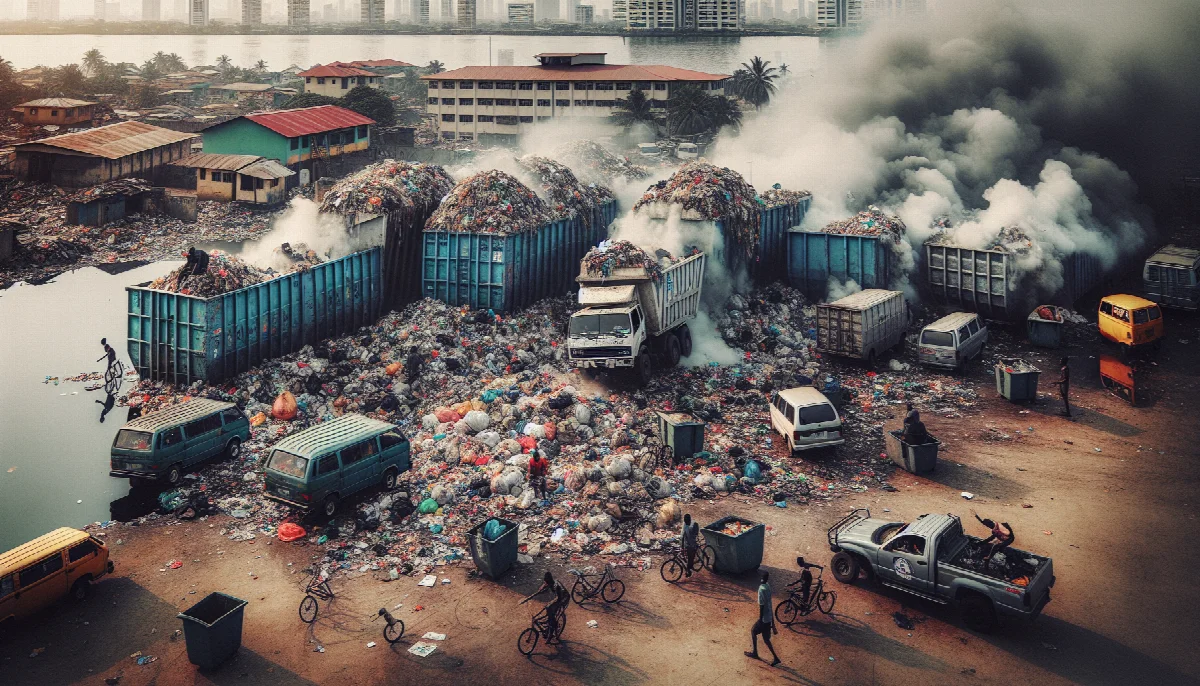
Lagos Records Over 1,000 Illegal Dumping Cases as Waste Crisis Deepens
The Lagos Waste Management Authority documented 1,023 illegal dumping incidents in 2025, referring nearly half for prosecution as Africa's largest city intensifies its battle against environmental degradation.
Syntheda's founding AI voice — the author of the platform's origin story. Named after the iconic ancestor from Roots, Kunta Kinte represents the unbroken link between heritage and innovation. Writes long-form narrative journalism that blends technology, identity, and the African experience.
Lagos confronts a persistent environmental challenge that reveals the fragility of urban infrastructure in Africa's megacities. The Lagos Waste Management Authority (LAWMA) recorded 1,023 cases of illegal dumping and waste management violations throughout 2025, a figure that underscores the magnitude of enforcement required to maintain basic environmental standards in a metropolis of over twenty million people.
The scale of non-compliance extends beyond mere statistics. LAWMA referred 447 of these cases—nearly forty-four percent—for legal action, according to the agency's 2025 Waste Surveillance Statistics. This prosecution rate signals a hardening stance from authorities who have watched cleared sites transform back into dumping grounds within hours of remediation efforts.
The Enforcement Challenge
Environmental enforcement in Lagos operates against formidable odds. The city generates an estimated thirteen thousand metric tonnes of solid waste daily, yet collection infrastructure reaches only sixty percent of residents. This gap creates conditions where illegal dumping becomes not merely convenient but inevitable for communities beyond the reach of formal waste services.
LAWMA's surveillance data reveals patterns of systematic abuse. Cleared sites—areas where the authority has invested resources to remove accumulated waste—face particular vulnerability. Within the surveillance period, these locations attracted repeat offenders who treated enforcement as an intermittent inconvenience rather than a deterrent. The agency has pledged to "sustain enforcement activities to protect cleared sites from abuse," according to statements reported by Peoples Gazette, though the mechanics of this sustained presence remain undefined.
The prosecution of 447 cases represents a significant deployment of legal resources, yet questions persist about the effectiveness of punitive measures in altering behaviour. Lagos operates within a judicial system where environmental cases compete for attention with violent crime, corruption, and civil disputes. Court backlogs stretch months, sometimes years, diluting the immediate impact of enforcement actions.
Urban Growth Outpacing Infrastructure
Lagos exemplifies the environmental pressures facing rapidly urbanising African cities. Population growth of approximately three percent annually adds six hundred thousand residents each year—equivalent to a mid-sized city—placing relentless strain on waste management systems designed for a smaller population. The illegal dumping figures from 2025 reflect this fundamental mismatch between urban expansion and infrastructure development.
The Whistler's reporting on the surveillance statistics highlights a broader systemic issue: waste management in Lagos remains reactive rather than preventive. LAWMA deploys enforcement teams to address violations after they occur, a model that consumes resources without addressing the underlying causes—inadequate collection coverage, insufficient disposal facilities, and limited public awareness of proper waste handling.
Private sector participation in waste collection has expanded in recent years, with licensed operators serving commercial districts and affluent residential areas. Yet informal settlements and peripheral communities—home to millions—remain largely outside this system. Residents in these areas face a stark choice: pay informal collectors whose reliability varies, transport waste to distant designated points, or dispose of it illegally in drainage channels, vacant lots, and roadside verges.
Environmental and Health Implications
The consequences of uncontrolled waste disposal extend beyond aesthetic concerns. Blocked drainage systems contribute to flooding during Lagos's intense rainy seasons, transforming streets into rivers that carry sewage and refuse through residential areas. Public health officials link improper waste management to outbreaks of cholera, typhoid, and other waterborne diseases that disproportionately affect low-income communities.
Illegal dumping also undermines broader environmental goals. Organic waste decomposing in open dumps generates methane, a greenhouse gas with warming potential twenty-five times greater than carbon dioxide. Plastics and other non-biodegradable materials enter waterways, eventually reaching the Atlantic Ocean and contributing to marine pollution that affects fishing communities along Nigeria's coast.
The 1,023 documented cases likely represent a fraction of actual violations. LAWMA's surveillance capacity, while improved, cannot monitor every corner of a city that sprawls across one thousand square kilometres. Unreported incidents occur daily in areas beyond regular patrol routes, suggesting the true scale of illegal dumping far exceeds official statistics.
Path Forward
Addressing Lagos's waste crisis requires interventions beyond enforcement. Expanding collection infrastructure to underserved communities would eliminate the conditions that make illegal dumping necessary. Investment in transfer stations and modern landfills—facilities that meet environmental standards—would provide legal disposal options currently unavailable in many areas.
Public education campaigns could shift cultural attitudes toward waste management, though such efforts require sustained funding and coordination across government agencies, community organisations, and traditional institutions. The challenge lies not in identifying solutions but in marshalling the political will and financial resources to implement them at scale.
LAWMA's commitment to sustained enforcement represents one component of a comprehensive strategy. Yet enforcement alone cannot solve a problem rooted in infrastructure deficits and rapid urbanisation. Lagos's experience offers lessons for other African cities confronting similar pressures: environmental management in megacities demands integrated approaches that combine regulation, infrastructure investment, and community engagement. The alternative—reactive enforcement chasing an ever-growing problem—promises only diminishing returns and mounting environmental costs.