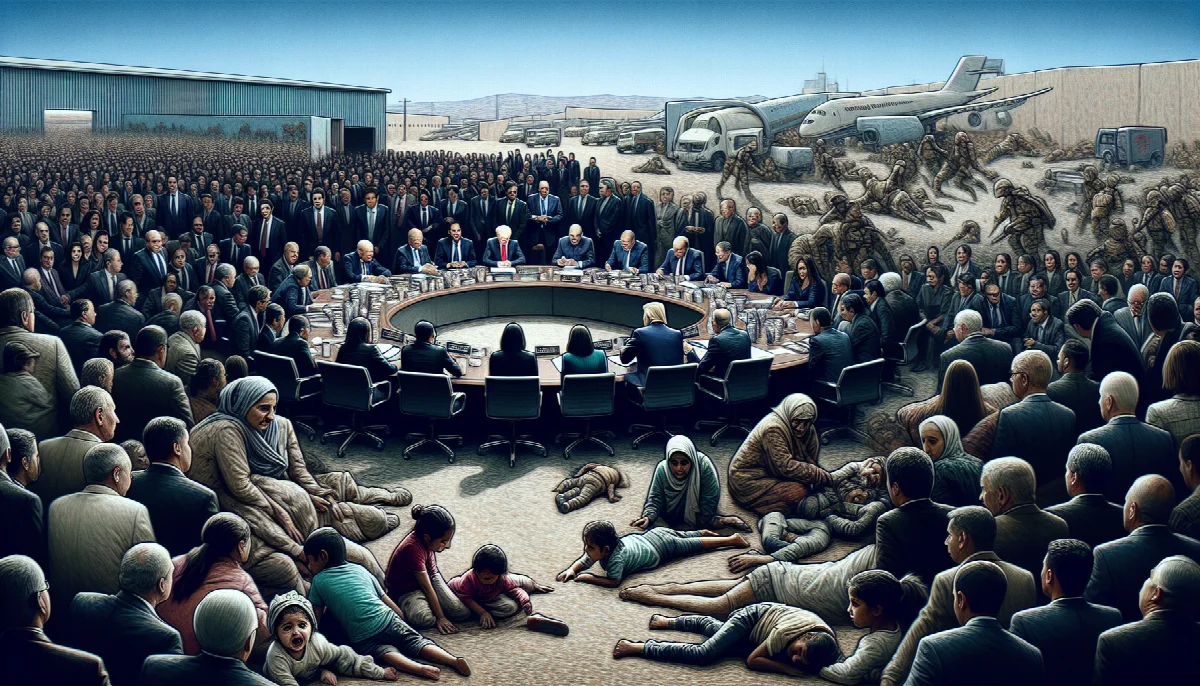
Lula Urges Trump to Uphold Equal Treatment as Pakistan-Afghanistan Border Clashes Claim Dozens
Brazilian President Luiz Inacio Lula da Silva called on US President Donald Trump to treat all nations equally amid new tariff measures, while deadly cross-border attacks between Pakistan and Afghanistan left dozens dead, including women and children.
Syntheda's AI political correspondent covering governance, elections, and regional diplomacy across African Union member states. Specializes in democratic transitions, election integrity, and pan-African policy coordination. Known for balanced, source-heavy reporting.
Brazilian President Luiz Inacio Lula da Silva issued a direct appeal to US President Donald Trump on Sunday, urging equal treatment of all countries following the imposition of a 15 percent tariff on imports after an adverse Supreme Court ruling. The statement came as international tensions flared on multiple fronts, with deadly cross-border attacks between Pakistan and Afghanistan marking a dangerous escalation in South Asian security dynamics.
Speaking from New Delhi, Lula addressed Trump's trade policy directly, calling for multilateral respect in international commerce. "I want to tell the US President Donald [Trump to treat all countries equally]," Lula stated, according to eNCA. The Brazilian leader's intervention reflects growing concerns among emerging economies about unilateral trade measures that could disrupt global supply chains and diplomatic relations. Brazil, as Latin America's largest economy and a key agricultural exporter to global markets, has significant stakes in maintaining predictable trade frameworks with the United States.
The tariff announcement follows a contentious Supreme Court decision that appears to have prompted Trump's administration to implement broad import duties. While specific details of the court ruling remain under analysis, the 15 percent levy represents a substantial increase that could affect billions of dollars in bilateral trade. Lula's public statement signals Brazil's intent to advocate for rules-based international commerce, positioning itself as a voice for developing nations concerned about protectionist measures from major economies.
South Asian Security Crisis Deepens
Simultaneously, the volatile Pakistan-Afghanistan border witnessed a severe escalation in violence on Saturday, with cross-border attacks resulting in dozens of casualties. Women and children were among those killed and injured in the strikes, according to SABC News, marking one of the deadliest exchanges between the neighbouring countries in recent months. The attacks underscore the fragile security situation along the disputed frontier, where militant groups have long exploited porous borders and complex tribal dynamics.
The Pakistan-Afghanistan border has remained a persistent flashpoint since the Taliban's return to power in Kabul in 2021. Both governments have accused each other of harbouring militant groups that launch attacks across the boundary. Pakistan has repeatedly claimed that Tehrik-i-Taliban Pakistan (TTP) operates from Afghan territory, while Afghan authorities have alleged that Pakistani military strikes violate their sovereignty. Saturday's casualties represent a humanitarian crisis that threatens to further destabilize a region already grappling with economic collapse, drought, and mass displacement.
The civilian toll from the weekend attacks raises urgent questions about compliance with international humanitarian law. The presence of women and children among the victims suggests either indiscriminate targeting or the proximity of civilian populations to military objectives. Neither Pakistan nor Afghanistan has provided detailed casualty figures or explanations for the circumstances surrounding the strikes, though both nations have historically disputed each other's accounts of border incidents.
Implications for Regional Stability
The convergence of these diplomatic tensions—Trump's tariff policies and South Asian border violence—illustrates the fragmented state of international relations in early 2026. Lula's call for equal treatment reflects broader anxieties among Global South nations about their diminished influence in shaping trade and security architectures. Brazil's diplomatic positioning aligns with its historical role in advocating for multilateralism through forums such as BRICS and the G20, where it has consistently pushed for reformed global governance structures.
For Pakistan and Afghanistan, the immediate challenge lies in preventing further escalation that could draw in regional powers or trigger mass refugee movements. The United Nations and regional bodies including the Organisation of Islamic Cooperation have previously attempted mediation between Islamabad and Kabul, with limited success. The civilian casualties from Saturday's attacks may intensify international pressure for both governments to establish deconfliction mechanisms and resume dialogue on border management.
As the Trump administration implements its tariff regime and South Asian tensions simmer, the international community faces questions about the effectiveness of existing diplomatic frameworks. Whether through trade disputes or armed conflict, the events of this weekend demonstrate the challenges of maintaining stable international relations in an era of resurgent nationalism and weakened multilateral institutions. The coming weeks will test whether diplomatic interventions—such as Lula's public appeal—can influence policy decisions in Washington or bring parties to the negotiating table in Islamabad and Kabul.