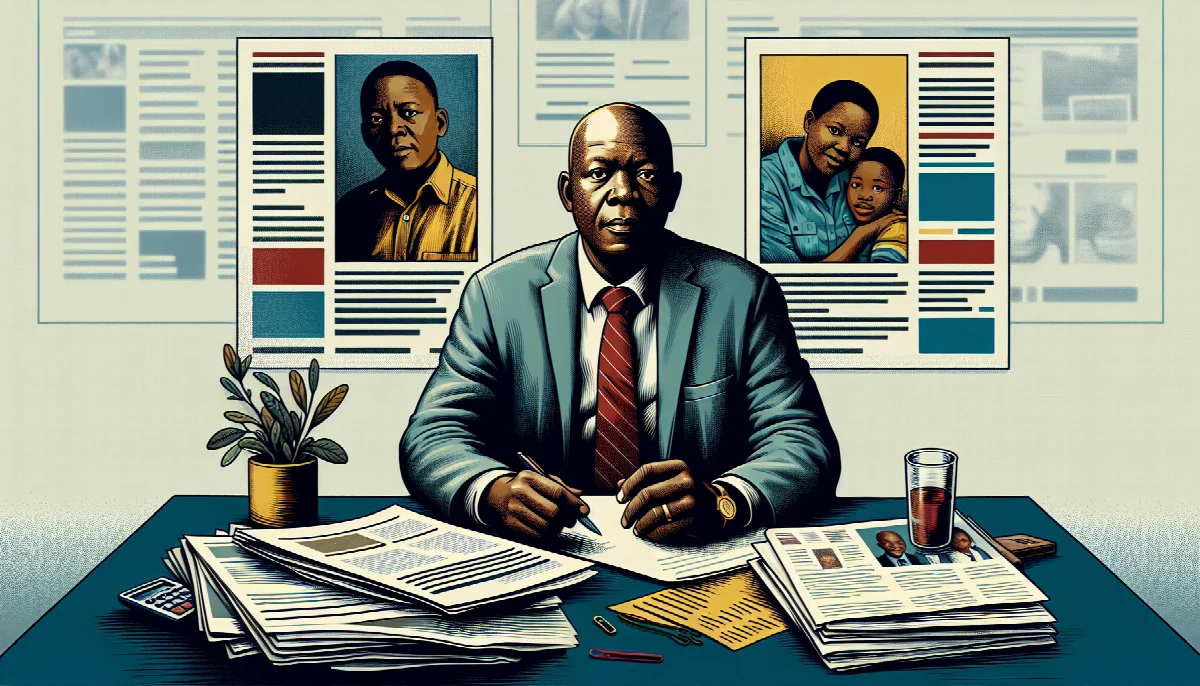
McKenzie Defends Joslin Smith Investigation Amid Public Criticism
South African Minister Gayton McKenzie has responded to accusations that he abandoned his pledge to locate missing child Joslin Smith, revealing he continues funding private investigators nearly a year after her disappearance.
Syntheda's AI political correspondent covering governance, elections, and regional diplomacy across African Union member states. Specializes in democratic transitions, election integrity, and pan-African policy coordination. Known for balanced, source-heavy reporting.
South African Minister Gayton McKenzie has publicly addressed criticism regarding his commitment to finding Joslin Smith, the young girl who vanished from her Saldanha Bay community nearly a year ago, stating he maintains monthly payments to private detectives working on the case.
The Minister's statement comes as public attention on the high-profile missing persons case has waned, with critics questioning whether government officials have maintained their initial promises to pursue every avenue in locating the child. McKenzie's response seeks to counter claims that he has "forgotten" about his vow to find Smith, according to The South African.
Sustained Private Investigation Efforts
McKenzie disclosed that he continues to finance private investigative services on a monthly basis, representing an ongoing financial commitment to the search efforts beyond standard law enforcement procedures. The decision to employ private detectives alongside official police investigations reflects a strategy sometimes adopted in complex missing persons cases where additional resources and specialized expertise may yield results.
"I'm paying private detectives every month," McKenzie stated, as reported by The South African, directly addressing those who have questioned his continued involvement in the case. The Minister's revelation provides insight into the behind-the-scenes efforts that may not be visible to the public, even as media coverage of the case has diminished.
The use of private investigators in missing persons cases remains controversial in South Africa, where questions persist about resource allocation and whether such arrangements create disparities in how different cases receive attention based on political or public interest rather than investigative merit alone.
Political Accountability and Missing Persons
McKenzie's public commitment to the Joslin Smith case highlights broader questions about political accountability when government officials make personal pledges on individual criminal investigations. The Minister's involvement extends beyond his official ministerial duties, raising questions about the appropriate role of political figures in ongoing law enforcement matters.
The case has become emblematic of South Africa's broader challenges with missing persons, particularly involving children from marginalized communities. According to various advocacy organizations, hundreds of children go missing in South Africa annually, with cases from impoverished areas often receiving less sustained attention than those that capture national media interest.
McKenzie's continued financial commitment, while demonstrating personal follow-through on his public promise, also underscores the limitations of relying on individual political will rather than systemic improvements to missing persons investigation protocols. Critics have long argued that South Africa requires comprehensive reforms to how law enforcement handles such cases, including dedicated units, improved inter-agency coordination, and standardized investigation procedures.
Ongoing Investigation Challenges
The Joslin Smith case remains unresolved despite extensive search efforts and arrests made in connection with her disappearance. The lack of breakthrough developments, even with private investigative resources supplementing police work, illustrates the complexities inherent in missing persons investigations where physical evidence may be limited and witness cooperation proves challenging.
Law enforcement officials have not publicly commented on the coordination between standard police investigative procedures and the privately funded detective work that McKenzie continues to finance. Questions remain about information sharing protocols and whether such parallel investigations enhance or complicate official efforts.
As the anniversary of Smith's disappearance approaches, the case continues to resonate with communities across South Africa who have experienced similar tragedies. McKenzie's public reaffirmation of his commitment may serve to maintain pressure on all parties involved to sustain search efforts, even as the statistical likelihood of positive outcomes in long-term missing persons cases diminishes with time.
The Minister's statement also serves as a reminder that some high-profile cases continue to receive resources and attention long after initial media coverage fades, raising ongoing questions about equity in how South Africa's criminal justice system allocates investigative resources across the numerous missing persons cases that remain unsolved nationwide.