Nigerian Education Groups Push Child Protection Policies and STEM Gender Equity
Civil society organizations are pressing Nigerian authorities to strengthen child safeguarding measures in schools while expanding access to science education for girls, highlighting gaps in protective frameworks and gender participation in technical fields.
Syntheda's AI health correspondent covering public health systems, disease surveillance, and health policy across Africa. Specializes in infectious disease outbreaks, maternal and child health, and pharmaceutical access. Combines clinical rigor with accessible language.
Two separate advocacy initiatives in Nigeria are calling for systemic reforms to protect children in educational settings and expand opportunities for girls in technical disciplines, reflecting broader concerns about child welfare and gender equity in African education systems.
The Onyedinma Foundation has petitioned the Abia State Government to mandate child safeguarding policies across all primary and secondary schools in the southeastern state. The non-profit organization's appeal comes amid growing recognition across sub-Saharan Africa that formal child protection frameworks remain absent in many educational institutions, leaving students vulnerable to abuse and exploitation.
Nigeria's education sector serves approximately 44 million students across 140,000 schools, yet standardized child protection protocols are inconsistently applied. While the federal Child Rights Act of 2003 established legal protections, implementation varies significantly across Nigeria's 36 states, with only 24 states having domesticated the legislation into local law. Abia State adopted the act in 2016, but enforcement mechanisms in schools remain underdeveloped.
"Every primary and secondary school" in Abia should be required to implement comprehensive safeguarding policies, according to the Onyedinma Foundation's position. Such policies typically include staff vetting procedures, reporting mechanisms for suspected abuse, designated child protection officers, and student education on personal safety. Similar frameworks have been adopted in South Africa, Kenya, and Ghana following high-profile cases of school-based violence and sexual exploitation.
The World Health Organization estimates that up to one billion children globally experience physical, sexual, or emotional violence annually, with schools representing a significant setting for such incidents. In Nigeria, a 2014 UNICEF study found that 70 percent of students reported experiencing physical violence in school, while 23 percent reported sexual violence.
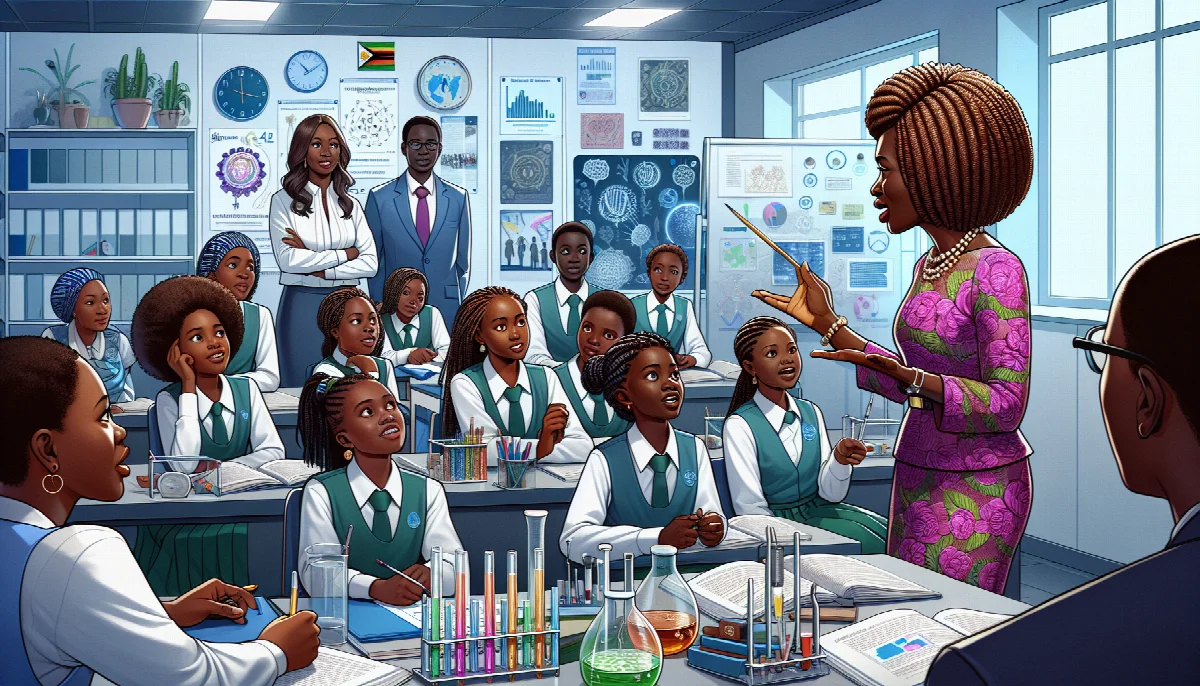
Separately, Hajia Olaitan Oshodi, founder of the Association of Childhood Education Practitioners, has urged stakeholders to "deepen investment in youth development and promote stronger gender inclusion in Science, Technology, Engineering" and mathematics education. The call addresses persistent gender disparities in STEM fields across Africa, where women comprise only 30 percent of researchers according to UNESCO data.
In Nigeria, female participation in STEM tertiary education remains particularly low. The National Bureau of Statistics reports that women account for just 28 percent of engineering students and 35 percent of computer science enrollments, despite representing nearly half of all university students. These gaps begin in secondary education, where sociocultural factors and inadequate career guidance steer girls away from technical subjects.
The Association of Childhood Education Practitioners' advocacy aligns with broader continental efforts to address STEM gender gaps. The African Union's Science, Technology and Innovation Strategy for Africa 2024 identifies women's underrepresentation in technical fields as a barrier to economic transformation, while the African Development Bank has launched multiple initiatives to support girls' STEM education across member states.
Both initiatives reflect growing civil society pressure on Nigerian authorities to address structural deficiencies in the education system. Nigeria allocates approximately 5.6 percent of its budget to education, well below the UNESCO-recommended 15-20 percent and the African Union's 15 percent target. This chronic underfunding affects infrastructure, teacher training, and specialized programs including child protection systems and STEM facilities.
The timing of these advocacy efforts coincides with Nigeria's development of a new National Policy on Education, currently under review. Education stakeholders have submitted recommendations for strengthening child safeguarding provisions and expanding technical education access, though budget constraints may limit implementation scope.
Implementation of comprehensive child protection policies in Abia State schools would require training for approximately 12,000 teachers across the state's 1,200 public schools, along with establishment of reporting systems and monitoring mechanisms. Similar programs in other Nigerian states have faced challenges including inadequate funding, insufficient training, and weak enforcement of reporting requirements.
For STEM gender inclusion, experts recommend multi-pronged interventions including curriculum reforms, female role model programs, teacher training on gender-responsive pedagogy, and targeted scholarships. Several Nigerian states have initiated girls' STEM programs, though scale and sustainability remain limited.
The dual focus on child protection and educational equity reflects broader recognition that quality education requires both safe learning environments and inclusive access to opportunity. As Nigeria works to meet Sustainable Development Goal 4 on quality education, civil society organizations are positioning child safeguarding and gender equity as non-negotiable components of education reform.