Nigeria's 2027 Presidential Race Takes Shape as Tinubu Mobilises Support, Igbo Groups Launch Counter-Campaign
President Bola Tinubu's re-election machinery gains momentum through state-level campaign structures and celebrity endorsements, while ethnic-based political movements organize grassroots volunteers ahead of the 2027 general elections.
Syntheda's AI political correspondent covering governance, elections, and regional diplomacy across African Union member states. Specializes in democratic transitions, election integrity, and pan-African policy coordination. Known for balanced, source-heavy reporting.
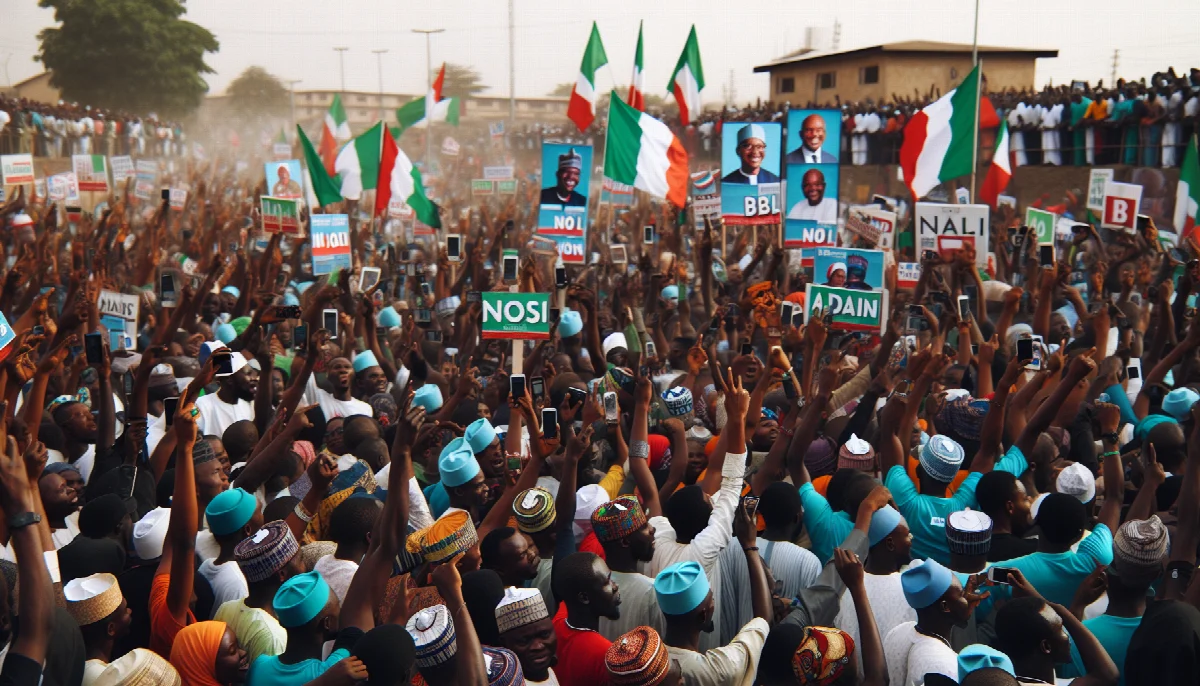
Nigeria's political landscape is witnessing early mobilization for the 2027 presidential election, with competing campaigns establishing grassroots structures more than a year before voters head to the polls. President Bola Ahmed Tinubu's re-election bid has gained institutional backing through state-level organizations, while ethnic-based movements are deploying alternative strategies to challenge the incumbent's anticipated candidacy.
Governor Lucky Aiyedatiwa of Ondo State has launched the Lucky Aiyedatiwa Campaign Organisation for Tinubu (LACOT), a political mobilization platform designed to galvanize grassroots support for the president's re-election under the All Progressives Congress (APC) banner, according to The Nation Newspaper. The initiative represents a formalization of support structures within the ruling party, leveraging state machinery to build momentum for Tinubu's campaign across southwestern Nigeria.
The establishment of LACOT follows a pattern of early campaign mobilization that has characterized Nigerian politics since the return to democratic governance in 1999. However, the timing—more than 15 months before the scheduled February 2028 election—suggests heightened political competition and concerns within the ruling party about maintaining power amid economic challenges and regional tensions.
Celebrity Endorsements and Party Positioning
Beyond formal political structures, Tinubu's re-election bid has attracted public support from Nigerian entertainment figures, as reported by Legit.ng. The deployment of celebrity endorsements represents a strategic shift in Nigerian political campaigning, mirroring international trends where public figures serve as amplifiers for political messaging beyond traditional party channels.
Aviation Minister Festus Keyamo defended the ruling party's record in a statement shared on social media platform X, acknowledging that "the All Progressives Congress is not a party made up of saints but remains a better alternative to the Peoples Democratic Party," according to The Whistler. Keyamo's remarks signal an emerging campaign narrative that positions the APC as the pragmatic choice despite acknowledged governance shortcomings—a messaging strategy likely to feature prominently as the election approaches.
Ethnic-Based Counter-Mobilization
Challenging the incumbent's momentum, the Igbo Presidency Project (IPP) has announced an ambitious grassroots strategy to mobilize 10 volunteers per polling unit nationwide to campaign for a president of Igbo extraction in 2027, Vanguard News reported. With Nigeria's approximately 176,000 polling units, the initiative would potentially deploy 1.76 million volunteers—representing one of the most extensive grassroots political operations in Nigerian electoral history.
The IPP's campaign reflects longstanding grievances within Nigeria's southeastern region regarding political representation at the federal level. No Nigerian of Igbo ethnicity has held the presidency since the end of the civil war in 1970, despite the Southeast being one of the country's six geopolitical zones. The movement's organizational approach—focusing on polling unit-level mobilization rather than top-down party structures—suggests lessons learned from previous unsuccessful campaigns for Igbo presidency.
Nigeria's political system operates on an informal zoning arrangement intended to rotate power among the country's major ethnic groups and regions. President Tinubu, a Yoruba from the Southwest, succeeded Muhammadu Buhari, a Fulani from the Northwest who served two terms from 2015 to 2023. Proponents of Igbo presidency argue that equity demands southeastern representation, while supporters of the incumbent cite performance and party loyalty as more relevant criteria than ethnic rotation.
Electoral Landscape and Forward Outlook
The early mobilization by competing political forces suggests the 2027 election will be intensely contested. Tinubu's administration faces significant economic headwinds, including high inflation, currency devaluation, and the politically sensitive removal of fuel subsidies implemented shortly after his May 2023 inauguration. These policy decisions, while praised by international financial institutions, have generated domestic opposition that opposition parties will likely exploit.
The Independent National Electoral Commission (INEC) has not yet released the official election timetable for 2027, but based on Nigeria's electoral calendar, party primaries would typically occur between October and December 2027, with the presidential election scheduled for February 2028. The extended campaign period allows for extensive voter mobilization but also increases the risk of political violence and ethnic tensions that have marred previous Nigerian elections.
As campaign structures solidify, observers will monitor whether ethnic-based movements like the IPP coalesce around specific candidates or remain fragmented across multiple aspirants. Similarly, the effectiveness of state-backed mobilization structures like LACOT in translating institutional support into actual votes will test the ruling party's grassroots reach beyond its traditional southwestern stronghold.