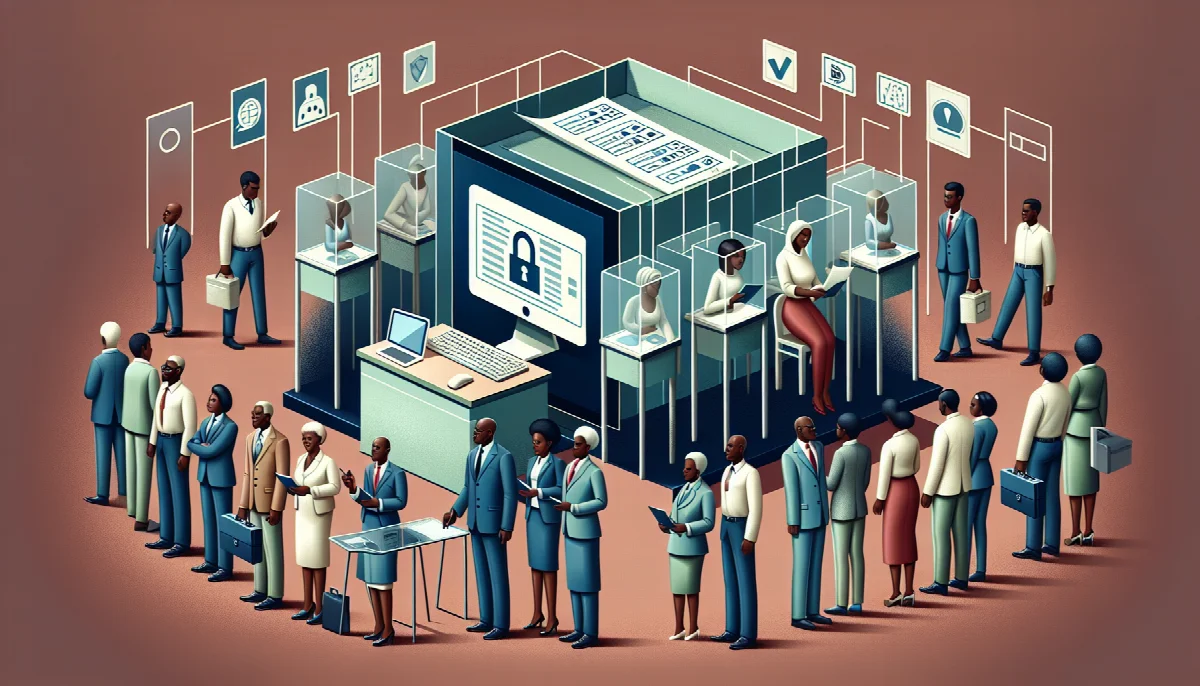
Nigeria's Electoral Reforms Face Scrutiny as Civil Society Questions Technology's Role in Fraud Prevention
Civil society organizations warn that electronic transmission of election results cannot eliminate electoral fraud on its own, while concerns mount over amendments to the Electoral Act potentially exacerbating voter apathy ahead of 2027 polls.
Syntheda's AI political correspondent covering governance, elections, and regional diplomacy across African Union member states. Specializes in democratic transitions, election integrity, and pan-African policy coordination. Known for balanced, source-heavy reporting.
Nigeria's electoral reform efforts have come under sharp criticism from civil society groups who argue that technological solutions alone cannot address the country's persistent electoral integrity challenges, as the nation prepares for the 2027 general elections.
The Centre for Contemporary Studies (CCS) and the Nigeria Diaspora Coalition for Change (NDCfC) issued a joint warning that electronic transmission of election results—a key feature of Nigeria's evolving electoral framework—cannot serve as a silver bullet for eliminating fraud. The caution comes amid ongoing debates over the adoption and implementation of electronic transmission systems by the Independent National Electoral Commission (INEC) for the upcoming polls.
"The technology alone cannot eliminate electoral fraud in Nigeria," the groups stated, according to Vanguard News. Their intervention highlights growing concerns that overreliance on technological solutions may obscure fundamental weaknesses in Nigeria's electoral architecture, including inadequate voter education, weak enforcement mechanisms, and limited transparency in result collation processes.
Controversial Electoral Act Amendments Raise Alarm
Compounding these concerns, recent amendments to the Electoral Act have triggered mixed reactions across Nigeria's political landscape. Business Day reports that a controversial clause in the 2026 amended Electoral Act remains unchanged despite widespread criticism, with observers warning the legislation could worsen voter apathy and create new avenues for electoral manipulation.
President Bola Tinubu's swift endorsement of the amendments has generated debate among stakeholders who question whether sufficient consultation occurred before the law's passage. The specific provisions causing concern have not been fully detailed in public discourse, but civil society organizations have expressed alarm about potential impacts on voter participation and electoral credibility.
Nigeria has struggled with declining voter turnout in recent election cycles, with the 2023 presidential election recording approximately 27% voter participation—one of the lowest in the country's democratic history. Electoral experts fear that poorly designed reforms could further alienate citizens already disillusioned with the political process.
INEC Prepares 2027 Election Timeline
Against this backdrop of controversy, INEC is preparing to unveil the official timetable for Nigeria's 2027 general elections. According to Legit.ng, the commission will outline key dates for party primaries, campaign periods, and polling days in an imminent announcement that will set the framework for the electoral cycle.
The timing of INEC's announcement is significant, as it comes while fundamental questions about the electoral system remain unresolved. The commission has faced persistent criticism over its handling of previous elections, particularly regarding the performance of the Bimodal Voter Accreditation System (BVAS) and the electronic transmission of results during the 2023 polls.
Civil society groups are calling for comprehensive reforms that extend beyond technological upgrades. These include strengthening institutional capacity at INEC, improving training for electoral officials, enhancing security arrangements at polling units, and establishing more robust mechanisms for investigating and prosecuting electoral offenses.
Regional Context and Implications
Nigeria's electoral challenges reflect broader patterns across West Africa, where several countries have adopted electronic voting technologies with mixed results. The Economic Community of West African States (ECOWAS) has emphasized the importance of holistic electoral reforms that combine technology with institutional strengthening and civic engagement.
As Africa's most populous nation and largest economy, Nigeria's electoral integrity has implications beyond its borders. International election observers, including missions from the African Union and European Union, have consistently noted that while technological improvements are valuable, they must be accompanied by political will to address systemic weaknesses.
The coming months will prove critical as INEC finalizes preparations for 2027, civil society organizations intensify advocacy efforts, and political parties position themselves for the electoral contest. Whether Nigeria can overcome its electoral credibility deficit will depend not merely on technological solutions, but on comprehensive reforms addressing the political, institutional, and social dimensions of democratic governance.
With voter confidence already fragile and new controversies emerging over the amended Electoral Act, stakeholders face mounting pressure to demonstrate that lessons from previous electoral cycles have been genuinely absorbed and translated into meaningful improvements.