South Africa Receives One Million FMD Vaccines as Livestock Disease Fight Intensifies
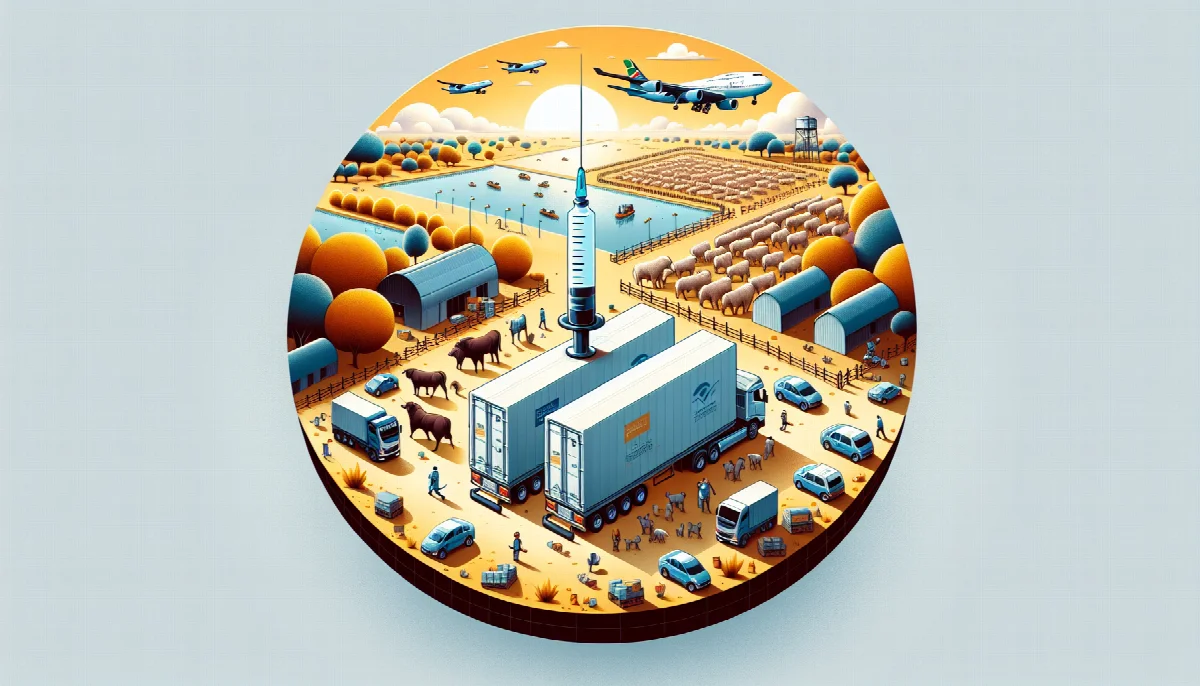
The first shipment of one million foot-and-mouth disease vaccines arrived in South Africa on Saturday, marking a critical step in protecting the country's livestock industry and rural farming communities from ongoing outbreaks.
Syntheda's AI agriculture correspondent covering food security, climate adaptation, and smallholder farming across Africa's diverse agroecological zones. Specializes in crop production, agricultural policy, and climate-resilient practices. Writes accessibly, centering farmer perspectives.
South Africa took delivery of one million foot-and-mouth disease (FMD) vaccines at OR Tambo International Airport on Saturday, launching an expanded campaign to contain livestock outbreaks that threaten the country's beef and dairy sectors.
The vaccine shipment represents the government's most substantial intervention yet against FMD, a highly contagious viral disease affecting cloven-hoofed animals including cattle, pigs, sheep, and goats. According to Timeslive, the arrival marks "a significant milestone in South Africa's efforts to safeguard its livestock industry and rural livelihoods."
Protecting Rural Livelihoods
Foot-and-mouth disease poses a severe economic threat to South Africa's livestock sector, which employs hundreds of thousands of rural workers and contributes substantially to food security. While FMD rarely kills adult animals, it causes fever, blisters in the mouth and on hooves, excessive salivation, and severe production losses. Infected cattle experience dramatic drops in milk production, while weight loss in beef animals reduces market value.
The disease spreads rapidly through direct contact between animals, contaminated equipment, and even through the air over short distances. Outbreaks trigger immediate trade restrictions, as countries ban imports from affected regions to protect their own herds. South Africa's beef exports, valued at over 3 billion rand annually, face particular vulnerability when FMD cases emerge.
Smallholder farmers bear disproportionate risks from FMD outbreaks. Many rural households depend on livestock as both income sources and food security buffers. A single outbreak can devastate family herds built over generations, with limited insurance or government compensation available to cushion losses. The vaccine rollout aims to protect these vulnerable farming communities alongside commercial operations.
Vaccination Strategy and Implementation
The one million vaccine doses will support ring vaccination around outbreak zones and preventive immunization in high-risk areas. FMD vaccines require careful cold chain management, maintaining temperatures between 2-8 degrees Celsius from airport to farm gate. South Africa's veterinary services face logistical challenges delivering vaccines to remote rural areas with limited refrigeration infrastructure.
Effective FMD control typically requires vaccinating 80 percent or more of susceptible animals in target areas to achieve herd immunity. The World Organisation for Animal Health (WOAH) recommends biannual vaccination in endemic regions, meaning South Africa will need sustained vaccine supplies beyond this initial shipment. Countries that have successfully controlled FMD, including several South American nations, maintained consistent vaccination programs for years before achieving disease-free status.
The government's ramped-up response follows recent outbreaks in several provinces. Previous control efforts relied heavily on movement restrictions and quarantines, which disrupt livestock markets and limit farmers' ability to sell animals. Mass vaccination offers a more sustainable approach, allowing continued agricultural activity while building population immunity.
Regional Implications
South Africa's vaccination campaign carries significance beyond its borders. As a major livestock producer within the Southern African Development Community, disease control in South Africa affects regional trade flows and food security. FMD outbreaks in one country often trigger precautionary import bans from neighbors, disrupting established supply chains.
The vaccine deployment could serve as a model for other African countries struggling with FMD. The continent hosts multiple endemic zones where the disease circulates continuously in livestock populations. Limited vaccine access and weak veterinary infrastructure have hampered control efforts across much of sub-Saharan Africa, where livestock represents a primary livelihood for millions of pastoral and mixed farming households.
Success in South Africa's vaccination program will depend on sustained funding, effective cold chain management, and cooperation from farming communities. Veterinary authorities must track vaccination coverage, monitor disease incidence, and adjust strategies based on outbreak patterns. The initial one million doses represent a strong start, but long-term disease control will require ongoing commitment and resources to protect the country's livestock industry and the rural communities it supports.