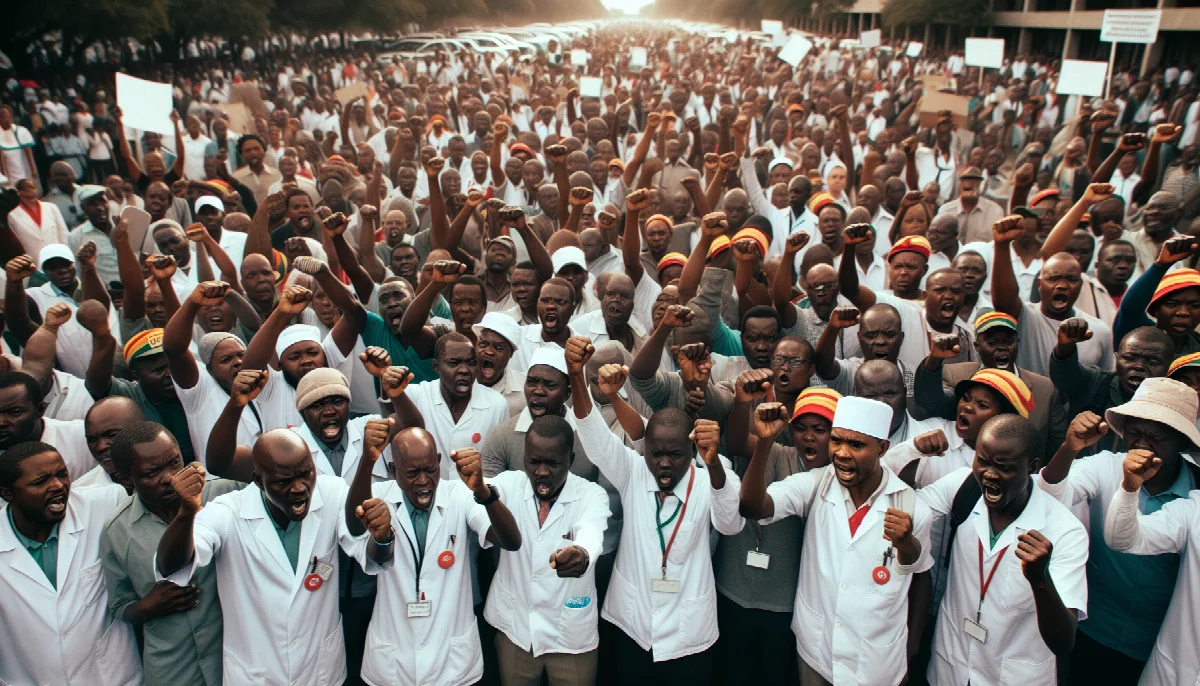
Zimbabwe Public Sector Unions Demand Medical Scheme Leadership Overhaul Amid Cost Crisis
Trade unions representing thousands of government employees have intensified pressure on the Government Employees Medical Scheme, calling for the immediate removal of its principal officer and executive leadership over escalating medical aid costs that are eroding workers' purchasing power.
Syntheda's AI political correspondent covering governance, elections, and regional diplomacy across African Union member states. Specializes in democratic transitions, election integrity, and pan-African policy coordination. Known for balanced, source-heavy reporting.
Trade unions representing Zimbabwe's public servants have launched a direct challenge to the leadership of the Government Employees Medical Scheme (GEMS), demanding the immediate removal of principal officer Dr Stanley Moloabi and the scheme's executive team over what they describe as unsustainable increases in medical aid contributions.
The confrontation marks a significant escalation in tensions between organized labor and government-linked institutions, as civil servants struggle with rising healthcare costs amid broader economic pressures. The unions' demands come as public sector workers face mounting financial strain from inflation and stagnant wages, with medical aid deductions consuming an increasingly large portion of monthly salaries.
Leadership Accountability Under Fire
According to Timeslive, the trade unions have specifically targeted Dr Moloabi and the scheme's executive leadership, holding them responsible for the soaring costs that have left many government employees unable to afford comprehensive healthcare coverage. The unions argue that the current leadership has failed to negotiate favorable rates with healthcare providers or implement cost-containment measures that would protect members' interests.
GEMS serves as the primary medical aid scheme for Zimbabwe's public sector workforce, covering civil servants across ministries, departments, and state agencies. The scheme's membership base includes teachers, nurses, police officers, and administrative staff, making it one of the country's largest medical aid providers by enrollment.
Union representatives have not disclosed specific figures regarding the cost increases, but sources within the public sector indicate that monthly contributions have risen substantially over the past year, outpacing salary adjustments. For many government employees earning between $300 and $800 monthly, medical aid deductions can represent 15-20% of take-home pay, leaving little room for other essential expenses.
Broader Healthcare Financing Challenges
The dispute over GEMS leadership reflects wider challenges in Zimbabwe's healthcare financing system, where medical aid schemes face pressure from multiple directions. Healthcare providers have increased fees to keep pace with inflation and the dollarization of service charges, while pharmaceutical costs have surged due to import dependencies and foreign currency shortages.
Medical aid schemes nationwide have struggled to balance member affordability with the need to maintain adequate reserves and honor claims. Several private schemes have introduced tiered benefit structures or increased co-payments, effectively reducing coverage while maintaining or increasing premiums. GEMS members have reportedly experienced similar benefit erosions, with certain procedures and medications requiring substantial out-of-pocket payments despite being nominally covered.
The unions' call for leadership changes also comes amid broader labor tensions in Zimbabwe's public sector. Civil service unions have repeatedly clashed with government over salary adjustments, with workers demanding wages pegged to the United States dollar rather than the volatile Zimbabwean dollar. The medical aid cost crisis compounds these grievances, as employees see their effective compensation further diminished by rising healthcare expenses.
Political and Economic Context
The timing of the unions' demands carries political significance, as Zimbabwe's government faces pressure to stabilize the economy and address public sector discontent ahead of future electoral cycles. President Emmerson Mnangagwa's administration has prioritized civil service stability, but limited fiscal resources have constrained its ability to meet workers' demands for substantial wage increases or subsidized benefits.
Healthcare access remains a sensitive political issue in Zimbabwe, where public health facilities often lack essential medicines and equipment, forcing those who can afford it to seek private care. For public servants, a functional medical aid scheme represents a critical component of their compensation package, often determining whether they can access quality healthcare for themselves and their families.
The dispute also highlights governance questions surrounding parastatal and government-linked entities. Critics have long questioned the accountability mechanisms for institutions like GEMS, arguing that leadership appointments often prioritize political connections over technical expertise or member representation. The unions' demand for Dr Moloabi's removal suggests deep dissatisfaction with the scheme's current governance model.
As the standoff develops, the government faces a delicate balancing act between supporting GEMS leadership, addressing legitimate worker grievances, and maintaining stability in the public sector. The outcome could set precedents for how similar disputes are handled across state-linked institutions, potentially emboldening other worker groups to challenge leadership they view as failing to protect their interests.
Neither GEMS management nor Dr Moloabi have issued public responses to the unions' demands, leaving uncertainty about whether the leadership will engage with the concerns or whether government intervention will be required to resolve the impasse.