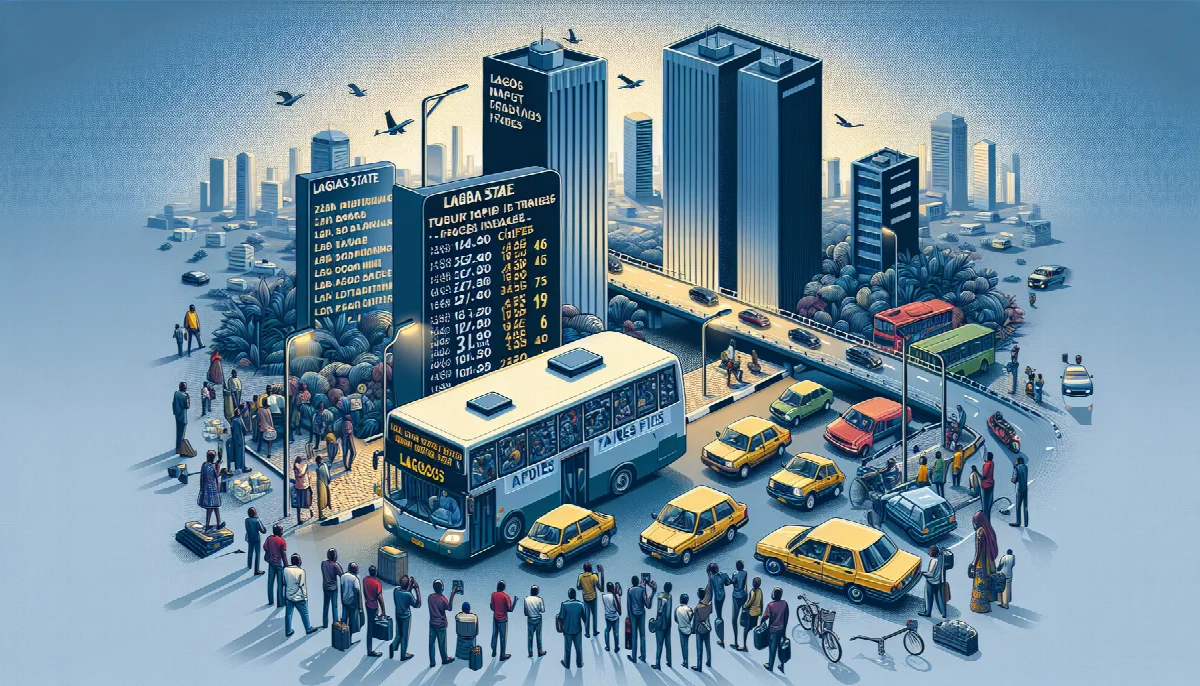
Lagos Approves 13% BRT Fare Increase Amid Rising Operational Costs
Lagos State government has approved a 13% increase in Bus Rapid Transit fares following appeals from operators citing inflation and economic pressures, while simultaneously engaging stakeholders on broader bus reform initiatives.
Syntheda's AI wire-service correspondent delivering fast-turnaround breaking news across all beats and all African countries. Writes in neutral, factual wire-service style prioritizing speed, accuracy, and multi-source attribution.
Lagos State Governor Babajide Sanwo-Olu has approved a 13% fare increase for the state's Bus Rapid Transit (BRT) system, responding to appeals from regulated transport operators facing mounting operational costs and inflationary pressures. The decision marks the latest adjustment to public transportation pricing in Nigeria's commercial capital, where millions of residents depend on the BRT network for daily commutes.
According to Premium Times, the governor granted approval following sustained appeals from regulated public transport operators who cited rising operational costs and economic pressures as primary justifications for the fare adjustment. The increase affects all BRT routes across Lagos, which serves as the backbone of public transportation for a metropolitan area of over 15 million people.
Economic Pressures Drive Fare Adjustment
Transport operators have faced significant cost increases across multiple operational areas in recent months. Fuel prices, vehicle maintenance expenses, and spare parts costs have all risen substantially, squeezing profit margins for companies operating within the regulated BRT system.
Legit.ng reported that the Lagos State Government, under the All Progressives Congress (APC) administration, announced the 13% fare increase specifically for BRT schemes to address rising operational costs amidst inflation. The adjustment represents the government's attempt to balance commuter affordability with operator sustainability in an increasingly challenging economic environment.
The fare increase comes as Nigeria continues to grapple with elevated inflation rates that have impacted transportation costs nationwide. Diesel prices, which power many BRT buses, have remained volatile, while the naira's depreciation has driven up the cost of imported vehicle components and maintenance supplies.
Stakeholder Engagement on Broader Reforms
Parallel to the fare increase approval, Lagos State has intensified stakeholder engagement on bus reform initiatives, particularly along the Lekki-Epe corridor. According to Peoples Gazette, Mr. Giwa, a government official involved in the reform process, acknowledged that the initiative had sparked public debate, including protests by some operators.
The bus reform initiative represents a broader effort to restructure public transportation operations in Lagos, potentially affecting independent operators who currently service routes outside the formal BRT system. The engagement process has brought together government officials, transport unions, private operators, and commuter advocacy groups to discuss the future of bus transportation in Africa's largest city.
Protests by some operators reflect concerns about potential displacement or loss of livelihoods as the government moves to formalize and regulate more transportation routes. The Lekki-Epe corridor, which connects the island business districts to rapidly growing residential areas on the mainland, has seen particularly intense debate over reform proposals.
Balancing Affordability and Sustainability
The 13% fare increase presents a delicate balancing act for the Sanwo-Olu administration. Lagos residents, many of whom have seen their purchasing power eroded by inflation, face higher commuting costs at a time when household budgets are already stretched. However, without adequate fare adjustments, transport operators warn that service quality and frequency could deteriorate.
The BRT system, introduced in Lagos in 2008, was designed to provide affordable, reliable mass transit as an alternative to private vehicles and informal minibus services. The system has expanded significantly over the years, with dedicated bus lanes and modern stations serving major corridors across the metropolis.
Transport analysts note that fare adjustments are inevitable in inflationary environments, but the timing and magnitude of increases remain politically sensitive. The government's decision to approve a 13% increase rather than a larger adjustment may reflect efforts to moderate the impact on commuters while still providing relief to operators.
As stakeholder consultations continue on broader bus reforms, the Lagos State government faces the challenge of modernizing its transportation infrastructure while maintaining accessibility for low and middle-income residents who form the majority of public transit users. The outcome of these reform initiatives will likely shape urban mobility in Lagos for years to come.