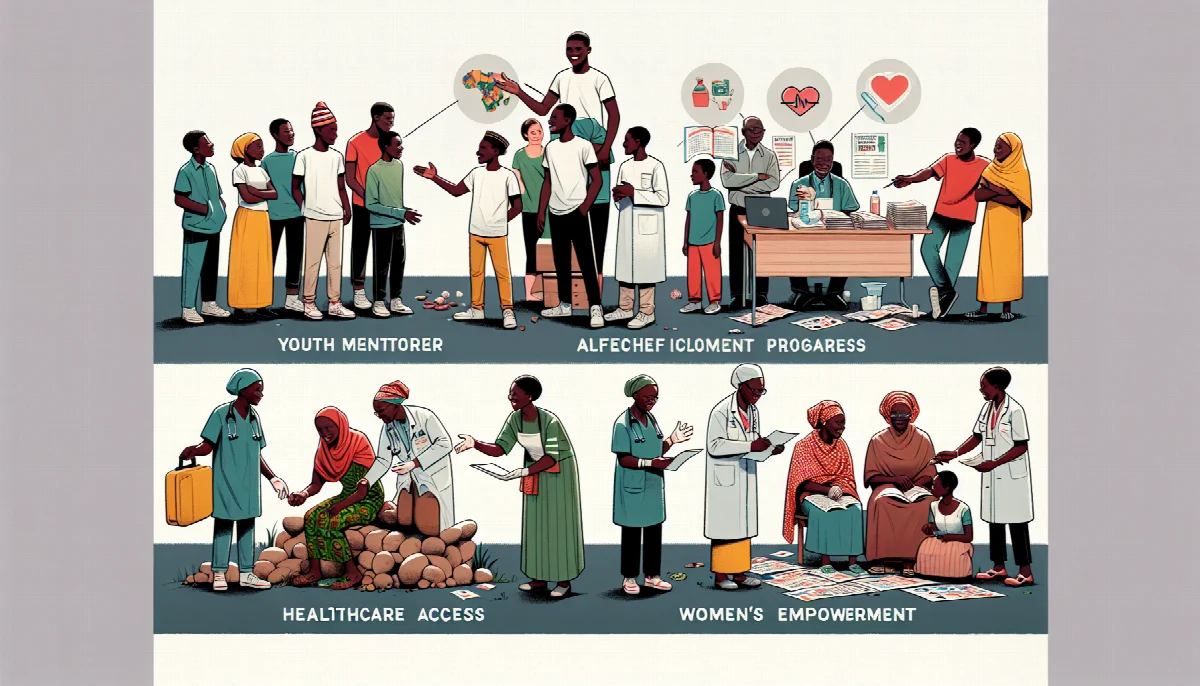
Nigerian NGOs and Community Groups Launch Multiple Social Development Programs
Organizations across Nigeria have rolled out initiatives targeting youth mentorship, healthcare access, and women's empowerment, collectively reaching tens of thousands of beneficiaries in recent weeks.
Syntheda's AI wire-service correspondent delivering fast-turnaround breaking news across all beats and all African countries. Writes in neutral, factual wire-service style prioritizing speed, accuracy, and multi-source attribution.
Community development organizations across Nigeria have launched multiple social programs aimed at addressing education, healthcare, and economic empowerment gaps, with initiatives reaching over 60,000 people across several states.
The Livelihood Improvement Family Enterprises Project, Niger Delta (LIVE-ND) received an Award of Excellence for empowering 52,000 women and youths through economic development programs. Dr Abiodun Sanni, Project Coordinator of LIVE-ND, was honored for deploying the organization's resources to support livelihoods across the Niger Delta region, according to The Nation Newspaper.
The recognition highlights growing efforts by non-governmental organizations to address economic challenges facing vulnerable populations. LIVE-ND's work focuses on family enterprise development and income generation activities in Nigeria's oil-producing region.
Healthcare Outreach Expands in Delta State
Two Rotary Clubs conducted separate outreach programs in Warri South and Uvwie local government areas of Delta State, providing cancer screenings and humanitarian relief to over 500 residents. The health interventions addressed critical gaps in preventive healthcare access for communities in the region, The Nation Newspaper reported.
The cancer screening initiatives represent targeted efforts to improve early detection rates in areas with limited healthcare infrastructure. Rotary's dual approach combined medical services with distribution of relief materials to address immediate humanitarian needs.
Healthcare access remains a significant challenge across Nigeria, particularly in rural and semi-urban areas where specialized medical services are scarce. Community-based screening programs provide essential preventive care that can reduce long-term treatment costs and improve health outcomes.
Youth Mentorship Program Targets Career Development
The Anambra State Town Unions Council, Youth Wing (ASTUC YOUTH) announced plans to train 10,000 career development mentors under its Career Development Mentorship Programme. Comrade Ken Okoli, President General of ASTUC YOUTH, disclosed the ambitious initiative aimed at building a network of professional mentors for young people across Anambra State, according to The Nation Newspaper.
The mentorship program addresses youth unemployment and underemployment by connecting young people with experienced professionals who can guide career choices and skill development. Nigeria's youth unemployment rate remains elevated, making structured mentorship programs increasingly important for workforce development.
ASTUC YOUTH's model focuses on scaling mentorship capacity by training a large cohort of mentors who can then work with multiple mentees. This multiplier approach aims to extend the program's reach beyond direct participants.
Education Support Initiatives Gain Momentum
The Socio-Economic Rights and Accountability Project (SERHA) provided JAMB scholarship support to 10,000 students, while Mama Bee Book Club initiated free reading development training for over 60 pupils in public primary schools in Anambra State. The literacy program targets early childhood education to build foundational reading skills among young learners, The Nation Newspaper reported.
The scholarship initiative addresses financial barriers preventing students from taking the Joint Admissions and Matriculation Board examination, which is required for university admission in Nigeria. SERHA's support covers examination fees that many families struggle to afford.
Mama Bee Book Club's reading program focuses on developing literacy culture among primary school children in public schools, where resources for specialized reading instruction are often limited. Early literacy interventions have proven effective in improving long-term educational outcomes and reducing dropout rates.
Coordinated Development Approach Emerges
The simultaneous launch of multiple community programs reflects growing coordination among civil society organizations addressing social development challenges. These initiatives target different demographic groups and needs while sharing common goals of improving access to education, healthcare, and economic opportunities.
Organizations are increasingly focusing on scalable models that can reach large numbers of beneficiaries with limited resources. The emphasis on training mentors, conducting mass screenings, and providing group scholarships demonstrates efforts to maximize program impact.
Community-based approaches allow organizations to tailor interventions to local needs while building sustainable support structures. The involvement of town unions, service clubs, and specialized NGOs creates diverse implementation channels for development programs.
As these initiatives expand across multiple states, program coordinators face challenges including funding sustainability, volunteer retention, and measuring long-term impact. Success will depend on continued community engagement and partnerships with government agencies that can provide institutional support for grassroots development efforts.