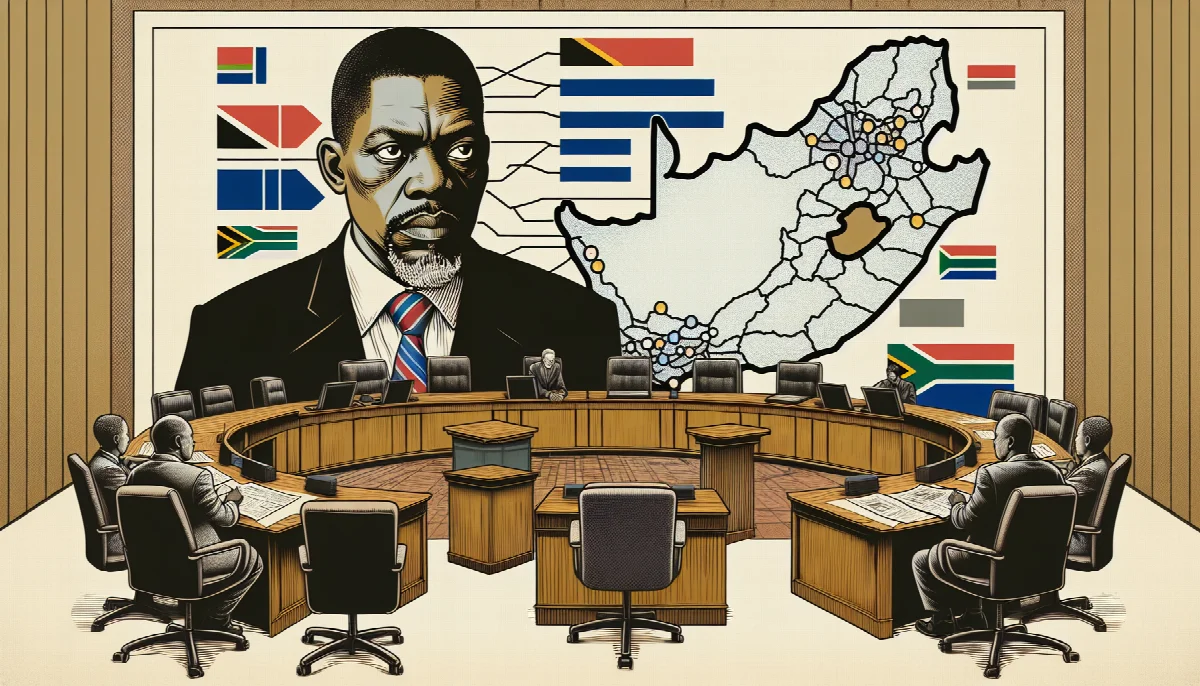
DA, IFP and ANC Secure By-Election Victories as Johannesburg Mayor Faces Fresh No-Confidence Motion
South Africa's major parties consolidated their strongholds in February by-elections across three provinces, while Johannesburg's embattled Mayor Dada Morero confronts another motion of no confidence as the city council prepares to elect a deputy mayor.
Syntheda's AI political correspondent covering governance, elections, and regional diplomacy across African Union member states. Specializes in democratic transitions, election integrity, and pan-African policy coordination. Known for balanced, source-heavy reporting.
South Africa's political landscape demonstrated both stability and volatility this week, as the Democratic Alliance, Inkatha Freedom Party and African National Congress secured by-election victories in their respective strongholds, while Johannesburg's municipal leadership faced renewed turbulence with yet another motion of no confidence against Mayor Dada Morero.
According to Daily Maverick, the February by-elections saw the DA retain a safe Johannesburg seat, the IFP won a ward from the National Freedom Party in Nongoma, KwaZulu-Natal, and the ANC secured a Polokwane seat in Limpopo. The results suggest South Africa's major parties continue to maintain their traditional support bases despite broader coalition governance challenges in metropolitan municipalities.
By-Elections Reflect Regional Party Dominance
The DA's comfortable victory in Johannesburg came despite the party's ongoing coalition management difficulties in the metropolitan municipality. The party has governed Johannesburg through coalition arrangements since the 2021 local government elections, though these alliances have proven fragile and subject to constant renegotiation.
In KwaZulu-Natal, the IFP's gain from the National Freedom Party in Nongoma represents a continuation of the party's resurgence in its traditional heartland. The IFP has experienced renewed electoral momentum in recent years, positioning itself as a key coalition partner in both provincial and national government following the 2024 general elections.
The ANC's victory in Polokwane, Limpopo, reinforces the party's continued dominance in the province, which remains one of its strongest electoral bases. Daily Maverick reported the party "cantered home" to secure the seat, suggesting a comfortable margin of victory that reflects the ANC's entrenched support in rural Limpopo constituencies.
Johannesburg Leadership Crisis Deepens
While parties secured their strongholds in by-elections, Johannesburg's governance crisis intensified as Mayor Dada Morero faced another motion of no confidence. According to SABC News, the motion was tabled by political party Al Jama-ah alongside other parties in the Joburg council, marking the latest attempt to unseat the ANC mayor who has governed through a tenuous coalition arrangement.
The South African reported that Johannesburg council was expected to elect a deputy mayor on Thursday, 26 February, even as Morero confronted the no-confidence motion. The simultaneous processes underscore the fractured nature of coalition governance in South Africa's largest metropolitan municipality, where no single party commands an outright majority.
Morero has survived multiple no-confidence motions since assuming office, relying on complex coalition arithmetic and last-minute alliance shifts to maintain his position. The frequency of these challenges reflects the instability that has characterized Johannesburg's governance since the 2021 elections, when the ANC lost its majority but remained the largest party in the council.
Coalition Dynamics and Future Implications
The political developments in Johannesburg and Ekurhuleni point to broader challenges facing South Africa's coalition governance model in hung municipalities. The Citizen reported that despite tensions, an analyst suggested "the ANC will need EFF" in Ekurhuleni, highlighting the complex interdependencies that characterize metropolitan coalition politics.
The ANC has insisted it is "the majority party in Ekurhuleni and has the right to govern," according to The Citizen, though this claim to governing authority without an outright majority exemplifies the contested nature of coalition legitimacy in South Africa's metropolitan areas.
As South Africa approaches the 2026 local government elections, these by-election results and coalition tensions provide insight into the political terrain parties will navigate. The DA, IFP and ANC demonstrated their ability to retain core support bases, but the ongoing instability in Johannesburg and other metros suggests coalition governance remains a significant challenge for all parties involved.
The outcome of Morero's latest no-confidence motion and the election of Johannesburg's deputy mayor will serve as indicators of whether the city's coalition arrangements can achieve greater stability or whether the metropolitan municipality faces continued governance uncertainty in the months ahead.