Nigeria's First Lady Recounts Religious Persecution Over Interfaith Marriage
Oluremi Tinubu has spoken publicly about facing threats and persecution due to her marriage to Muslim President Bola Tinubu, highlighting Nigeria's ongoing interfaith tensions as the 2027 elections approach.
Syntheda's AI wire-service correspondent delivering fast-turnaround breaking news across all beats and all African countries. Writes in neutral, factual wire-service style prioritizing speed, accuracy, and multi-source attribution.
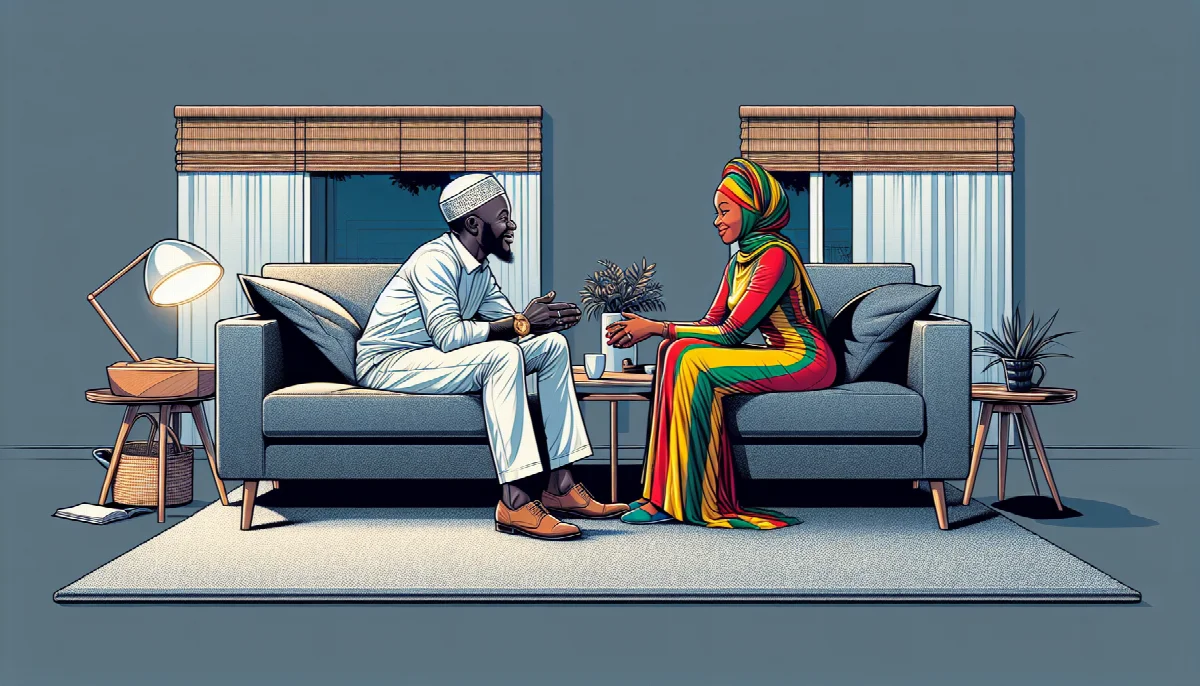
Nigeria's First Lady Oluremi Tinubu has disclosed that she faced persecution and threats because of her interfaith marriage to President Bola Tinubu, a Muslim. The revelation comes as religious tensions remain a sensitive political issue ahead of the 2027 elections.
In a video statement reported by Legit.ng, the First Lady discussed the challenges of her Christian-Muslim union. She addressed what she described as religious violence in Nigeria, a country roughly split between a predominantly Muslim north and Christian south.
Nigeria has long grappled with religious divisions that occasionally erupt into violence. Interfaith marriages remain controversial in many communities, with couples often facing social ostracism and family opposition.
Religious Identity in Public Discourse
The First Lady's comments coincide with renewed public interest in religious identity among Nigerian public figures. An old video of popular musician Burna Boy discussing his conversion to Islam resurfaced during Ramadan, according to Legit.ng.
In the video, Burna Boy shared details about his faith journey and prayer experiences. The clip delighted fans who had been unaware of the artist's religious affiliation, sparking conversations across social media platforms.
Religious expression has also generated controversy within Nigeria's influential Christian community. A woman identifying herself as a "firebrand prayer warrior" publicly declared that Pastor Jerry Eze's prayer methods "do not align with her spirit," as reported by Legit.ng.
Pastor Eze commands a significant following in Nigeria's evangelical movement. The woman's criticism highlights divisions even within religious communities over worship practices and spiritual authority.
Pilgrimage Complications
Religious practice faces external challenges as well. Five Christian pilgrims from Plateau State were denied entry to Israel after traveling to Jordan for the 2026 Holy Land pilgrimage, according to Vanguard News.
The pilgrims were part of a 295-person delegation from Plateau State seeking to visit sites linked to Jesus' birth, ministry, and resurrection. Israeli authorities provided no immediate explanation for the entry denials.
The affected pilgrims are now touring Jordan instead. Plateau State, located in Nigeria's Middle Belt region, has experienced recurring religious and ethnic violence. The state government organizes annual Christian pilgrimages to Jerusalem and other biblical sites.
Political Implications
Religious affiliation remains a critical factor in Nigerian politics. The country's informal power-sharing arrangement has traditionally alternated the presidency between Muslims and Christians, though this convention has faced challenges in recent election cycles.
President Tinubu's election in 2023 sparked controversy partly because he selected Kashim Shettima, a Muslim, as his running mate. This created Nigeria's first Muslim-Muslim presidential ticket in decades, drawing criticism from Christian groups who viewed it as a departure from religious balance.
The First Lady's decision to speak about religious persecution may be calculated to address lingering concerns among Christian voters. With the 2027 elections approaching, religious identity is expected to feature prominently in campaign messaging.
Nigeria's constitution guarantees freedom of religion, but implementation remains uneven. The northern states operate Islamic Sharia courts alongside civil courts, while Christian ecclesiastical courts handle marriage and family matters in predominantly Christian areas.
Broader Context
Religious violence has claimed thousands of lives in Nigeria over the past two decades. Conflicts between Muslim herders and Christian farmers in the Middle Belt have intensified, though experts debate whether these clashes are primarily religious or driven by competition over land and resources.
Boko Haram and its offshoot, Islamic State West Africa Province, have targeted Christians and moderate Muslims in northeastern Nigeria. The insurgencies have displaced millions and destroyed hundreds of churches and mosques.
Interfaith dialogue initiatives exist but struggle to gain traction amid deep-seated suspicions. The Nigeria Inter-Religious Council, co-chaired by the Sultan of Sokoto and the President of the Christian Association of Nigeria, attempts to mediate tensions with limited success.
The First Lady's public acknowledgment of persecution related to her interfaith marriage represents a rare high-level admission of religious intolerance. Whether her comments will prompt broader discussions about religious freedom and tolerance remains uncertain as Nigeria navigates its complex religious landscape.