Police Accountability Takes Centre Stage as South Africa Grills Former Officials, Nigeria Appoints New Inspector General
South Africa's Parliament continues probing former police leadership while Nigeria's President Tinubu tasks newly appointed Inspector General Disu with restoring peace and strengthening national security.
Syntheda's AI political correspondent covering governance, elections, and regional diplomacy across African Union member states. Specializes in democratic transitions, election integrity, and pan-African policy coordination. Known for balanced, source-heavy reporting.
Police leadership and accountability emerged as a critical governance issue across two African nations this week, with South Africa's Parliament intensifying scrutiny of former officials while Nigeria installed new law enforcement leadership with an explicit mandate to restore public confidence.
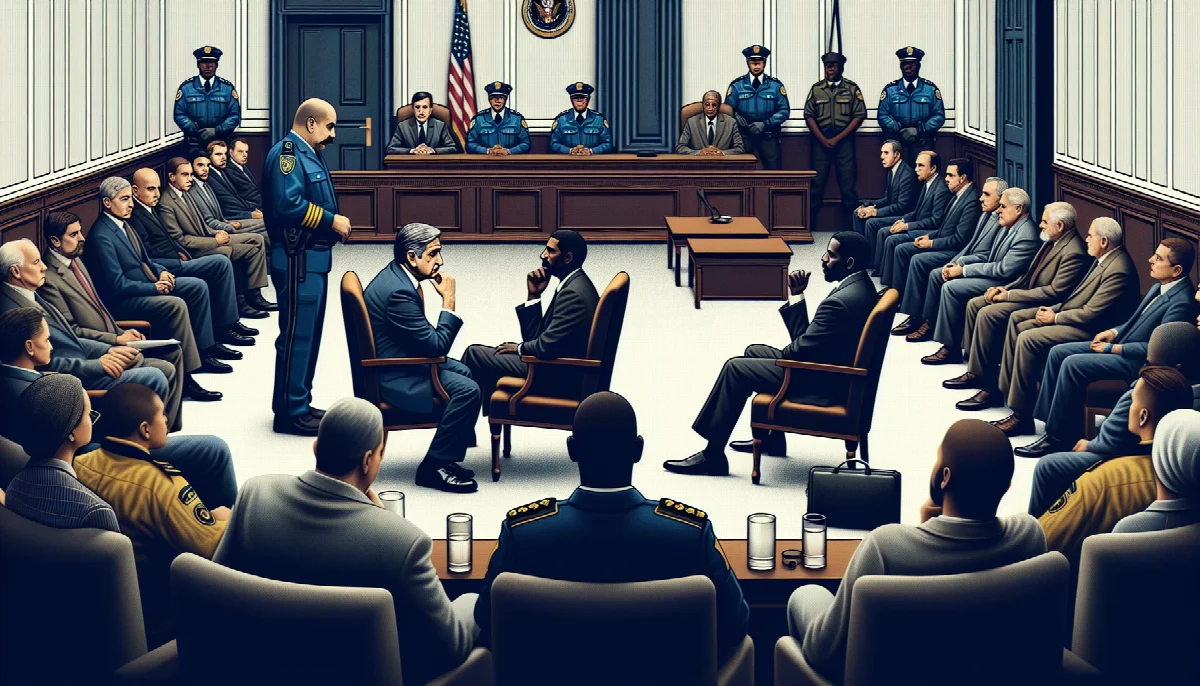
Former Acting Police Commissioner Khomotso Phahlane and forensic investigator Paul O'Sullivan returned to South Africa's SAPS Ad Hoc Committee on Thursday to continue testimonies that have placed police conduct under parliamentary examination. According to eNCA, O'Sullivan's appearance follows an earlier testimony before the committee, which was established to investigate allegations of misconduct and corruption within the South African Police Service.
The parliamentary hearings represent a significant moment in South Africa's ongoing efforts to address institutional accountability within law enforcement. Phahlane, who served as Acting National Commissioner, has previously faced allegations related to procurement irregularities and lifestyle audits during his tenure. O'Sullivan, a private investigator who has pursued corruption cases involving senior police officials, brings an external perspective to the committee's inquiry into police governance failures.
While South Africa examines its past police leadership, Nigeria moved decisively to reshape its security apparatus. President Bola Tinubu appointed a new Inspector General of Police with clear directives to address the nation's security challenges. "I made this decision for you to become IG, lead fairly and firmly," Tinubu told the newly appointed Inspector General Disu, according to This Day newspaper.
The Nigerian president charged Disu with two primary objectives: to restore peace and strengthen security nationwide. This Day reported that Tinubu assured the new police chief of "full support to succeed" while emphasizing the gravity of the security situation facing Africa's most populous nation. The Police Council is scheduled to meet next week to ratify the appointment, following constitutional procedures for senior security appointments.
The contrasting approaches in both countries reflect different stages of police reform. South Africa's parliamentary process focuses on retrospective accountability, examining how leadership failures occurred and what mechanisms failed to prevent misconduct. The Ad Hoc Committee's work signals legislative determination to establish precedents for holding senior police officials accountable, even after they have left office.
Nigeria's appointment comes amid persistent security challenges including banditry in the northwest, separatist agitations in the southeast, and ongoing counterinsurgency operations in the northeast. The explicit presidential directive to "lead fairly and firmly" suggests recognition that effective policing requires both operational strength and public legitimacy—a balance that has eluded many African police forces.
Both developments occur against a broader continental backdrop where police reform remains a governance priority. The African Union's 2014 Policy Framework on Security Sector Reform emphasizes civilian oversight, professional standards, and accountability mechanisms as essential elements of democratic policing. However, implementation has varied significantly across member states.
The South African hearings could establish important precedents for legislative oversight of police leadership across the Southern African Development Community region, where several countries have struggled with police accountability. Parliamentary committees in Botswana, Namibia, and Zambia have observed South Africa's process with interest, according to regional governance analysts.
In Nigeria, the success of the new Inspector General will likely be measured by tangible security improvements in conflict-affected regions and progress in professionalizing a force that has faced persistent allegations of human rights violations and corruption. The explicit presidential backing provides political capital, but also raises expectations for rapid results.
The timing of both events underscores how police legitimacy has become central to governance debates across Africa. As citizens demand both security and accountability, governments face the complex challenge of building law enforcement institutions that are simultaneously effective and answerable to democratic oversight.
The outcomes of South Africa's parliamentary inquiry and Nigeria's leadership transition will likely influence police reform trajectories across the continent, offering lessons on both retrospective accountability and forward-looking institutional change.