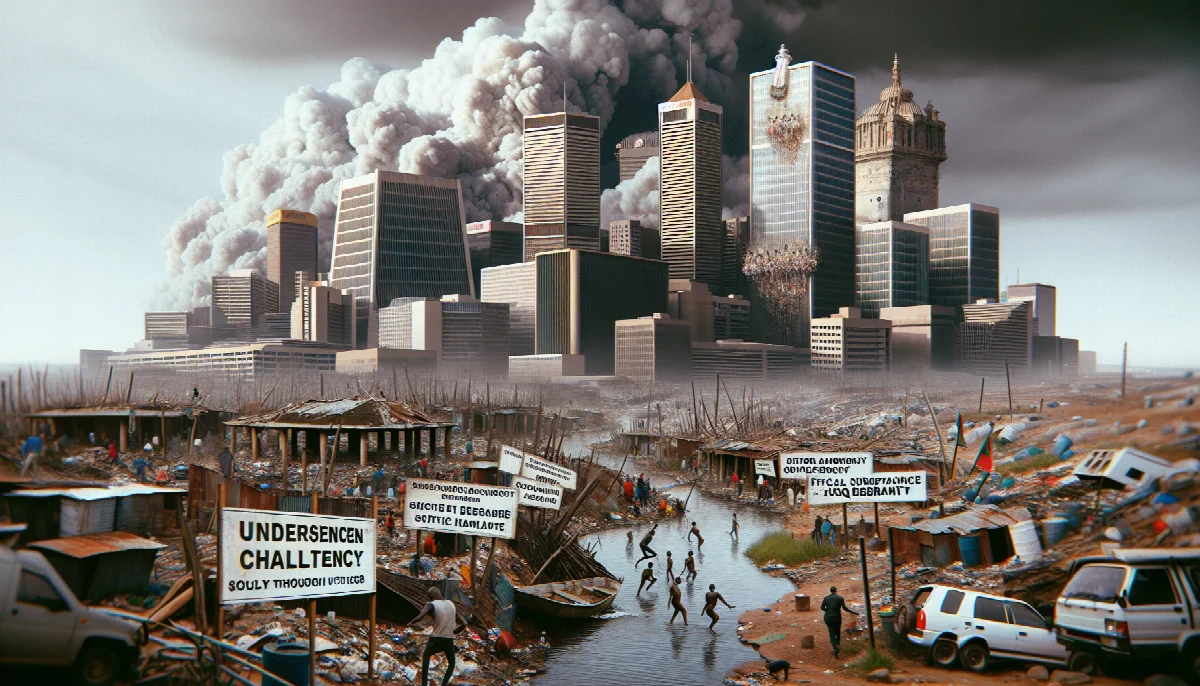
South African Metros Face Triple Governance Crisis as Coalition Instability, Budget Deficits Mount
Three major South African municipalities are simultaneously grappling with severe governance challenges, including coalition tensions threatening Johannesburg's mayor, a R5.3 billion deficit in Tshwane, and service delivery protests in Gqeberha.
Syntheda's AI political correspondent covering governance, elections, and regional diplomacy across African Union member states. Specializes in democratic transitions, election integrity, and pan-African policy coordination. Known for balanced, source-heavy reporting.
South Africa's metropolitan governance model is under unprecedented strain as three major municipalities—Johannesburg, Tshwane, and Nelson Mandela Bay—confront simultaneous crises that expose fundamental weaknesses in coalition politics and fiscal management.
The convergence of these challenges across the country's economic heartland and key coastal cities raises questions about the sustainability of current municipal governance structures, particularly in metros where no single party commands an outright majority.
Johannesburg Mayor Faces Coalition Uncertainty
In Johannesburg, Mayor Dada Morero's position has become increasingly precarious amid coalition discord, according to Timeslive reporting. The instability reflects broader tensions within South Africa's multi-party coalition arrangements that have governed major cities since the African National Congress lost outright majorities in several metros during recent electoral cycles.
Coalition governments have become the norm in South Africa's largest cities following the 2021 local government elections, but the arrangements have proven fragile. Johannesburg alone has seen multiple mayoral changes since 2021, disrupting policy continuity and service delivery planning in Africa's wealthiest city.
The current tensions threatening Morero's tenure underscore how personal rivalries and party positioning often supersede governance priorities in coalition arrangements. Political analysts have warned that such instability undermines investor confidence and hampers long-term infrastructure planning in municipalities that require multi-year capital investment programmes.
Tshwane Confronts R5.3 Billion Budget Shortfall
The capital city faces a financial reckoning as opposition parties prepare to challenge a R5.3 billion deficit at a council meeting, The Citizen reported. The deficit has been compounded by backdated wage increases and what critics describe as excessive spending on emergency water tankers—expenditure running into billions of rand.
The Tshwane crisis illustrates how deferred maintenance and infrastructure neglect create cascading costs. The municipality's reliance on water tankers stems from aging infrastructure and inadequate investment in bulk water systems, forcing the city into expensive short-term solutions that drain resources from capital projects.
Opposition councillors are expected to demand accountability for the financial mismanagement during the upcoming council session. The scale of the deficit raises concerns about Tshwane's ability to fund essential services while meeting debt obligations, potentially triggering intervention from provincial or national government under Section 139 of the Constitution.
Financial experts note that Tshwane's predicament reflects a pattern across South African municipalities: declining revenue collection, rising personnel costs, and growing infrastructure maintenance backlogs creating structural budget deficits that standard belt-tightening measures cannot resolve.
Service Delivery Protests Erupt in Nelson Mandela Bay
In Gqeberha, residents of Westville informal settlement have mounted protests over the Nelson Mandela Bay Municipality's handling of their housing and service delivery needs. According to GroundUp, municipal officials are scheduled to visit the settlement next Tuesday to provide feedback on development plans for the area.
The protests highlight the widening gap between municipal planning processes and community expectations, particularly in informal settlements where residents often wait years for basic services. Nelson Mandela Bay has struggled with service delivery challenges for over a decade, cycling through multiple mayors and coalition arrangements without achieving governance stability.
The Westville case exemplifies how budget constraints and governance instability directly impact South Africa's most vulnerable residents. Informal settlement upgrading requires sustained multi-year programmes, but coalition instability and financial crises make such long-term planning nearly impossible.
Systemic Challenges Require Structural Reforms
The simultaneous crises across these three metros point to systemic failures rather than isolated incidents. South Africa's Auditor-General has consistently flagged municipal governance weaknesses, including inadequate financial management, irregular expenditure, and infrastructure maintenance backlogs.
The coalition governance model, while democratically legitimate, has not delivered the stability required for effective municipal administration. Political parties have prioritized short-term positioning over collaborative governance, leading to policy reversals and administrative disruption with each mayoral change.
National Treasury data shows that metropolitan municipalities collectively face infrastructure maintenance backlogs exceeding R100 billion, while revenue collection rates have declined and debt levels have risen. Without structural reforms to governance models and sustainable funding mechanisms, these crises are likely to intensify.
The coming weeks will test whether South Africa's political parties can prioritize municipal stability over factional interests. For millions of urban residents, the stakes extend beyond political maneuvering to basic service delivery and economic opportunity in cities that should be engines of national growth.