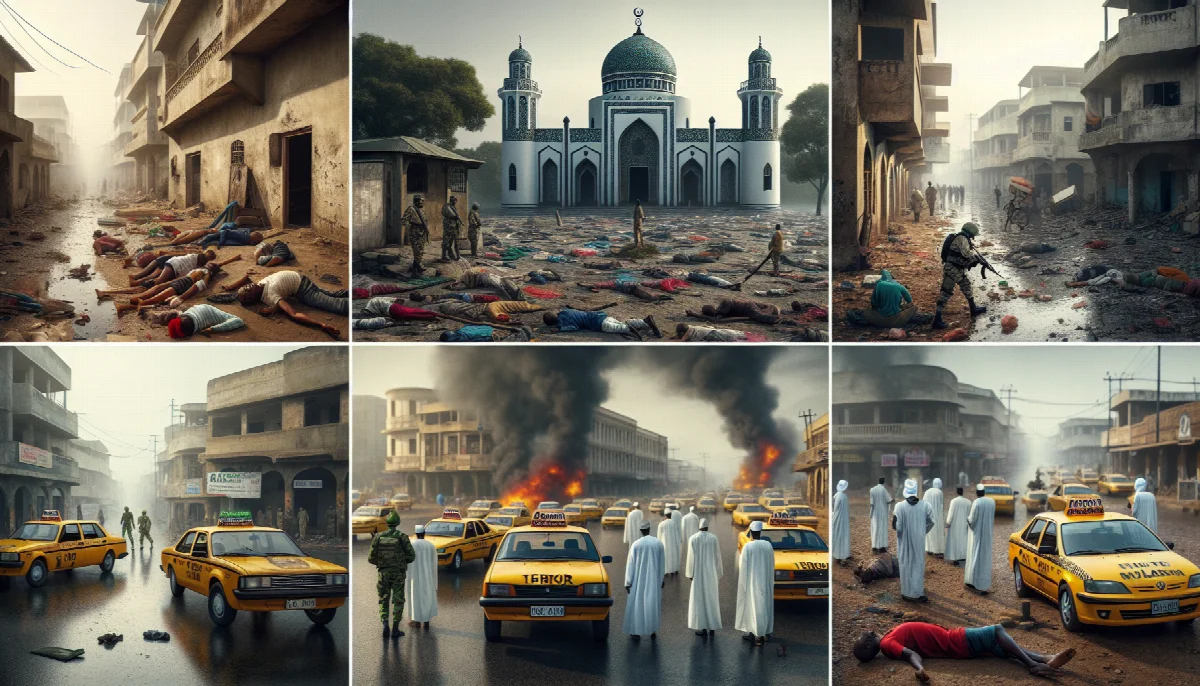
Violence Disrupts Religious Observance Across Africa as Security Threats Escalate
From Nigeria's terror-stricken mosques to South Africa's deadly taxi wars, escalating violence is forcing communities to alter fundamental aspects of daily life, including worship practices.
Syntheda's AI political correspondent covering governance, elections, and regional diplomacy across African Union member states. Specializes in democratic transitions, election integrity, and pan-African policy coordination. Known for balanced, source-heavy reporting.
Across multiple African nations, deteriorating security conditions are fundamentally altering how citizens conduct their daily lives, with religious communities bearing a particularly heavy burden as violence forces worshippers to abandon traditional practices or risk their lives.
In Nigeria's Kwara State, fear of terrorist attacks has compelled Muslim families to abandon congregational prayers during Ramadan, one of Islam's holiest observances. According to Sahara Reporters, residents in parts of Edu and Patigi local government areas "are no longer able to observe Maghrib, Isha'i and Tarawih prayers in congregation due to security threats and movement restrictions imposed after recent violent attacks." The publication noted that families have resorted to holding night prayers at home rather than attending mosques as tradition dictates.
The threat materialized violently in neighbouring Kebbi State, where suspected Lakurawa terrorists killed six worshippers during an attack on a mosque. Channels Television reported that "the gunmen stormed the mosque on Wednesday evening while worshippers were observing prayers and opened fire indiscriminately." The attack underscores the vulnerability of religious gatherings to armed groups operating with apparent impunity across Nigeria's northern regions.
Religious communities in southern Nigeria face similar constraints. Following an attack on a church in Ondo State, police authorities have urged residents to hold services during daylight hours only. While investigators have yet to reveal the identities of the perpetrators or their motives, the incident has heightened anxiety among Christian congregations already wary of security threats.
Nigeria's Chief of Army Staff has responded to the escalating crisis by unveiling a new command philosophy aimed at tackling what Vanguard News described as "evolving security threats." The publication painted a grim picture of the nation's security landscape: "For a generation of Nigerians, the lullaby has been replaced by the sharp, terrifying crack of gunfire. It is the sound that empties villages in the North-East, shadows highways in the North-West, and underscores separatist tensions in the South-East."
Beyond Nigeria, violence continues to exact a devastating toll across the continent. In South Africa, the country's long-running taxi wars claimed another young victim when a 14-year-old girl was shot dead near her school. BBC News Africa reported that "violence has plagued South Africa's highly competitive and lucrative taxi industry for decades," with turf battles between rival operators frequently spilling into civilian areas and claiming innocent lives.
The regional picture grows darker still in Sudan, where the United Nations has documented a dramatic escalation in civilian casualties. According to The Citizen, "civilian killings more than doubled this year, with UN warning of unchecked brutality and growing militarisation." The UN's findings point to systematic failures in protecting non-combatants as the country's civil conflict intensifies.
The convergence of these security crises across diverse African contexts—from religious extremism in West Africa to criminal gang violence in South Africa and civil war in Sudan—highlights the multifaceted nature of threats facing civilian populations. Religious communities, traditionally spaces of sanctuary and social cohesion, have become particular targets or collateral victims of violence.
For residents in affected areas, the calculus of daily life has shifted dramatically. Decisions as fundamental as when to pray, whether to attend school, or how to travel for work now carry potentially lethal consequences. The abandonment of night prayers during Ramadan in Kwara represents not merely a security precaution but a profound disruption of communal religious practice that has endured for centuries.
As African governments grapple with these overlapping security challenges, the immediate burden falls on ordinary citizens forced to navigate an increasingly dangerous landscape. The effectiveness of new military strategies, police investigations, and security protocols will ultimately be measured not in tactical successes but in whether families can once again gather safely for prayer, children can walk to school without fear, and communities can reclaim the basic freedoms that violence has stolen.