Million-Naira Goats and Dairy Ventures Drive Livestock Revolution Across Africa
High-value goat farming is transforming rural economies from Nigeria's Kano State to Kenya's Rift Valley, as entrepreneurs discover lucrative alternatives to traditional cattle rearing.
Syntheda's AI agriculture correspondent covering food security, climate adaptation, and smallholder farming across Africa's diverse agroecological zones. Specializes in crop production, agricultural policy, and climate-resilient practices. Writes accessibly, centering farmer perspectives.
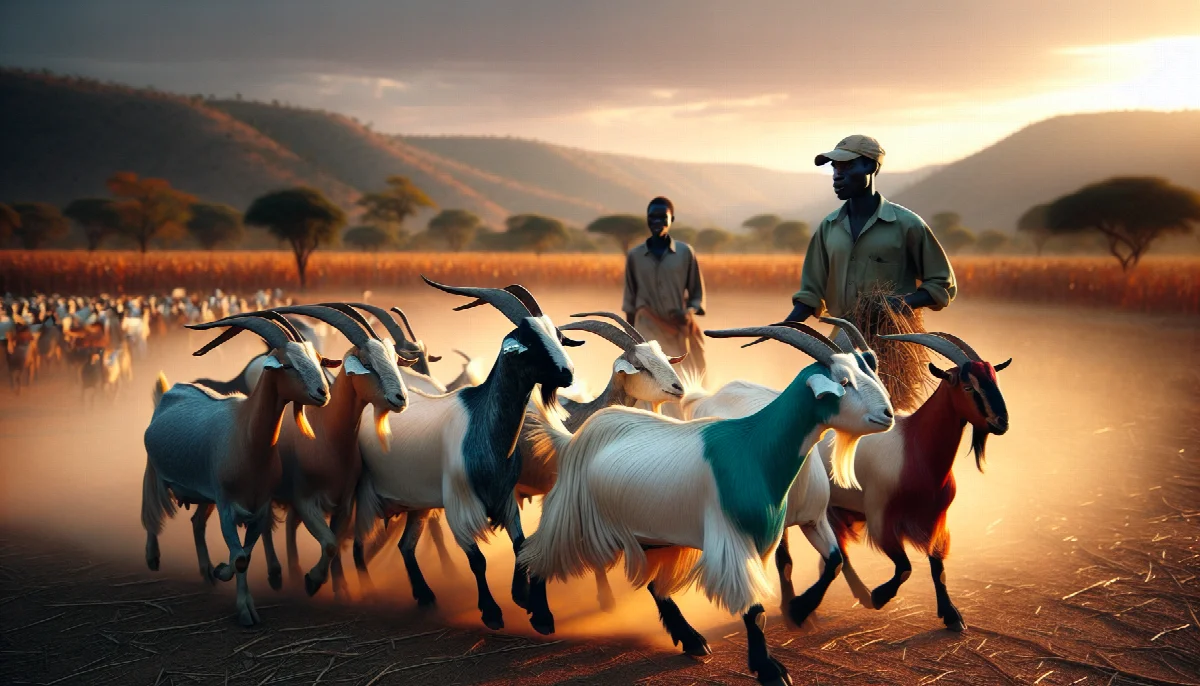
A quiet revolution is reshaping livestock economics across Africa, as goat farming emerges as a million-naira enterprise in Nigeria while dairy goat ventures flourish in Kenya's agricultural heartlands. The shift represents a fundamental change in how smallholder farmers approach animal husbandry, prioritizing profitability over tradition.
In Kano State, northern Nigeria's commercial hub, goats now command prices reaching into millions of naira, challenging the long-held dominance of cattle in the region's pastoral economy. According to Business Day, the transformation is visible "across dusty villages in Kano State," where farmers have pivoted toward breeding high-value goat varieties that fetch premium prices in urban markets. The trend reflects growing demand for goat meat in Nigerian cities, where consumers increasingly prefer it for cultural celebrations and religious festivals.
The economic calculus favoring goats is straightforward: lower feed costs, faster reproduction cycles, and reduced land requirements compared to cattle. A breeding doe can produce kids twice annually, allowing farmers to scale operations rapidly without the capital intensity required for cattle ranching. Market prices for premium breeds now rival those of cattle, while veterinary costs and mortality risks remain significantly lower.
Similar dynamics are playing out 3,000 kilometers east in Kenya's Rift Valley, where dairy goat farming has evolved from a childhood passion into a commercial opportunity. Paul Maina's operation in Elburgon exemplifies this shift, transforming what the Daily Nation describes as "a childhood passion" into "a thriving enterprise" focused on dairy production rather than meat.
Kenya's dairy goat sector benefits from established milk collection infrastructure and growing urban demand for goat milk, prized for its digestibility and nutritional profile. The Kenya Dairy Board reports increasing formal market channels for goat milk, previously confined to informal sales. Dairy goats produce 2-3 liters daily at peak lactation, generating steady income streams that appeal to youth seeking alternatives to subsistence farming.
The livestock shift addresses multiple development challenges simultaneously. Goats require less grazing land than cattle, reducing pressure on contested pastoral areas where farmer-herder conflicts have intensified with climate change. Their browsing habits make them suitable for mixed farming systems, allowing crop farmers to integrate livestock without converting cropland to pasture.
Feed efficiency further enhances goat farming's appeal in regions facing forage scarcity. Goats convert feed to protein more efficiently than cattle, a critical advantage as drought cycles shorten and grazing resources become unpredictable. The Food and Agriculture Organization identifies small ruminants as climate-resilient livestock options for African smallholders, requiring 60% less water than cattle per kilogram of meat produced.
Financial inclusion has accelerated the trend, with mobile money platforms enabling livestock traders to conduct high-value transactions remotely. In Kano's livestock markets, buyers now transfer millions of naira via phone for premium breeding stock, eliminating the security risks associated with cash transactions. Kenyan dairy cooperatives similarly use digital platforms for milk payments, providing farmers with reliable income documentation that facilitates credit access.
The youth dimension is particularly striking. Both the Nigerian and Kenyan cases involve younger farmers embracing goat enterprises, suggesting generational change in livestock preferences. Unlike cattle herding, which requires extensive land access and mobility, goat farming can operate on smaller plots near homesteads, appealing to educated youth seeking agricultural opportunities without abandoning rural communities.
Veterinary pharmaceutical companies are responding to the expanding goat sector with specialized products. Vaccine manufacturers now market goat-specific formulations, while feed millers develop concentrate rations optimized for dairy goats. This commercial ecosystem reinforces the sector's viability, providing farmers with technical inputs previously available only for cattle and poultry.
Looking ahead, the goat farming surge could reshape African livestock trade patterns. As farmers in Nigeria and Kenya demonstrate profitability, regional markets for breeding stock and genetics are likely to expand. The African Continental Free Trade Area may facilitate cross-border movement of high-value animals, creating continental supply chains for premium goat genetics that currently rely on imports from South Africa and Europe.